
The ShOC-N Continues To Provide the Rigor
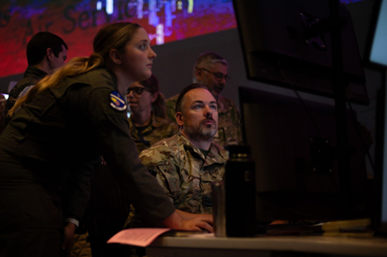
The 805th Combat Training Squadron, stationed at Nellis Air Force Base, Nevada, is at the forefront of joint and coalition interoperability and command-and-control (C2) modernization.
Also known as the Shadow Operations Center–Nellis, ShOC-N, the squadron has, for several years, tested and experimented with the crucial technologies that the joint force needs.
With the culmination of its latest effort, Capstone 2025, the ShOC-N has concluded its 2025 experimentation series, said Debora Henley, from the 505th Command and Control Wing’s Public Affairs, in a December 18 report. The 805th/ShOC-N, which reports to the Wing’s 505th Combat Training Group, is the U.S. Air Force’s Battle Lab.
The technologies the ShOC-N examined for operations included: artificial intelligence (AI) and machine learning (ML) applications for C2, human-machine teaming, kill chain automation and multidomain operations.
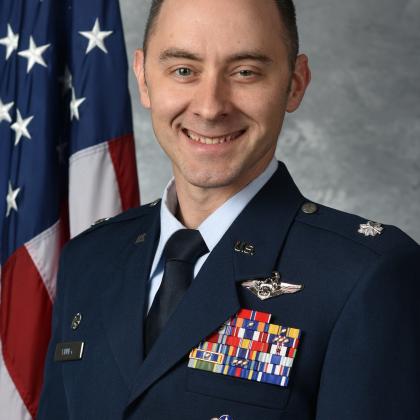
The center’s success from its year-long work and Capstone 2025 are adding to the U.S. military’s advancements in Project Convergence and Bamboo Eagle, said U.S. Air Force Lt. Col Shawn Finney, commander of the 805th Combat Training Squadron/ShOC-N, in an email to SIGNAL Media. The center works closely with both organizations to leverage leaders’ feedback and iterate and refine tools to make sure the ShOC-N remains aligned with what is needed for warfighters, he said.
Project Convergence is the military’s joint and multinational event that is transforming warfighter readiness through high-tech, concept-based experimentation.
“Capstone has provided valuable insights into the integration of [U.S.] Army, Marine and Navy fires into dynamic targeting processes,” explained Finney. “These efforts are helping to inform Project Convergence, where similar data links, real-time targeting and joint software integration will be critical. The lessons learned from Capstone, particularly in target sharing, datalink optimization and joint system integration, are paving the way for PC [Project Convergence] to adopt these methodologies, further accelerating the speed and precision of joint targeting operations.”
Bamboo Eagle, meanwhile, is the U.S. Air Force Warfare Center-hosted event that involves Air, Space, Naval, Marine, Army, Guard and Reserve, as well as international components. It is designed to advance multiservice integration and demonstrate seamless joint operations in a simulated contested theater.
The next Bamboo Eagle, 26-1, which will be held in February, will help continue preparing U.S. and allied forces for contested operations in the Indo-Pacific. The ShOC-N is working closely with the warfare center to advance joint asset tracking and mission-sharing approaches in particular, the commander noted.
“The ShOC-N incorporates direct feedback from the U.S. Air Force Warfare Center’s Integration Office to ensure that tool development aligns closely with warfighter needs identified in Bamboo Eagle,” said Finney. “Advancements from Experiment 4 and Capstone, such as improvements in joint asset tracking and mission-sharing, are being integrated into Bamboo Eagle 26-1.”
Future sprints with the ShOC-N will focus on enhancing dynamic mission replanning for Bamboo Eagle 26-3, to be held later in 2026. The aim there, Finney shared, was to support “more flexible, real-time responses” in changing operational environments.
For Capstone 2025, in particular, the center focused on advancing artificial intelligence capabilities for C2, as well as dynamic targeting, said Capt. Stephanie Albanese, 805th Combat Training Squadron/ShOC-N Capstone 2025 experiment director, in the December 18 report.
Albanese emphasized that the event marked “a significant departure” from earlier ShOC experiments by testing coalition and joint forces, enabling the ShOC-N to refine Maven Smart Systems tools while advancing Combined Joint All-Domain Command and Control objectives, reported Henley.
“Capstone 2025 featured unprecedented joint and coalition participation, including the U.S. Navy (the Naval Surface and Mine Warfighting Development Center and the Naval War College), Marine Corps Tactical Systems Support Activity, U.S. Army Pacific warfighters, and Five Eye partners, the United Kingdom and Canada,” Albanese noted.
The Maven Smart System, which was developed in part by Palantir Technologies for the National Geospatial-Intelligence Agency's Maven AI infrastructure, is in use across the U.S. military services and in NATO.
Although the ShOC-N leaders raised some questions after using the Maven Smart System in their work, overall, they found it to be an “advanced and dynamic program that has proven highly capable” in addressing the evolving needs of U.S. warfighters, Finney said.
“While specific challenges and areas for improvement are naturally part of any complex system, the detailed analysis is included in the ShOC Capstone After Action Report, which, due to its sensitive nature, is not available for public release,” he indicated. “What I can share is that the MSS [Maven Smart System] continues to evolve based on feedback and lessons learned, with a focus on continually enhancing its performance to meet operational needs. As is typical with cutting-edge technologies, any identified limitations are addressed and incorporated into ongoing system improvements to ensure it remains a critical asset for mission success.”
The Maven Smart System’s tool for identifying friendly forces, for example, was well received.
“The MSS Joint Blue Asset Tool, for instance, automated updates on blue force assets, providing real-time awareness and improving mission coordination,” Albanese stated.
Another key tool that the ShOC-N leveraged in its work was the Combined Federated Battle Laboratories Network (CFBLNet), which it has used since 2023 in a variety of operational contexts. “The recent Capstone 2025 event marked a significant milestone [with the CFBLNet], as it pioneered new and innovative methods for real-time data-sharing, connections and scenario sharing,” Finney stated. “This advancement will not only enhance the flexibility and responsiveness of future operations but also create substantial opportunities for deeper integration, enabling more seamless collaboration between our allies and partners.
The real-time integration with the U.K. and direct comparison of their AI capabilities against U.S. systems achieved here is unparalleled. It lays the foundation for more effective simulations, strengthens data-sharing between our nations and enhances collective operational capabilities.
The airmen integrated the CFBLNet with systems from the United Kingdom, which enabled parallel testing of the U.K.’s Air Power 4.0 AI/ML tool. As a result, U.K. warfighters were able to generate courses of action and provide feedback by sharing air tasking orders—all of which advance cross-national technological collaboration, Finney emphasized.
“The real-time integration with the U.K. and direct comparison of their AI capabilities against U.S. systems achieved here is unparalleled,” he said. “It lays the foundation for more effective simulations, strengthens data-sharing between our nations, enhances collective operational capabilities.”
“Having coalition and joint partners collocated with U.S. Air Force and Alaska Air National warfighters as well as digitally connected via battle lab environments and communication pathways means we can holistically assess the interoperability of our tactics, techniques, procedures and technology,” said Lt. Col. Wesley Schultz, 805th CTS/ShOC-N director of operations. “Coalition and joint partner participation enhances our experiments and accelerates technical solutions to warfighter challenges.”
Finney also sees the lessons learned from the last Capstone event shaping future uses of the CFBLNet, including “driving increased interoperability and enhancing execution across multiple platforms.”
“Additionally, it will play a crucial role in expanding AI/ML testing capabilities, paving the way for smarter, more adaptive systems in future operations,” Finney stated.



Comments