
J-6 CIO Reports More Competition in Cyber Domain Than Any Other
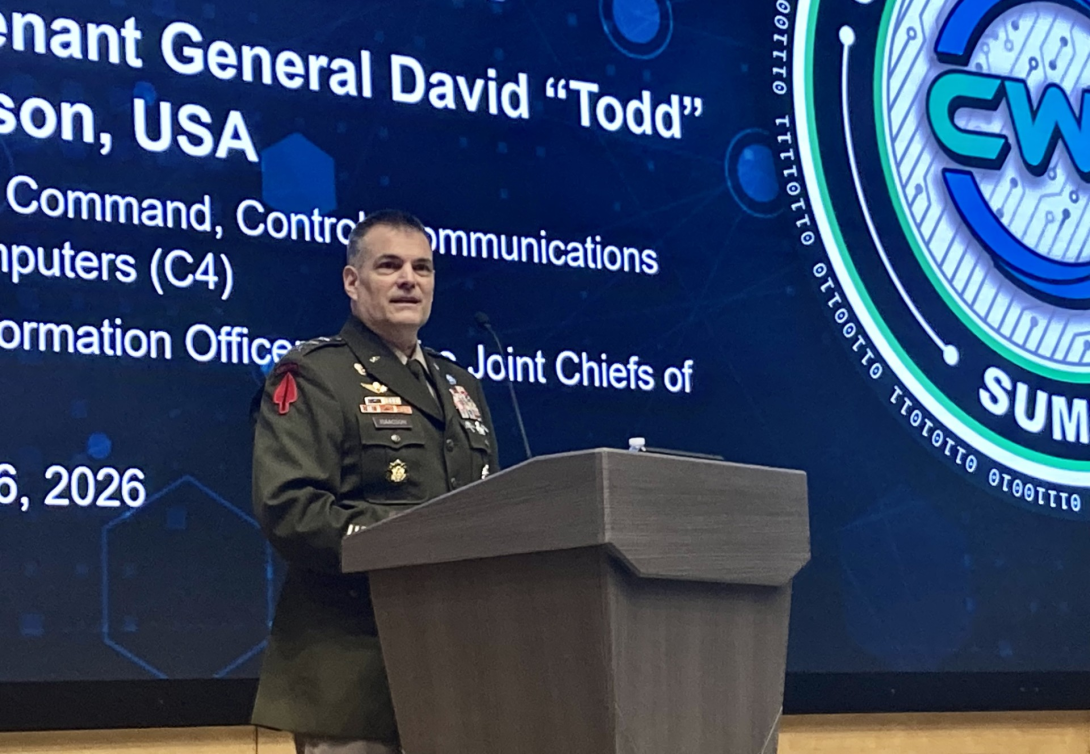
As adversaries increase their cyber capabilities, the U.S. military is demanding more of its cyber workforce.
“Driving risk in cyberspace to zero is a failed strategy,” stated Lt. Gen. David Isaacson, director for command, control, communications and computers (C4)/cyber, and chief information officer (CIO) at J-6, Joint Chiefs of Staff.
“We do not live in a world where we have no risk,” he said at the Cyber Workforce Summit 2.0. “There are tremendous amounts of risk that we could talk about in cyberspace, but attacking any single one of them in a silo … will simply be a failed strategy to believe that if I just solve this one problem, all of my risks will drive to zero.”
Today, more competition exists in the cyber domain than any other warfighting domain, Isaacson explained. He went on to list the current demands of the cyber workforce to meet today’s most complex challenges.
- Agility and flexibility
There’s no guarantee that today’s capabilities will meet the needs of the future fight. Therefore, Isaacson said, ability to adjust is critical.
“The adversary will get a vote, competition will unfold and the cyber key terrain will continue to shift, and all of that demands agility,” he stated.
- Innovation
Warfighters must be put first, Isaacson said. “We have to innovate and think on behalf of the warfighter, understanding the concept and operation and outcomes they are pursuing and then innovate to the idea that I can help you achieve that with the following effects.”
- Educating leadership
The last 15 years of cyber education have been pivotal in today’s landscape.
“The more we educate the enterprise to understand the capabilities, the effects and outcomes and the risks, the better we are communicating as a workforce to our leaders to make wise decisions,” he said.
- Technical mastery
As adversaries evolve their skill sets and expertise, U.S. cyber force operators should be masters of the domain, Isaacson stressed.
The CIO concluded his address by emphasizing the importance of connecting ideas to the warfighters.
A communicator by trade, Isaacson noted the value of effective communication.
“I have tried to not only operate in tactical formations, but to be able to communicate effectively to the commander the outcomes, the effects that they are trying to achieve and how I can help them perform them,” he said. “What I don’t do is get into terms of reference that are incredibly technical and talk about lightning bolts and these kinds of graphics and stuff. I talk in warfighter terms because that’s how a warfighter thinks, and I believe warfighters appreciate folks who can meet them in terms of references that are familiar and understandable.”
The Cyber Workforce Summit 2.0 is hosted by AFCEA International in cooperation with the DOW CIO and the National Defense University. SIGNAL Media is the official media of AFCEA International.


Comments