
The 'Delicate Dance' of Balancing Speed, Scale and Risk in Agentic AI
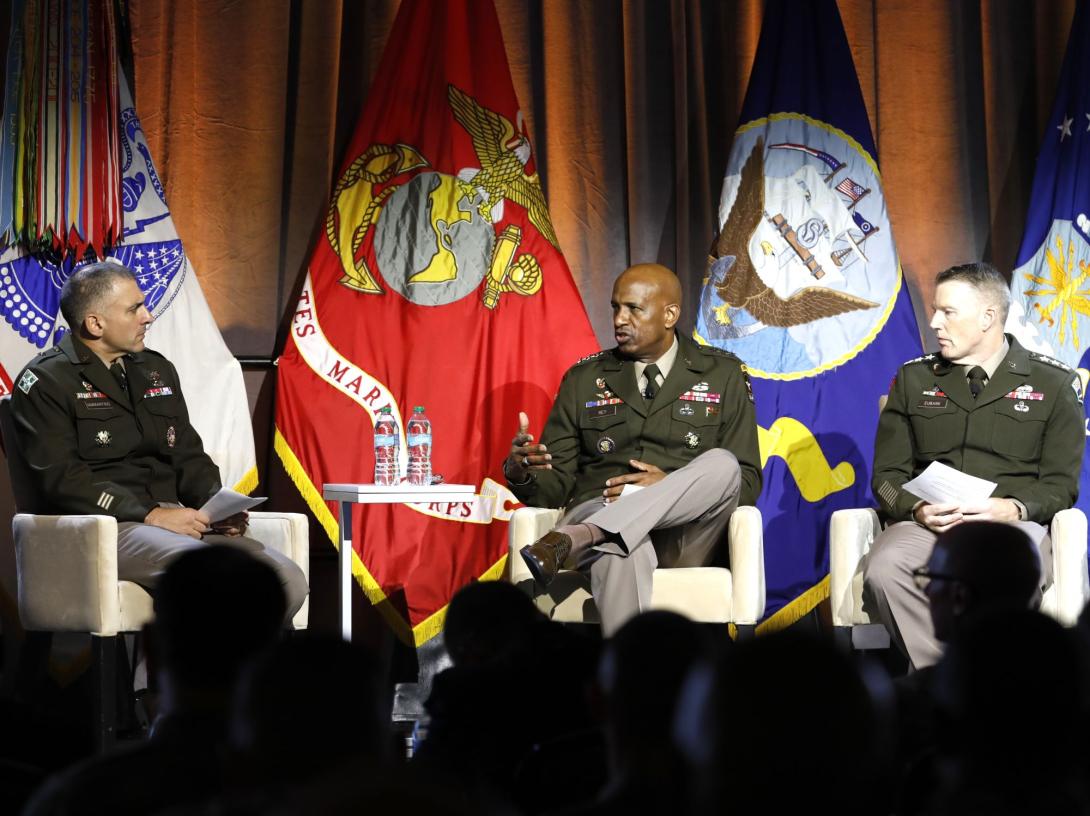
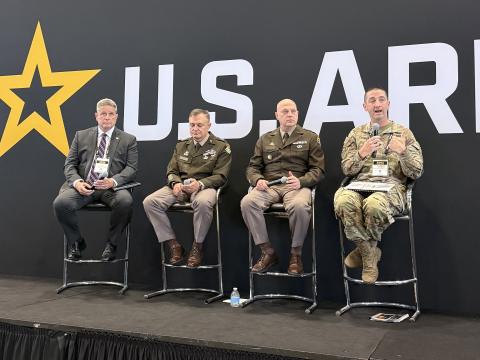
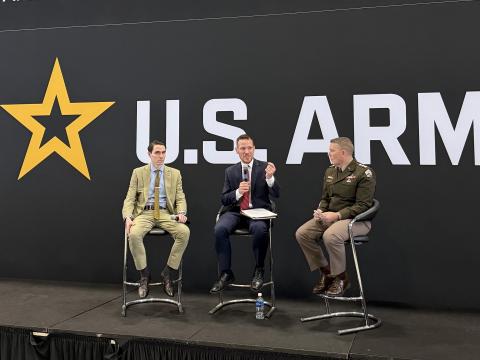
During a panel at TechNet Augusta 2026, U.S. Army Cyber Command (ARCYBER) leaders announced they have established a new special unit called Task Force Lexington to confront the innate battle between speed, scale and risk. The group focuses on every facet of AI, from simple staff processes to agentics working on getting after hunting the Department of War Information Network, described Lt. Gen. Christopher Eubank, commanding general of ARCYBER, during the panel.
“I have a soon-to-be O-6 who leads a band of about 10 high-speed folks inside of ARCYBER that do all things AI for the command, so that group is charged with developing the agent, developing the harnesses and training the agents,” Eubank said. “Every agent we create is trained in a work role inside of the cyber force, so there’s no rogue things going on here.”
The U.S. Army has four main pillars when it comes to agentic artificial intelligence (AI): speed, scale, innovation and integration. The branch integrates agentic AI “pretty well,” and with the help of industry, they innovate with agentic AI every day; however, the branch encounters challenges concerning speed and scale due to the presence of risk, said Eubank. These problems are what officials want Task Force Lexington to help solve.
Eubank further explained that Task Force Lexington members have created a plethora of different work roles for agentic AI, such as developing, data engineering, host analyzing and exploitation analyzing. The special unit is also responsible for training the agentic AI to fit its assigned role. The training will have the same standards as the training that humans receive in this space, Eubank ensured.
During the panel, he illustrated what the process looks like. “Agents have a work role, their job qualification record. They get trained,” Eubank said. “They get set on a mission with a human watching. They deliver results. When they make a mistake, they get taught the way to do it, and it goes back in and retrains itself.”
Eubank and other Army superiors are working together to determine which risks humans should address and which risks the agentic AI should address. “How do you balance that? So, each and every day, we sit down as a group, and we figure out the guardrails we’re going to apply to these agents. We ask ourselves: Is it a risk that a human should be answering, or is it a risk that an agent could answer? Right now, today, humans are all responsible for risk. We have not turned any agents loose to assume risk on their own behalf, but this is a monumental point as we operate, secure, defend and attack the network.”
ARCYBER now also has an agentic red team and 17 agentic mission elements, along with cyber protection team mission elements, the commanding general of ARCYBER added.
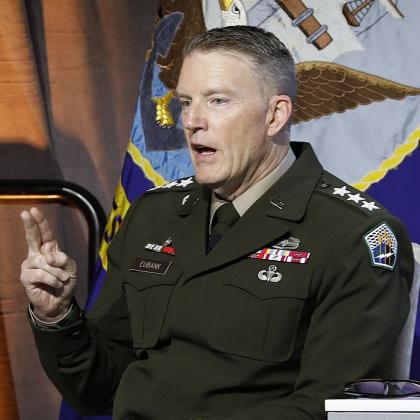
“It’s a delicate dance in balancing the risk to what these agents can do, because they move a lot faster than humans move,” Eubank said. “So, each and every day, humans are in and on the loop as we operate, defend and attack.”
In terms of humans and becoming familiar with agentic AI, ARCYBER leaders are taking actions to guarantee the workforce understands how to manage, control and harness the AI and knows agentic AI will not replace humans. For example, ARCYBER will host a “rigorous” training event next month. While at the event, the ARCYBER workforce will learn fundamental AI and what it can and cannot do for them.
Lt. Gen. Jeth Rey, deputy chief of staff of the G-6, was also on the panel, and he emphasized the importance of informing soldiers and cyber personnel about agentic AI, as it can play a role in winning on the battlefield.
It’s a delicate dance in balancing the risk to what these agents can do, because they move a lot faster than humans move.
“We need to get our workforce in the mindset that we’re headed in a different direction,” Rey said. “We’re not in a network-centric environment anymore. We’re in a full-fledged data-centric environment going forward, and that is all about how we aggregate data in order for it to render the commander the right information in order to make the decision that he or she needs to make. So, the education of the workforce is going to be one of the biggest things we have to get after right now.”
To attain agentic AI-related goals, the Army needs help. Rey noted that the branch cannot comprehend how to use and possess advanced agentic AI tools on its own, and he stressed the crucial role that everyone plays in this race.
“We can’t do this alone,” Rey said. “There’s no way. We need industry, and we need academia. We need everyone to come on board with us. We have to adopt all the best practices that are happening out there.”
“[With] mostly industry partners listening, this is not just AI for AI’s sake,” Rey added. “We need help. We need better tools every single day and every single week so we can get the competitive advantage over our adversaries. So, this is not just for AI’s sake. It’s for a specific mission. It’s for mission outcomes. It’s for human accountability. So, we definitely need your help in getting those tools into our hands so our operators can actually have something that they can use.”
TechNet Augusta is organized by AFCEA International with help from the U.S. Army Cyber Center of Excellence. SIGNAL Media is the official media of AFCEA International.
Comment
Great insights by the…
Great insights by the leadership. As Lt Gen. Eubank said, “It’s a delicate dance in balancing the risk to what these agents can do, because they move a lot faster than humans move. So, each and every day, humans are in and on the loop as we operate, defend and attack.” - One phrase I add to it is: "AI by the people for the people".
Comments