
Gen. Brunson Raises Urgency for AI Technology Development in the Indo-Pacific
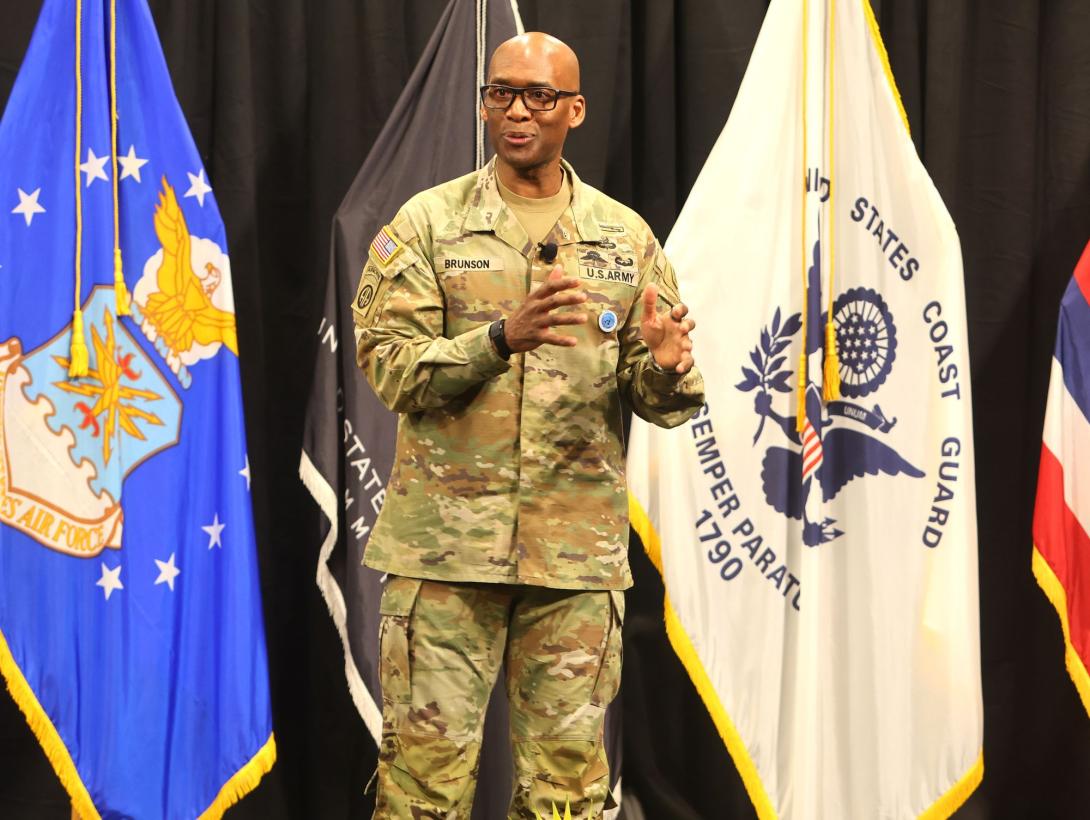
As tensions in the Indo-Pacific rise, the United States is increasingly relying on its strong allyship and its position on the Korean Peninsula. Time is of the essence when it comes to providing artificial intelligence (AI) technology into the hands of warfighters. Adversaries practice electronic attacks daily, attempting to blind servers, sensors,and networks. With AI models only being as lethal as the data they are fed, systems for pure U.S. enclaves are no longer an option. Partnership is a crucial approach, said Gen. Xavier T. Brunson, commander of U.S. Forces Korea (USFK).
“Time in modern warfare is critical," Brunson said in a keynote address at this year’s AFCEA TechNet Indo-Pacific in Honolulu. "Time is the difference truthfully between living and dying. Our adversaries understand this.
"They are actively betting that our bureaucratic policies, our classification silos and our proprietary architectures will stay slower than their ability to impact our formations,” said Brunson, who is also commander of United Nations Command and Combined Forces Command.
From the front lines, the USFK is urging rapid industry development. Coupled with a one-of-a-kind and long-time allyship with Korea and Japan, the USFK benefits from location and is looking for that same advantage in AI technology.
The USFK is seeking better decisions, faster compression of a kill chain from minutes to seconds, and multiple anchor points across domains, services and allies. However, the demand for a quick turnaround in capabilities does not equate to replacing humans.
“We must demand to have humans in the loop. We must not use [super intelligence] to replace the commander’s judgement,” explained Brunson.
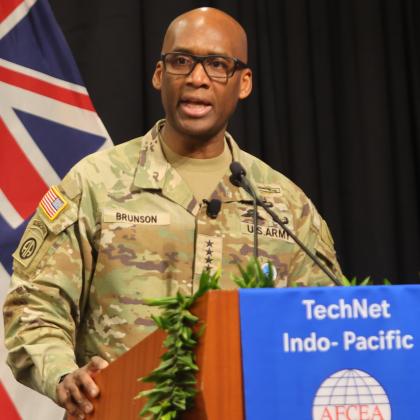
Time is the difference truthfully between living and dying. Our adversaries understand this.
He also gave insight into what the force is preparing for and, in turn, looking for. The USFK is not worried about oversharing data with allies, but complementary data curbing and enabling adversary attacks. Networks are expected to be fully attacked, and operations disaggregated and distributed. The command is looking for solutions that fit this future, shifting from network-centric to data-centric security.
“When our adversaries look across the water, I don’t want them to see seams. I don’t want them to see bureaucratic hesitation. I don’t want them to see disconnected networks. I want them to look at our combined formations. I want them to see our seamless integration,” Brunson concluded.
TechNet Indo-Pacific is co-sponsored by AFCEA International and AFCEA Hawaii. SIGNAL Media is the official media of AFCEA International.
Comments