
Government on the Network
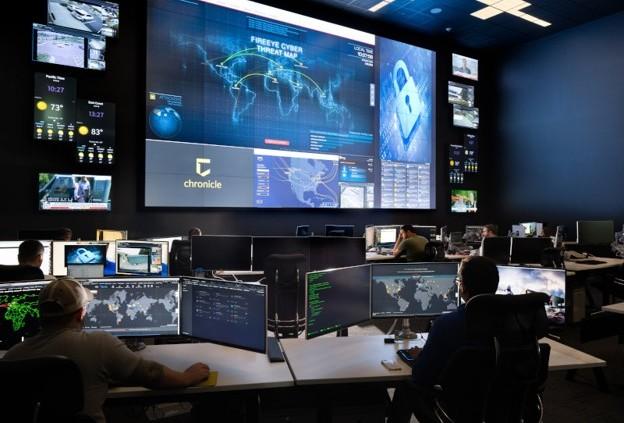
Like many other technology verticals, the realm of government solutions has its own set of segments. Hospitality, for example, is an umbrella term for hotels (from budget to luxury), casinos and sportsbooks, bars and restaurants, entertainment concessions and more. Similarly, government can include Defense Department meeting rooms, civilian agency headquarters, command-and-control centers, courtrooms and so on.
They all have one thing in common, however: the bulk of their technological solutions are moving to the network.
“When it comes to AV-over-IP deployments for the federal government—especially in the realms of defense, intelligence or energy—that’s when specifiers get a bit nervous,” said Joe Schauder, senior director of Crestron’s federal government solutions. “We’re working against certain preconceived notions that top-secret video communications are getting blasted across the network.”
Even in the second half of the 2020s, Schauder finds himself educating decision-makers about the security compliance that’s met by a military-grade switch.
“I understand the concerns, of course,” Schauder said. “It’s my job to help them understand that things like AV-over-IP solutions are just as secure and compliant as previous technologies. It’s just that the technology driving things is now better and faster—with a network switch.”
Schauder noted that Crestron has proven examples of functionality diagrams (and design ideas you can find here). “We’re moving into a world where you can design these systems using a web browser instead of proprietary software.”
Pixel Perfect Processing
“When we’re talking about things like command-and-control centers or intelligence meeting rooms, there’s another aspect of solutions such as Crestron DM NVX® AV-over-IP. A DM NVX system incorporates what we call ‘pixel perfect processing’ technology, which provides flawless video transport in all applications,” Schauder said.
Depending on the operating mode, the DM‑NVX‑360, for example, can encode or decode a video signal to achieve imperceptible end-to-end latency of less than one frame. “That’s certainly helping us alleviate concerns about this evolving technology,” he added.
As that technology evolves, however, so does the process for ensuring compliance. “For many years, there was an approved product list managed by DISA, the Defense Information Systems Agency,” Schauder said. “That’s been replaced by the vendor STIG program, the Security Technical Implementation Guide.” The difference? “Now that the government knows that a Crestron DM NVX encoder/decoder out of the box is secure, when it’s set up according to those guidelines, that device becomes extraordinarily secure."
“The certifications we meet demonstrate that Crestron technology has already been tested and is fully compliant with security regulations,” he added.
Into the Courts
The transition to AV-over-IP solutions is also occurring in the federal court system. “There hasn’t been as much concern over security in this segment,” said Chris Grafton, a government account manager with Crestron. “However, there has been a shift lately; there’s definitely going to be a push for TAA-compliant solutions this year,” he added. (For the uninitiated, TAA refers to the Trade Agreements Act, which states that products must be manufactured or “substantially transformed” in the United States or a TAA-designated country.)
“The bigger concern is budgets,” Grafton said.
To stay ahead of shrinking resources, the federal court system has created CJECT, which stands for the Center for Judicial Excellence in Courtroom Technology, an internal U.S. federal judiciary shared services group. “There are more than 90 districts, and they have the budgets to upgrade one or two of those in each district every year.” Grafton likened them to an elite military unit. “They’re like the Navy SEALs of courtroom tech,” he said.
One of the key members of that team is Justin Beardsley, a Crestron Masters certified programmer.
The Need for Virtual Hearings
Beardsley started his career as a courtroom technology specialist for the U.S. District Court for the District of Connecticut. Like so many other things, the pandemic changed the technology needs of the courtroom—and technology supplied solutions that remain. As we noted on the Crestron blog:
Virtual court appearances were a completely new wrinkle for the federal courts, he noted. “We had never done full hearings with all parties on video. In fact, federal law needed to be temporarily amended to permit this.” Beardsley needed to figure out, quickly, how to streamline videoconferencing for a broader set of users, and his Crestron training helped give him the knowledge to tackle the project.
The other concern that’s top of mind for Beardsley is ease of use. “The question I’m always asking myself is: ‘How do I make this system so easy to use that it’s intuitive to our customers?’ We never want a hearing interrupted by technology, so it should be easy to use and reliable.”
Content Sharing and Support
While the post-COVID courtroom is much less reliant on virtual appearances, the need for reliable content-sharing remains.
“Crestron AirMedia presentation and conferencing technology has been in high demand in both the conference space and the courtroom, Grafton said. “The technology makes it very easy for an attorney to walk into court, plug in one of our adapters and immediately begin sharing content on a display.”
From AV-over-IP solutions in the Pentagon to "bring your own device" technology in court, Crestron has the ability to provide solutions for nearly every aspect of technology that falls under the heading of government solutions. Crestron is known for its durable and reliable hardware and software, but there’s another big differentiator here: support.
“Any manufacturer that supplies the government with technology needs a decent support system,” Grafton said. “But to be honest, I’ve had customers refer to our support staff as ‘rock stars.’
“And that’s a big reason these specifiers keep coming back to Crestron.”
Find more info on Crestron Government Solutions here.




Comments