
SSC International Affairs Chief Talks Allies for Developing Space Force

Space Systems Command International Affairs (SSCIA) is embracing its allies and doing so by design, said Zayd Al-Marayati, chief of the foreign military sales (FMS) division for the SSCIA.
The organization’s mission is to support capabilities that meet national security objectives through space security, in hopes of leading security cooperation in space capability development.
The SSC established its FMS and IA department in 2021, coinciding with the SSC's establishment as an official U.S. Space Force. Earlier this year, Al-Marayati described FMS, in a report for SSC News, as a key tool for achieving U.S. policy goals through the sale of defense articles, services and training with partner nations.
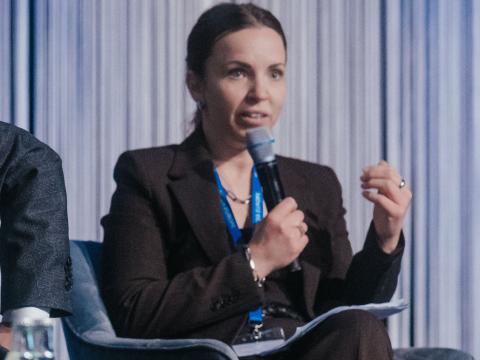
“The U.S. government pools resources from allies, and in turn, they receive capability. That is the heritage of most of the international affairs of the space enterprise in the U.S. military,” Al-Marayati explained during Space Industry Days 2026 in Los Angeles. In the same report written by Al-Marayati for SSC News, he vouched for FMS effectiveness in strengthening international security and stability by empowering allied partners through capability development and support.
The SSCIA boasted several accomplishments, mainly focusing on capability expansion for allies, which includes more than 35 partner nations. One of them included the development and support of establishing Poland’s first space operations system.
“We align closely with the secretary of war’s priorities. Centered around delivery and capability of the warfighter,” Al-Marayati said. The National Security Strategy (NSS), an executive report in 2025, is traditionally translated by the Department of War (DOW) through implementation. The NSS lists Austria, Hungary, Italy and Poland as countries the United States should work with more.
“One of our biggest portfolios right now is commercial SATCOM [satellite communications], with whom we work through Cisco, to deliver proliferated LEO [low-Earth orbit] capabilities to partner with a heavy footprint in Eastern Europe,” Al-Marayati stated.
Proliferated LEO systems are low-orbit satellite communications systems, meaning they orbit significantly closer to Earth than other satellites. These satellites communicate through voice, data and internet signals between ground stations or antennas. Cisco is a top provider in information technology and networking, partnering with the SSC on satellite ground communications operations.

Comments