
Why Conduit Capacity Matters in Defense Network Modernization
Government and military leaders are under growing pressure to build communications infrastructure that is resilient, secure and scalable. As advanced surveillance and other data-intensive technologies become increasingly important to mission execution, conduit strategy can no longer be treated as a second thought. It is a critical consideration in how effectively an installation can support modernization, protect project performance and adapt to future compliance with the latest government regulations.
The challenge is not simply how to install more fiber. It is how to create and preserve pathway capacity that supports long-term operational readiness without unnecessarily expanding physical infrastructure.
Many government and military installations rely on conduit systems designed before today’s bandwidth requirements were anticipated. As new cables are added, pathways become increasingly congested, potentially limiting an installation's ability to deploy future technologies. Constructing additional conduits may be possible, but trenching, boring, permitting and navigating secure or operationally sensitive environments can increase cost, complexity and project timelines.
Here is an example to help us think through why your conduit's capacity, serviceability and scalability matter most.
The Project: A recent fiber redundancy project at a strategic military installation demonstrated the value of approaching conduit capacity differently. The installation needed redundant fiber pathways to reduce the risk of a single point of failure and strengthen access to high-bandwidth and low-latency connectivity. The time-sensitive project required three high-density fiber cables to cross an underground pathway nearly 4,000 feet long and 150 feet deep.
The Challenge: The distance and depth created significant installation risks. Long pulls, heavy cables, friction and twisting can generate excessive tension, potentially damaging fiber and compromising long-term network performance. The installation, therefore, required a solution that could protect the cables, manage pulling tension and expedite deployment without sacrificing reliability.
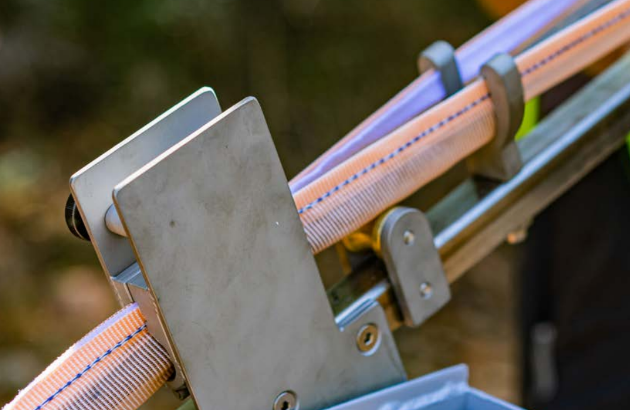
The Solution: Following an evaluation of the project requirements, MaxCell recommended MaxWrap, an outside plant fabric mesh solution designed to encompass and protect the cable as it is installed. MaxWrap takes on much of the pulling load, reducing tension placed directly on the cable and supporting longer, more difficult installations. It also provides a single-step pathway solution that can eliminate the need to install new ducts in certain overbuild applications.
The Result: Although the installation was expected to take three days, all three cables were installed in less than five hours. Tension on each cable remained below 150 pounds, and post-installation testing showed results comparable to those recorded when the cables arrived from the manufacturer. The successful deployment led to MaxWrap being specified for additional government and military projects, including planned installations spanning up to 6,000 feet.
The broader lesson is that conduit should be viewed as a strategic infrastructure asset. Every pathway decision made today can either preserve or restrict an organization’s ability to support future mission requirements.
With more than 25 years of network construction expertise, MaxCell is a leading brand offering a portfolio of fabric innerduct solutions designed to maximize conduit capacity, organize and protect critical cabling, and reserve space for network growth. MaxCell’s solutions have been deployed in more than 200 government and military installations worldwide, from high-security facilities to remote and demanding environments.
Whether through site surveys, project evaluations or technical consultations, MaxCell works closely with customers to assess conditions and help them find the best path forward.
To further strengthen project planning, MaxCell’s specialized Fill-Ratio tool, available here, enables customers to accurately calculate maximum allowable conduit fill when using MaxCell’s solutions.
The communications requirements of tomorrow will continue to evolve. Government and military organizations may not be able to predict every future application, but they can ensure their physical infrastructure is prepared to accommodate it. By optimizing existing conduit and preserving capacity during today’s deployments, agencies can create a more resilient, adaptable and “mission-ready” foundation for the future.

Comments