
3D Printing Opens the Door for Rapid Capability Delivery
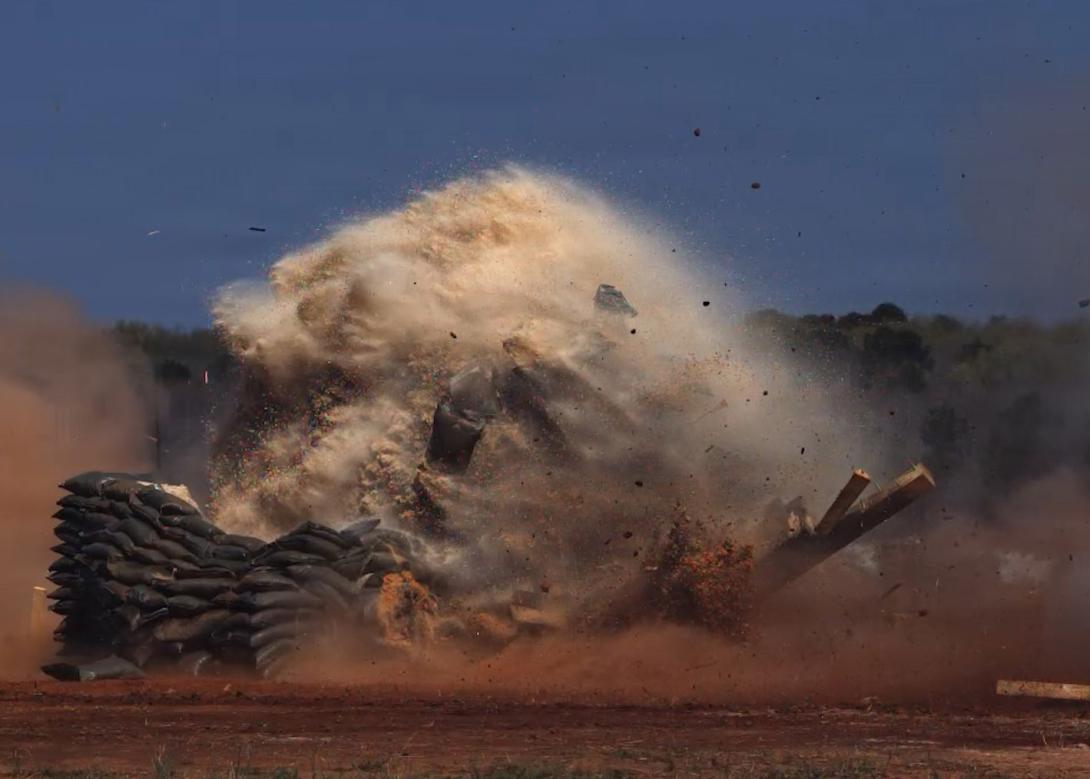
The recent creation of the Bunker Rupture and Kinetic Explosive Round (BRAKER) signifies the rare yet maturing relationship between 3D printing and the military.
U.S. Army officials are leveraging the technology in certain areas of their branch to satisfy a critical need: eliminating the gap between innovation and impact by quickly distributing new technology to warfighters. BRAKER is a prime example of where 3D printing can assist in achieving this goal.
BRAKER is a brand-new, lightweight and high-blast-payload capability designed to accompany small, unmanned aircraft systems (SUAS) or other unmanned aircraft systems (UAS) during missions in which the goal is to neutralize threats. More specifically, operators can launch BRAKER from these types of drones primarily at structures to cause the collapse of earth and timber bunkers.
The tool also has a high blast overpressure explosive capability, which crews can use to demolish hardened buildings and enclosed spaces, such as tunnels, per Daniel Suarez, senior research engineer at the Warheads & Lethal Mechanisms Technology Division at the U.S. Army Combat Capabilities Development Command Armaments Center (DEVCOM Armaments Center), which is located at the Picatinny Arsenal in New Jersey.
The high-blast overpressure explosive capability also allows it to solely address the target and prevent it from injuring other people or destroying other infrastructure, Suarez added. “It could also be effective when you want some lethality, but [when] you don’t necessarily want collateral damage,” Suarez said during an interview with SIGNAL Media. “It’s only a blast warhead; it produces high blast overpressure, but it doesn’t produce fragmentation. So, if you want to have effects in a very small area but not far out, then it’s effective in those circumstances.”
Due to its novelty, BRAKER is still in the testing stage of development, which has been highlighted by an effective recent live-fire demonstration at Redstone Arsenal in Alabama. At the event, Army Infantry Drone Operators flew the BRAKER prototype into a sample building and detonated it. The blast completely destroyed the sample building, accomplishing the goal of the mission. BRAKER’s ability to put its capabilities into practice through an effective showing, along with its several benefits and potential, has led to Army crews receiving a plethora of positive responses regarding the tool, according to Suarez and Paul Redner, chief of the Warheads & Lethal Mechanisms Technology Division at the DEVCOM Armaments Center.
“The feedback was very good, given the amount of output from a small warhead we were able to get due to the novel energetics that we developed here at the DEVCOM Armaments Center,” Suarez said. “It was certainly of interest. People like to see when there’s certainly no question whether or not a target is defeated, so I think people like that we were able to deliver that.”
“It was definitely highly successful,” Redner said. “We were tasked to provide this in a very short timeframe, and it did exactly what it was supposed to do.”
The short timeframe Redner mentioned was an incredibly tight schedule indeed. From product designing to prototyping to shipping out, leaders gave DEVCOM Armaments Center personnel four or five weeks to complete the entire assignment, per Suarez. The DEVCOM Armaments Center team complied with this required timeline as they went from concept to live fire in two weeks, Col. Vincent Morris, project manager, Close Combat Systems, said in a press release. To deliver the BRAKER prototype in the allotted timeframe, DEVCOM Armaments Center leaders elected to utilize 3D printing technology. This strategy was not the sole reason for the warhead’s expedited innovation process, as some components were built using other methods, but Suarez stressed that the usage of additive manufacturing played a major role in making it possible.
“That [turnaround time] kind of limits your ability on what you can do,” Suarez said. “Some of the components in the warhead were fairly complicated geometries, so it would have been very difficult and time-consuming to produce them using the typical manufacturing methods, and [it would’ve been] expensive. We were able to go from a 3D computer-aided design model to a finished part within about a day because we’re able to quickly do these iterations. We could print, fit check, ‘we got to tweak something,’ fix it and print again, so it shortens the whole cycle.”
“It’s not all 3D printing, but 3D printing is just a tool in our toolbox that enables us to go from idea to demonstration faster, which is so important in today’s environment,” Suarez added.
In addition to Army leaders seeking quick development, they also requested the creation of only a handful of BRAKER prototypes. During an interview with SIGNAL Media, Redner called BRAKER the nearly ideal scenario to employ 3D printing, citing these two elements. “This was almost the perfect situation to use 3D printing,” Redner said. “Due to the fact that it was a short timeframe but also a small number to deliver, so that complexity combined with the speed needed made it the perfect tool for this specific action.”
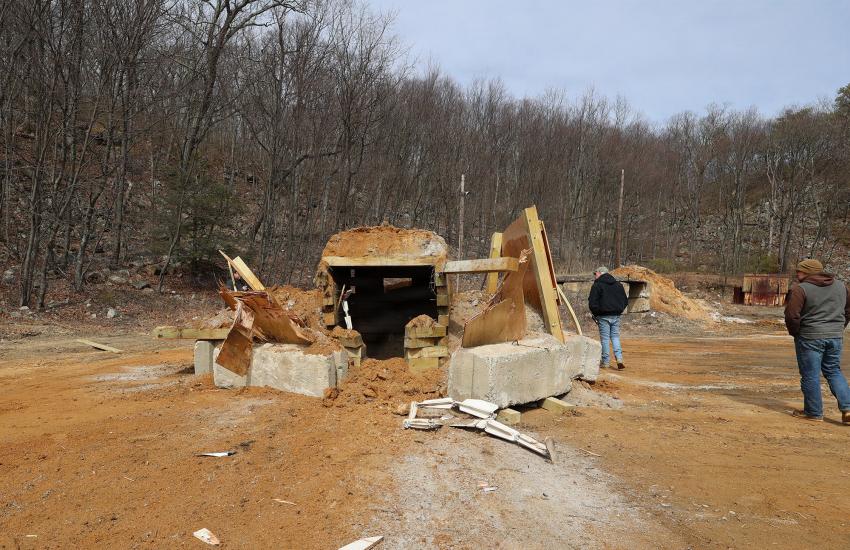
Another component of BRAKER that made it compatible with additive manufacturing is that the warhead itself is small, adding even more evidence of its nearly perfect fit.
When asked about other specific additive-manufactured capabilities, Suarez and Redner said they could not delve too much into detail. The gentlemen did say that 3D printing is the optimal option in certain instances; however, it is not always the universal solution, as additive manufacturing can be easily restricted when it comes to developing capabilities for military use. Redner and Suarez warned of the technology’s limitations and suggested that it has room for improvement.
“My personal philosophical standpoint is that when you have more advanced geometries to consider or when you have smaller batches or amounts to consider, that’s when it really becomes something that is a route to consider,” Redner said. “[When] you start talking about larger items or ones where you need to produce a lot of them, I don’t think we’re there yet. So really, [3D printing] is good for niche-type stuff. Again, when you’re looking at some more advanced geometries and even some materials, and that’s about it.”
“I don’t know if it’s revolutionizing yet,” Suarez said. “I think it’s certainly another enabler that we try to take advantage of whenever possible in terms of rapid prototyping or small-scale. It may be a great enabler to quickly get new designs or iterations of designs out faster without having to go through costly tooling and facilitation using traditional methods. So, I don’t think we’re there yet where it’s revolutionizing, but it’s certainly been helpful from our perspective to get things done quicker.”
3D-printed-based technologies must adhere to similar safety standards and undergo similar safety inspections as technologies built via other methods. The main difference between the two is that 3D-printed materials are sometimes not as strong, so these types of tools need to endure thorough testing to ensure that they are safe to use. The examination process can ensure officials of these devices’ ability to withstand the challenging conditions of the battlefield, such as temperature variation, environmental factors, vibration and mishandling, according to Suarez. Because of this necessity, along with BRAKER’s newness, operators will continue to experiment with and evaluate the warhead to satisfy these safety requirements. These actions must happen before leaders can field the technology. Furthermore, since the aforementioned demonstration in Alabama, DEVCOM Armaments Center teams have been engaging with the user community and gathering feedback from warfighters to better understand how to upgrade the warhead. Suarez said they will continue that relationship as they conduct the testing exercises.
3D printing has come a long way since its inception in the 1980s. Over the years, operators have used additive manufacturing machines to build a variety of different products, such as robots, prosthetic limbs, custom shoes, musical instruments, etc., according to U.S. Department of Energy officials.

Comments