
African Lion 2026: A Reimagined Version
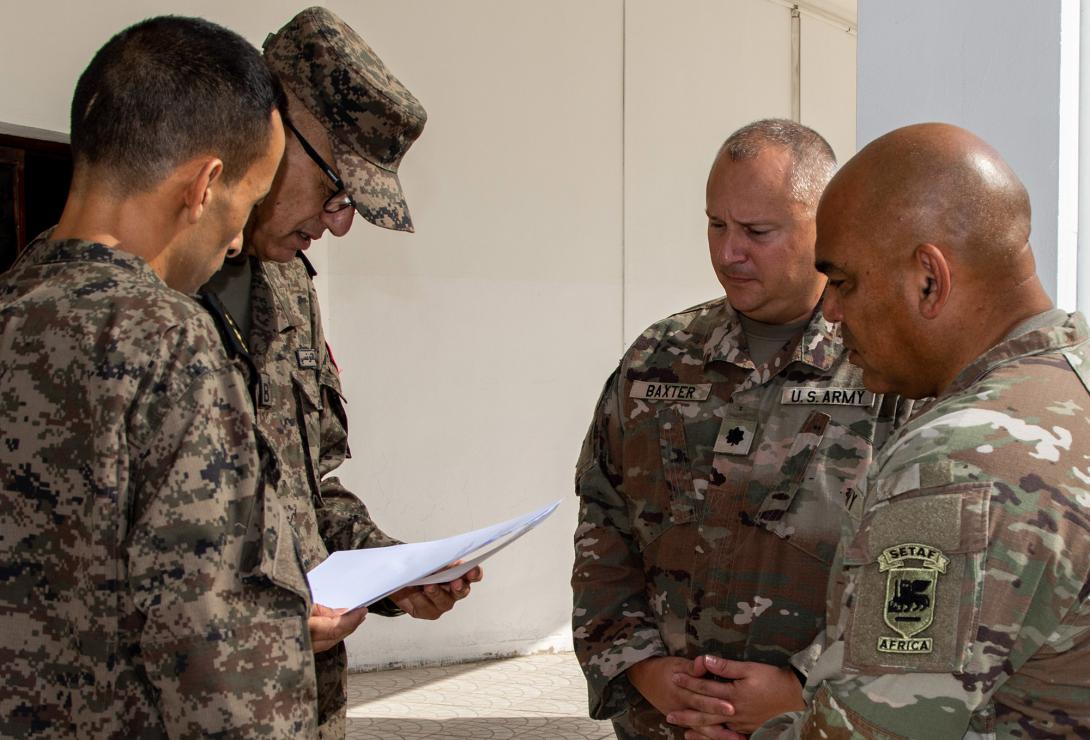
With exercise African Lion 2026 quickly approaching, soldiers are in the final phase of preparations, setting the stage for the annual event taking place later this month. And officials associated with this year’s version of the exercise expect this iteration to feature one major difference compared to past events.
African Lion 2026 crews will integrate and transition to a command field exercise rather than the traditional field training exercise that participants of past editions might be familiar with. The command field exercise will feature three different scenarios across three separate days that will allow Army personnel to put technologies—including technologies that are on the rise, new and already being used by warfighters who are taking part in African Lion 2026—in the hands of soldiers so that they can test and assess the systems’ role and effectiveness in realistic battlefield situations, according to Lt. Col. Nicholas Dubaz, division chief for the innovation division of the new Advanced Capabilities Directorate at the Army Southern European Task Force, Africa (SETAF-AF). Officials launched the Advanced Capabilities Directorate at SETAF-AF on January 5, per Staff Sgt. Raquel Birk. Furthermore, the scenarios are designed to reflect realistic threats that would occur specifically on the African continent. African Lion 2026 will take place in that region, so these events will happen in an open desert environment, providing the extreme conditions Army personnel need to thoroughly stretch out and experiment with the capabilities.
With that in mind, on the first day of the command field exercise, officials expect to use autonomous systems, particularly unmanned aircraft systems (UASs), counter UASs, sensors and AI-enabled systems to bring these capabilities together and facilitate a defense-in-depth scenario, Dubaz said. During this training situation, Army leaders will launch real-life threats against warfighters. These soldiers will have to observe and recognize warning indications emitted by sensors and subsequently activate and direct systems to respond to and defend against the threat.
African Lion 2026 crews predict that they will execute a deep attack scenario during the second day to shape the battlefield. The training events of this day will largely concentrate on loitering munitions and launched effects, the latter of which is the focal point and a critical part of this version of African Lion, per Dubaz.
“That’s kind of, I think, what we call the centerpiece of the exercise, where we’re partnered with the Army’s new Global Tactical Edge Acquisition Directorate—the arm of the assistant secretary of the Army for Acquisitions, Logistics and Technology—that’s designed to get capabilities to the edge and to the field as fast as possible,” Dubaz said during an interview with SIGNAL Media. “We’ve been partnered with them since basically the beginning of this effort to transform African Lion 2026, and they’ve been able to bring and source these launched effects systems from a variety of backgrounds that will help us really put them to the test on this more expansive range that helps push them to the limits that really we can’t in other locations.”
On the third day, crews will focus on a counterattack scenario that zeroes in on autonomous systems that can breach obstacles and initiate counterattacks. These are risky tasks, so instead of assigning these missions to soldiers, African Lion 2026 officials will work to identify and test autonomous systems that can carry them out, reducing potential casualties and minimizing cognitive burden, according to Dubaz.
These focal points taking place over the course of the three days are part of African Lion 2026’s new command field exercise approach, and this is why contributors expect this year’s version to positively differentiate itself from all other training series, along with old African Lion events.
“All these together are really what separate African Lion, not just from the past and from African Lion 2005 and going back years, but also from other exercises,” Dubaz said. “Like the Flytrap series of exercises are really good at testing UAS and counter UAS, that kind of scenario on the range, and it’s designed to really understand the capabilities of the systems and put them to the test in a force-on-force scenario.”
“What’s different about African Lion is that we’re knitting all of these things together,” Dubaz added. “UAS, counter UAS, autonomous maneuver systems, sensors, mission command systems and AI-enabled command and control launched effects all together in the same scenario, in a realistic scenario in the hands of soldiers. So, everything will be tested in the most realistic environment possible with the most practical use that we can of the systems in the exercise, like they would be in a real battlefield.”
African Lion 2026 participants have selected 43 systems they seek to test, each of which falls under six of the following capability groups: UAS, counter-UAS, autonomous maneuver systems, sensors, mission command systems and AI-enabled command and control launched effects. Despite choosing 43 different options, it is unlikely that each system will be present at the event due to changes in vendor priorities, Dubaz cautioned. Even if some systems are not accessible during the event, exercise leaders conducted the selection process in a way that essentially ensures they will still have technologies they can categorize into the six capability groups.
As for the timeline for fielding these capabilities, soldiers will be able to use some of the systems immediately after African Lion 2026, while others are likely years away from deployment to the battlefield.
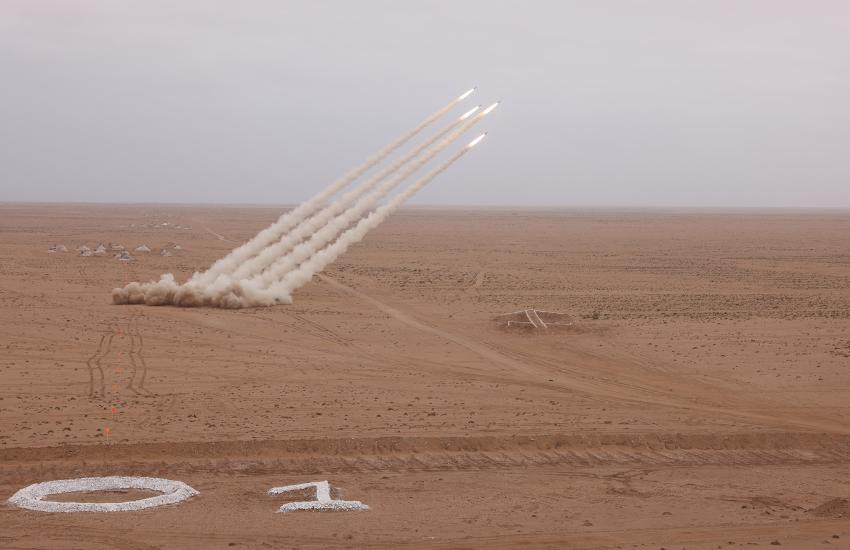
Leaders intentionally picked systems that fulfill their happy medium, or “sweet spot,” as Dubaz called it. They targeted capabilities that are considered six to eight on the technology readiness level scale. This range ensures that they are not choosing systems that are already programs of record that the Army has already decided to buy, and they are not choosing systems that are too early in the developmental process that they cannot put in the hands of soldiers in realistic scenarios.
“So, that sweet spot is really [finding systems that are] developmentally far enough along that the soldier can use it, but it’s not so far along that we already know enough about it to say we’re going to buy this. That’s the place we’re trying to exist here is to help the Army make decisions that can really help advance the mix of systems that the Army is trying to build for our future force, and also help industry take lessons learned back so that they can make their systems better and advance their prototyping and developmental processes and bring a better system for the next exercise.”
Furthermore, Army leaders will return the systems they deem promising but in need of improvements to commercial developers and suggest ways to refine the technologies, Dubaz added. “Those will almost certainly go back to industry for them to continue to prototype and advance if there are opportunities for us,” Dubaz said. “Those things that we’re really excited about, and we find really work well, there are opportunities for us to continue partnerships through some of our Army lab partners or others.”
“If we find something that we really like, then our job is to try to get it to the warfighter as fast as possible, so we’ll seek out whatever methods we can to procure and get the best technologies forward that we can. But really, here at SETAF-AF, we see ourselves as an enabler of the wider Army efforts for experimentation, testing and evaluation, and by and large, we’re going to make recommendations and help the Army know what works and what doesn’t and then work through those procurement processes as a larger force rather than SETAF-AF just as one command out here alone.”
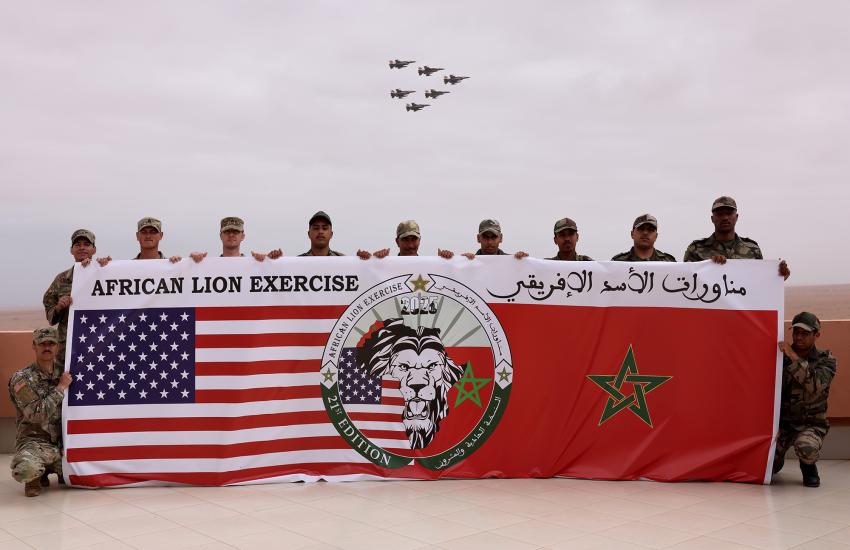
This year’s African Lion exercise will be the 21st in the series, which is considered the premier event on the African continent, according to Neil Ruggiero, media relations officer with SETAF-AF in the public affairs office, and Dubaz. Historically, these training sequences have focused on building and bolstering relationships and interoperability between the Army and its partners, while also fostering preparedness and strengthening their ability to respond to problems in the region.
African Lion 2026 will primarily take place in Morocco, Tunisia, Ghana and Senegal, and it will run from April 20 to May 9, with the command field exercise on May 2, 3 and 4. This region offers a plethora of features, including maneuver space, electromagnetic spectrum availability and an unobstructed airspace, in contrast to the congested range facilities in standard training found in the U.S. and Europe, Dubaz mentioned in an email following the interview with SIGNAL Media.
Comments