
Lethality Is Capability: Man Transportable Robotic System Integration and Education
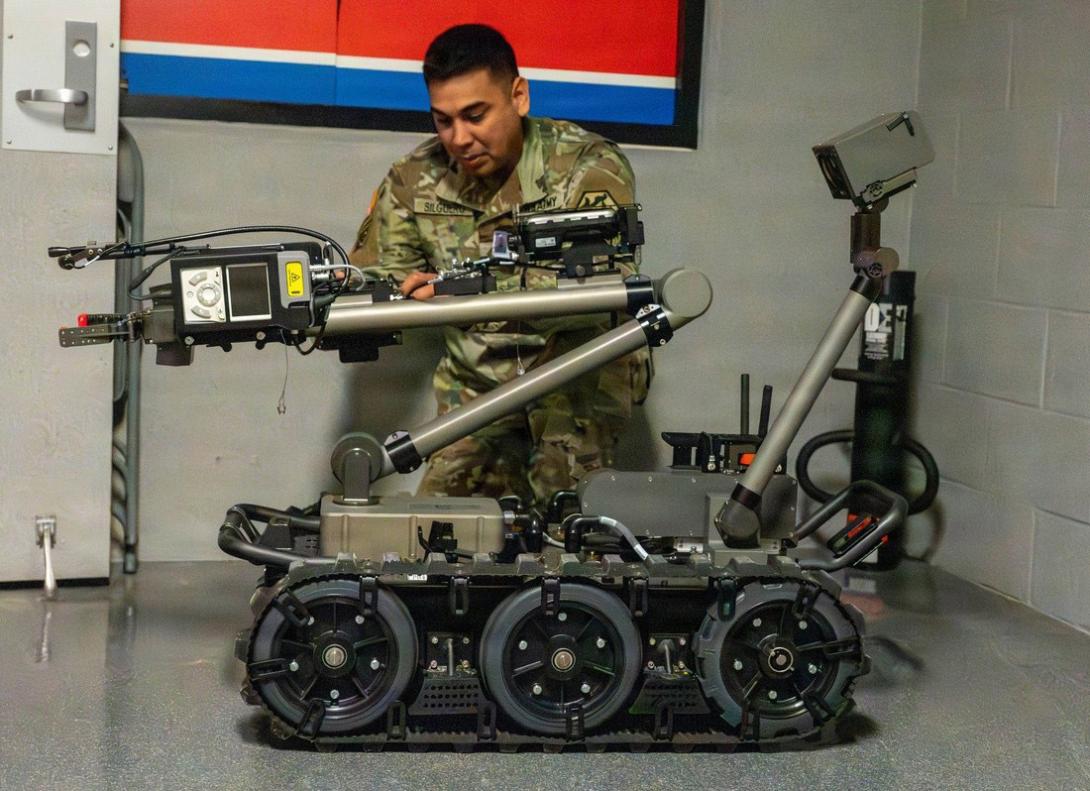

As defense officials in the U.S. Department of War (DOW) endeavor to prevent their adversaries from obtaining access to weapons of mass destruction—through examples such as Operations Epic Fury and Midnight Hammer—Army leaders are working to propel the space forward by upgrading and ensuring that warfighters are better prepared to use a capability designed to help address these threats. They aim to broaden the application of the new man transportable robotic system (MTRS) by enhancing the device and providing users with opportunities to become more familiar with the system.
Specifically, this summer, crews will conclude the third phase of their pilot program featuring the MTRS, according to Daniel Murray, director of the Maneuver Support Center of Excellence’s Chemical Defense Training Facility (CDTF) in Fort Leonard Wood, Missouri. During the final stages of phase three, MTRS operators will send the device into toxic areas to detect and identify site-specific targets, a drastic step forward compared to what they had been doing.
“We have been using [the MTRS] right now in our nontoxic training spaces as primarily a kind of ‘get ready, get set phase’ to test our ability to operate it and test the ability of our class leaders to actually manage the integration of the MTRS into their planning processes,” Murray said during an interview with SIGNAL Media. “So, come this summer, we’ll actually take some of our other units. We have three of these MTRS on site here [at Fort Leonard Wood]. We’ll keep one out in the clean area, and then we’ll move a second one inside the toxic area to actually move on to fixed-site targets where there are going to be new challenges that we’ll experience.”
Confronting these fresh obstacles will be the primary goal of the following phase, and after that, CDTF officials will institutionalize the integration of the MTRS into their senior courses and refine their lesson plans for their upper-level classes, Murray added.
The incorporation of the MTRS into the training program at the CDTF has activated a new element of mission planning and a method of information collection. These crucial, additional aspects and benefits of the courses at the CDTF guarantee that students are being introduced to authentic, realistic scenarios to better brace them for the situations that they might see on the real-life battlefield.
CDTF officials will continue to exploit and integrate the MTRS during and into training courses to pave the way for Army senior noncommissioned officers and Army captains to acquire extensive expertise in the device itself, along with applicable environments in which to employ the system. Additionally, through the training at the CDTF—which requires participants to possess advanced skill sets, per Murray—senior noncommissioned officers and captains can use the experience to observe and record the value and potential role of the MTRS in current battlefield operations. The process is common amongst the armed forces when they are experimenting with and learning about any type of remote systems, according to Murray.
The influx of information that instructors are facilitating during this next training stage is opening the door for soldiers to access more reliable information about the MTRS prior to entering the battle or challenge, which, Murray said, leads to a more prepared and lethal force.
“What that does is it makes our soldiers more lethal in their jobs, and we use that term ‘lethal’ very broadly,” Murray said. “For us, lethality is capability. So, when we increase capabilities, we help the force become more lethal, because these capabilities are able to obtain information far faster than traditional means, and when you can respond and react with information that typically would take you 24 or 48 hours to collect, and you can collect that, let’s say, in under two or three hours, decisions can be made quicker by maneuver commanders, and their plans can be refined, which will make those maneuver forces far more lethal. So, our capability translates into lethality for the overall force.”
The MTRS is a remote-controlled robot that features camera and mobile capabilities, allowing operators to gain an in-depth look at potentially hazardous sites from afar. The device can detect and identify weapons of mass destruction materials, and in some instances, the MTRS can confront and neutralize these types of threats, according to Melissa Buckley of the Fort Leonard Wood Public Affairs Office. Once again, the robot can accomplish all these tasks while also eliminating the risk and time that come along with coordinating an in-person mission.
“What the MTRS is going to do is enable us to obtain items of intelligence value without having to send soldiers into harm’s way,” Murray said. “Sailors, airmen, marines—same thing. Whoever is using these robotic systems will have the benefit of being able to potentially assess a fixed site or an area without having to suit people up and potentially put them into an unknown level of toxicity-type environment or expose them to conventional threats.”
Murray continued by comparing the benefits of the MTRS capability and the space entirely to the advantages that the unmanned aircraft systems (UAS) field provides. “You can remotely pilot these robots, and depending on the payloads that you affix to the arms and to the actual body of the system, you can basically do your chemical, biological, radiological and nuclear (CBRN) detection from a remote location, and that information can be transmitted in real time,” Murray added. “You’re probably saving hours, if not days, because you’re not missioning a team to actually enter into that space, suiting them up and then worrying about life support for them as they go down range. You can just send a robot into that space.”
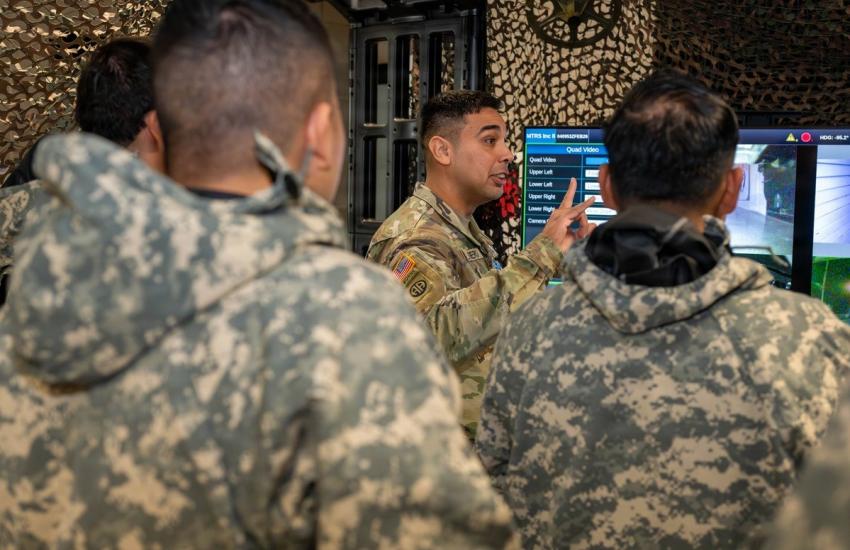
Moreover, the MTRS can also perform several levels of the battlefield forensics process. From exploitation to assessment, the robot thoroughly gets the job done, per Master Sgt. Rolando Silguero, noncommissioned officer in charge at the CDTF.
“The MTRS is a great piece of equipment to use for site exploitation because it allows us to do what we specialize in, which is site characterization and site assessment,” Silguero said. “We can actually do site characterization and site assessment while simultaneously doing site exploitation through the detection equipment that’s on [the MTRS] and the identification equipment that’s outfitted on these robots we call payloads. The payload that this robot is outfitted in could also allow us to do sensitive site characterization and sensitive site assessment while doing the site exploitation. It allows us to do all of this without putting soldiers at risk and down range.”
The MTRS features another groundbreaking piece of technology: MPU5 radios. The innovation is a type of mobile ad-hoc network that functions on its own IP address rather than FM radio frequencies, a transformation that counters electronic warfare and obstructs adversaries’ ability to interfere with and jam the systems, according to Silguero.
CDTF officials organize live training events to educate servicemen and women representing all branches of the military on how to defend against CBRN threats, offering them the opportunity to elevate and refine their skills individually and collectively, Army personnel stated. At the facility, they can also learn more about and get their hands on new capabilities, such as the MTRS. About 4,500 uniformed troops visit the CDTF annually to experience the training firsthand and grasp the fundamentals of CBRN defense, which ideally leads to success in chemical environments, per Murray.
“Our primary objective is to produce what we have called chemical veterans by putting them through skill-level-appropriate training scenarios that will develop confidence: confidence in their ability to fight, survive and win on a chemical battlefield and confidence that the equipment that they will find in their table of organization and equipment units will actually save their lives and will protect them.”
But Murray does not want to stop there. The leader of the CDTF has an even more ambitious goal for his team. “Our end state is to be the global venue of choice, not just for the U.S., but for all of our international partners who train out here to come and attain those training objectives of confidence, both at the individual skill level and in some cases, the collective skill level for the things that they are going to need to be able to do when they deploy,” Murray added.
Comments