
Army Establishes the Way Forward With NGC2 Ecosystem
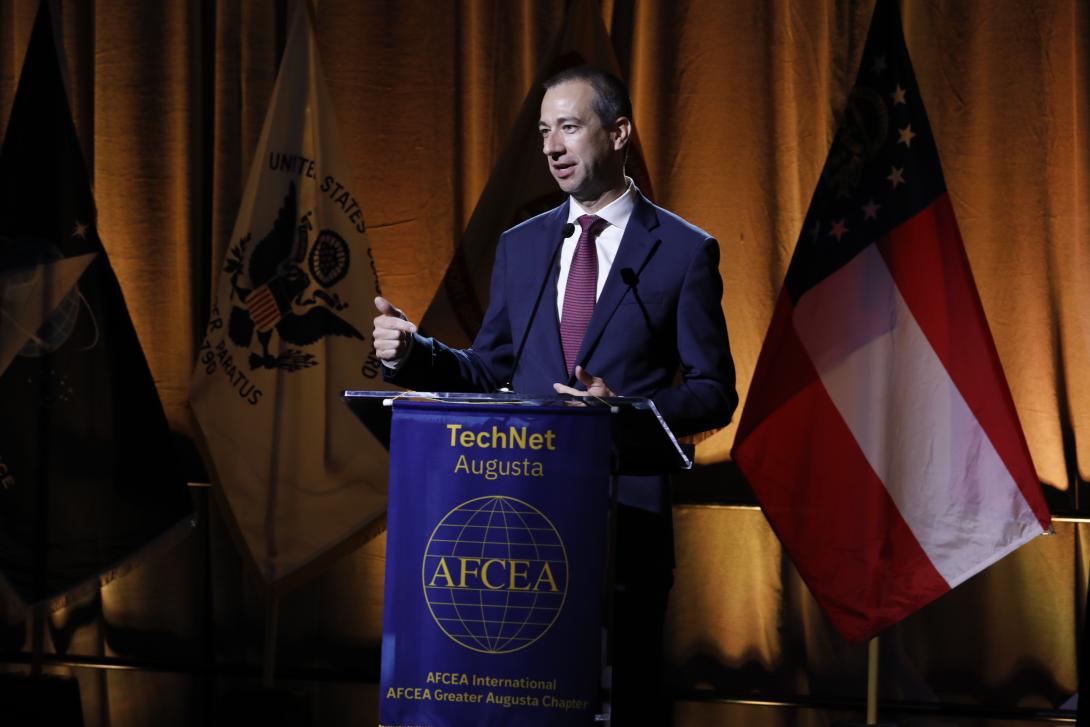
U.S. Army teams will expand the Next Generation Command and Control (NGC2) ecosystem out to I Corps later this year, Joseph Welch, portfolio acquisition executive for C2 and Counter C2 and the executive director for Transformation and Training Command, announced Tuesday during the opening keynote at TechNet Augusta 2026.. This objective is one of many that Welch revealed to the audience regarding the NGC2 project.
Welch said branch officials will manage the delivery process of modernizing their tactical hardware. They will work to accomplish this goal through C2NOW by divesting their routine tactical systems and pouring time and resources into advanced mobile data networks that are resilient, even while on the go.
Army leaders will also continue to iterate with 4th Infantry Division and 25th Infantry Division, Welch added. They will establish baselines and award contracts for the enduring capabilities they select within those divisions, while also exploring and keeping an eye out for ways to integrate the cloud-enabled element of the NGC2 ecosystem into additional formations.
These announcements come less than a month after Army leaders hosted Project Convergence Capstone 6 at Fort Irwin, California. At the event, nearly 9,000 soldiers across six brigades had the opportunity to validate NGC2, a number Welch called larger than usual, and they participated in more than 2,000 fires missions. During these exercises, the time to target was measured in minutes to seconds, and the software network-enabled connectivity remained strong despite being contested persistently. Welch applauded the ability of the team and industry at the event and in the NGC2 ecosystem.
“Our signal community, represented within the 4th Infantry Division and its capable soldiers, was able to play a big role in the resilience part of NGC2,” Welch said. “Our industry partners have given us a lot of great tools, and their ability to understand and develop proficiency in using those [tools] and overcoming technical tactical challenges out in the box was just very impressive. It gives me a lot of confidence about the path that we’re on when it comes to delivery of NGC2.”
Welch also provided major updates concerning NGC2. The ecosystem now has 45 apps, and more than 60 vendors (and counting) are working on the platform. The firm and growing partnership between the Army and private sector has been crucial to these successes surrounding NGC2, and it’s the component that delights Welch the most. “More than anything we’ve demonstrated to date, that’s really what I’m most excited about, because that’s what’s going to enable us to replace technologies that no longer work and rapidly introduce new and better solutions on a continuous path.”
On the other hand, Project Convergence Capstone 6 exposed a weakness in the NGC2 ecosystem. The weather, particularly the heat on display at Fort Irwin, uncovered vulnerabilities in its energy capabilities, so officials are exploring power solutions and analyzing other equipment integration options.
Our industry partners have given us a lot of great tools, and their ability to understand and develop proficiency in using those [tools] and overcoming technical tactical challenges out in the box was just very impressive.
Even after crews solve the power issue, there will likely always be improvements to make to the ecosystem, he added.
“We’re not done by any means, but this isn’t the kind of thing that ever really gets done,” Welch said. “It needs to work well enough to continue to scale, and that’s what we demonstrated out at Project Convergence Capstone 6.”
Maj. Gen. Ryan Janovic, commanding general of the U.S. Army Cyber Center of Excellence and Fort Gordon, opened the morning keynote and introduced Welch. Janovic, whose tenure is ending and will be replaced by Maj. Gen. Mark Miles, said branch personnel are changing the way they address tools and technologies, and he emphasized the importance of fostering the connection between the Army and industry.
“Those in the industry who have been working with us over the past year know that we are defining capabilities differently,” Janovic said. “We’re talking about them differently. We’re partnered in the construct of these things. So, what is it today? What is it this week that we want? We want to continue frank conversations about what does the warfighter need. What can you deliver? What can we work on together, both in the material side and in the education side?”
TechNet Augusta is organized by AFCEA International with help from the U.S. Army Cyber Center of Excellence. SIGNAL Media is the official media of AFCEA International.

Comments