
Army Scaling Next Generation C2 as Project Progresses to the Deployment Phase
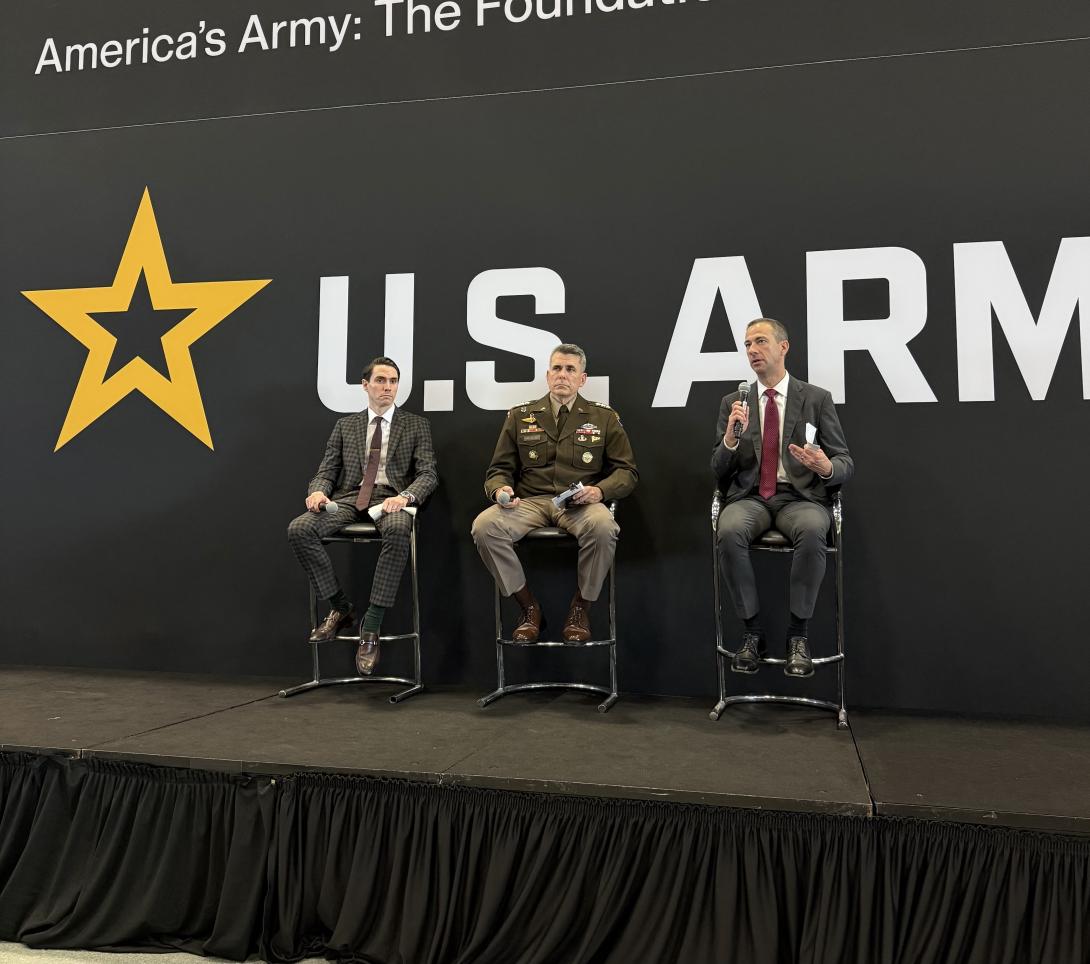
As the fiscal year flipped to the new year this month, next generation command and control (NGC2) is also transitioning to a new chapter. Army leaders announced that the branch’s effort to revolutionize command and control is now in the deployment phase. Joseph Welch, portfolio acquisition executive (PAE) for C2 and Counter C2 in the U.S. Army, described that during this phase, Army personnel will now scale NGC2 and extend the project to include additional units. Previously, only soldiers in the 4th and 25th Infantry Divisions were testing the infrastructure.
This endeavor will not happen without its challenges, Welch envisions. During the prototyping phase, which preceded this next step, NGC2 officials established a baseline set of capabilities. They filled in four architectural components necessary at different layers of the technology stack, according to the PAE for C2 and Counter C2. Welch wants the ecosystem to deliberately maintain the baseline as they start the scaling process.
“When you’ve got one or two divisions, what I’ve found is we can try out a lot of things very rapidly, and that’s great,” he said Tuesday during a brief one-on-one discussion with SIGNAL Media following a panel at the 2026 Association of the U.S. Army (AUSA) Annual Meeting and Exposition. “As we start going across wider and wider operational sets, it becomes more important that we are scaling this in a deliberate way."
Scaling something of this magnitude can create several challenges, he said.
“You’ve got more information environments that you need to integrate, whether that’s at higher classification levels or command, control, computing, communications, cyber, intelligence, surveillance, reconnaissance and targeting programs or joint and partner capability that is coordinated at the theater Army or corps level,” Welch elaborated. “It’s really building in that more robust information environment into our command and control capability that we’ve built within our division and are now extending up to the corps.”
As mentioned, the deployment phase follows the prototype and experimentation phase that took place throughout most of fiscal year 26. This time period was considerably different. As the name of the phase implies, Army crews had a wide-ranging set of capabilities that they were testing and evaluating at different exercises, and they had a very broad problem statement, which Welch called appropriate for that particular stage.
“We deliberately did not put out a reference architecture for NGC2 at the outset because we didn’t want to constrain industry and your thinking about how we are going to introduce solution sets and the capabilities that you will develop,” he said.
Welch echoed what Maj. Gen. Pat Ellis, USA, commanding general of the 4th Infantry Division and Fort Carson, said during an earlier panel on Tuesday at AUSA’s event, that the work is not finished.
“It doesn’t mean that everything’s done,” Welch said. “We still got work to do, and we’re still going to have problems to solve. We’re still going to have new things that crop up.”
Comments