
Chief Super Intelligence Officer Calls for Faster Integration of SI Capabilities
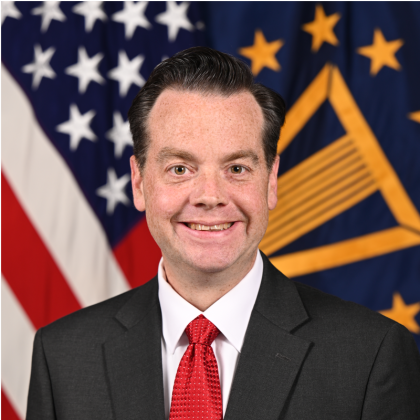
Cameron Stanley, chief super intelligence officer for the Department of War, outlined the department’s push to accelerate super intelligence (SI) integration, leverage commercial tools and remove policy barriers to maintain a strategic advantage.
“The only way to fight an agentically enabled, very nefarious threat environment is to get agents yourself,” said Stanley. “Integrate SI, use your domain expertise, use your subject matter expertise and fight fire with fire. Because the longer we wait, the more behind we're going to be.”
The Department of War announced last week the redesignation of the Chief Digital and Artificial Intelligence Office (CDAO) as the Department of War Super Intelligence Office (SIO).
“What we’re trying to do is really focus on the intent that this administration has on delivering super intelligence tools into the department at speed and at scale,” said Stanley. “By focusing attention on the actual super intelligence moniker, I think we’re doing that very effectively.”
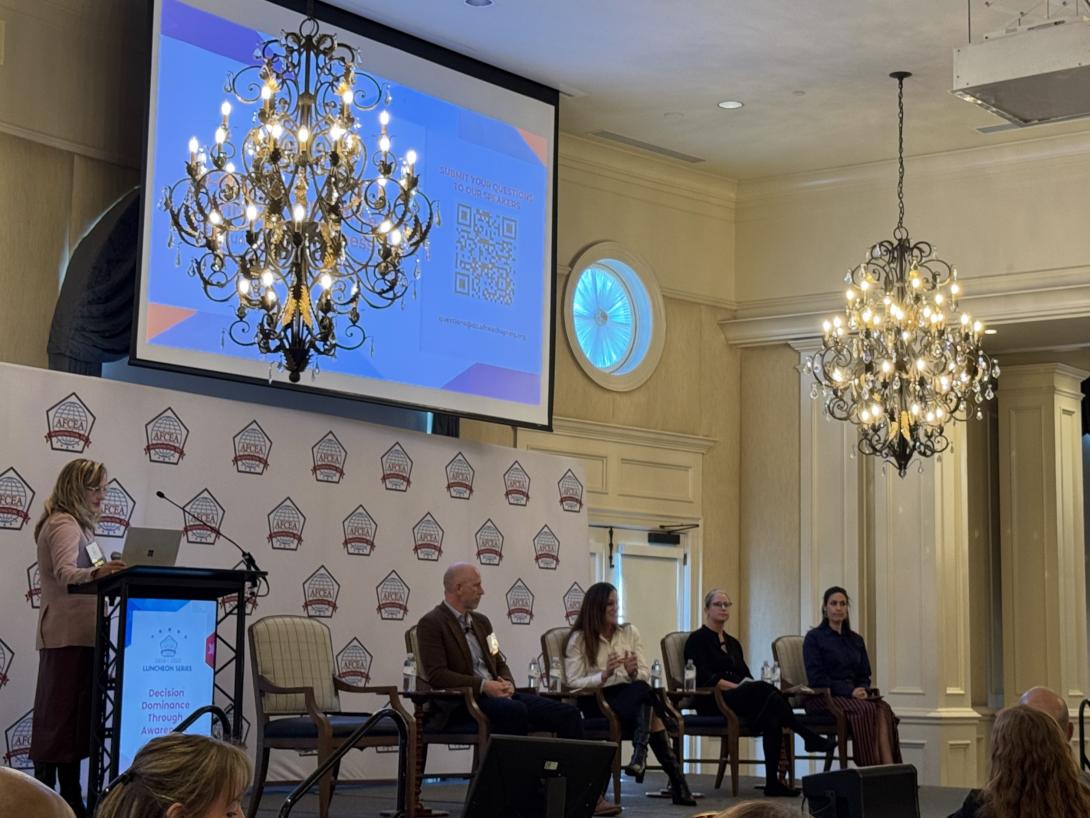
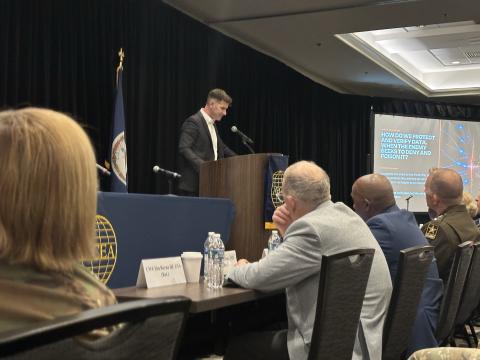
Stanley was the keynote speaker at the AFCEA DC Luncheon Series on November 19 titled “Decision Dominance Through Awareness: A Luncheon About OSINT and Strategic Intelligence.”
He reminded the chapter that since his last visit in May, the department has expanded its GenAI.mil platform, which now offers three models in IL5 (Impact Level 5), allowing personnel to work on U.S. government data at CUI (controlled unclassified information).
The department’s objective is to use SI to process large volumes of information to make better decisions more quickly.
“Why do we use analytics like super intelligence on top of data? Because usually it's too much data, and we're trying to make better decisions, or faster decisions or, ideally, better decisions faster.”
Open-source intelligence (OSINT) and commercial tools, says Stanley, are geared and tuned into “more data than we have in the department.”
“Open-source data is a treasure trove in volume and in quality, if you know how to use it, if you have the ability to parse through it, and this is where our SI tools come in.”
Stanley said commercial solutions offer access to larger datasets and processing capabilities that can help address the department’s strategic intelligence challenges.
“You have access to all the different capabilities to scale and to move and process large amounts of data without having to work in a constrained environment of government.”
However, he acknowledged that commercial solutions are not suited for every application.
“It doesn't work for everything. But when it comes to all of these big challenges that we have, open-source data solves a lot of them just inherently.”
Stanley pointed to one example of how the commercial industry has outpaced military capabilities.
“No longer do we have dominance in things like space-based intelligence, for example. No longer is MILSATCOM [Military Satellite Communications] considered to be the gold standard. It's not. The commercial industry has overtaken us, so we would be fools not to take advantage of it.”
The only way to fight an agentically enabled, very nefarious threat environment is to get agents yourself. Integrate SI, use your domain expertise, use your subject matter expertise and fight fire with fire. Because the longer we wait, the more behind we're going to be.
As the department moves toward rapid SI adoption, experts also emphasized the risks that come with accelerated experimentation without proper oversight.
“The Department of War now has 100,000 agents that have been created using GenAI.mil. They've got about 500,000 power users and approaching 2 million casual users of the technology. But this desire for rapid experimentation also comes with some risk,” said Diane Staheli, chief scientist, AI and cybersecurity at MIT Lincoln Laboratory, during a panel discussion after Stanley’s keynote.
She recalled an incident in which intelligence imagery was misinterpreted, resulting in a commercial vessel being misidentified as a nuclear submarine.
“That's a high consequence decision,” she said, emphasizing the need for “human accountability” and “checkpoints along the way.”
The push to accelerate SI adoption also reflects the need for closer collaboration between government and industry.
“We need closer partnership between the operators on a battlefield and the engineers at the companies building these capabilities,” said Sarah Pearson, director of strategic initiatives, Defense Innovation Unit.
But adopting those capabilities at scale will require changes within the department, Stanley said, pointing to culture and policy barriers for faster adoption.
“I want to identify every single policy barrier that exists that prevents us from integrating these technologies and absolutely destroy every single policy barrier that slows us down,” he said. “We need to lean forward and take risks, especially in this domain.”


Comments