
Army Goes All-Out in Pursuit of a Modular Open Systems Approach
U.S. Army officials are onboarding new service members who will become part of the engineering technical workforce helping to implement the service’s modular open systems (MOSA) strategy. Once this step is complete, crews can begin institutionalizing MOSA within the first digital engineering ecosystem prototype, per Maj. Domoniqué Hittner, an acquisition technical expert and digital engineering architect in the Office of the Assistant Secretary of the Army (Acquisition, Logistics and Technology) and the director of Army Systems Engineering and Architecture.
Hittner’s team will circulate the prototype to several portfolio acquisition executives, striving to execute feedback-gathering-related tasks, such as usability and user satisfaction studies and effectiveness and efficiency evaluations.
“They’ll be able to view and conduct those studies and bring back that data through that system in a digital way,” Hittner said during an interview with SIGNAL Media. “It’ll be an automated way of connecting that data back to our engineering technical work, so we can continue to accelerate the work and start buying down decisions at that time and reducing risk, which is great.”
Army Systems Engineering and Architecture folks are also updating their digital engineering policy, according to Hittner.
Additionally, the branch, along with industry leaders, launched the Right to Integrate (R2I) initiative earlier this year. R2I has the single purpose of “warfighter supremacy.” The hackathon, which is intertwined with their goal of accomplishing MOSA, will guarantee that offensive and defensive weapon and business systems across the Army can integrate and communicate with each other, especially with respect to data-sharing. Army officials said that R2I also intends to eliminate hindrances that exist between military systems and distribute more integrated combat capability to soldiers on the battlefield in a timelier manner.
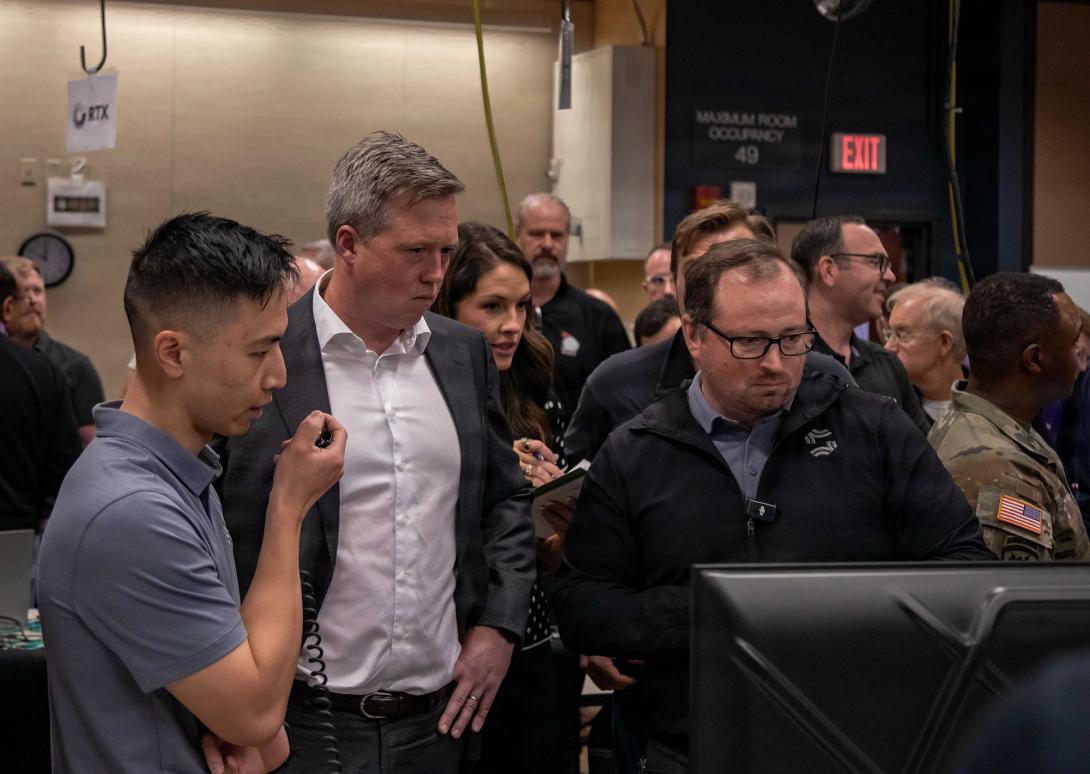
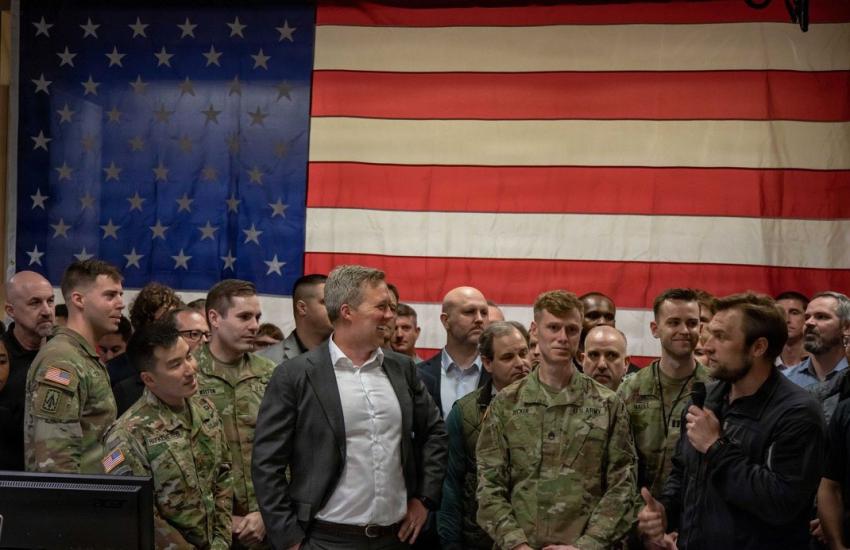
In May, Army personnel and their private sector partners held the first event associated with R2I: Operation Jailbreak, where they sought to connect systems that traditionally operate in isolation, resulting in systems that are more modular and propelling the shift toward MOSA forward.
Modular open systems are platforms that are built of individual and independent parts loosely coupled and highly cohesive, meaning that even if one component needs repairing, replacing or refining, the other components can remain intact, and the system as a whole can still be effective.
Engineers can also attach additional features and elements for augmentation, and modular systems will still operate.
For example, Hittner pointed to the modern-day smartphone. Operators can use smartphones as movie players, cameras, personal stereos and wallets, among other things, but their intended purpose is to connect people around the world. Smartphones showcase their modularity when their cameras break or speakers malfunction, yet users can still take advantage of their designated function—calling and texting. Additionally, if one specific app or part of its software needs updating, users can typically still call and text. Leaders in the defense space are extending this concept to their respective fields by seeking modular systems and thoroughly assessing these capabilities to comprehend and, ultimately, protect their intended purposes.
“[MOSA] is really looking at your hardware and software holistically and really discerning what is the true function of the phone, [and asking] how are we protecting it and how is it interacting with other things that I need to use it for,” Hittner said. “And that is ultimately the same type of thing that we’re doing here—enabling and making sure that the underlying requirements are set in place and that the underlying policies that are affecting the software upgrades within your devices are not inhibiting people from doing the things that they need to do. That way, if there’s some sort of upgrade that needs to be done or if there’s some sort of change that needs to happen, you won’t need to replace the whole thing necessarily, unless it makes sense at the time.”
Another feature that Hittner highlighted is the ability for systems to communicate with their counterparts. Rather than having to buy unique proprietary equipment to send messages, it is crucial that the Army obtains technologies that can send and receive messages effortlessly.
“Having that MOSA really enables lots and lots of agility when we’re talking about how we can expose interfaces and expose how the systems are interoperating at scale, and the efficiency of their work down to the system level, which is the level of precision and technical expertise that is necessary today in our work for lots of reasons, because of all the human-centered interactions that are happening across our work,” Hittner said. “So, it’s critical that we have that ability to evaluate what is happening down to the system level, and the only way to do that is to first have this core underpinning, which is the digital engineering ecosystem.”
The director of Army Systems Engineering and Architecture further stated that assessing systems at this intense level can also open the door for another significant benefit: the ability of personnel in the armed forces to become more familiar with and better prepare themselves to operate these kinds of systems. “The point is accessibility,” Hittner added. “The point is ensuring that we have ways to maximize the things that we do have and to discern the level of fidelity and the level of efficiency and effectiveness of our systems and our users, our soldiers, our warfighters, our sailors, our Marines, our Coast Guard, our Air Force and our coalition partners. We have to be able to use these systems in a way that’s meaningful, and the users have to feel comfortable with the level of compliance and the level of effectiveness of our systems. That usability matters.”
In addition to the flexibility and convenience that modular systems offer, Army Systems Engineering and Architecture personnel note that MOSA will boost competition, foster innovation, promote cost-cutting measures and highlight and strengthen interoperability.
Hittner wound down her exclusive interview with SIGNAL Media by applauding the progress that her team and other contributors have made and by noting that the impact of this work will be felt by generations to come.
“Being here today really enables innovation,” Hittner said. “It enables the next major push into the future of the design and development of systems within the government. It enables this next pipeline of critical technology that will shape my grandkids’ use of systems within the government. That is incredible. That is an incredible place to be in. This will shape how we’re interacting with systems across the board.”
Hittner went on to say that the collaborative partnership they have fostered with private sector leaders and scholars is paving the way for breakthroughs in this space, and she expressed deep gratitude for the opportunity to continue this relationship. “Keeping a pace with where we’re moving towards from a technology standpoint within the government and staying at a pulse with industry and academia is possible now, and that is why moving at the speed that we’re in right now enables us to move with our industry and academia partners,” Hittner explained further. “As we’re moving together, we can accomplish so much more, and enabling that work is a really great place to be in.”


Comments