
DISA Establishes Regional Network Operations Security Center Pacific
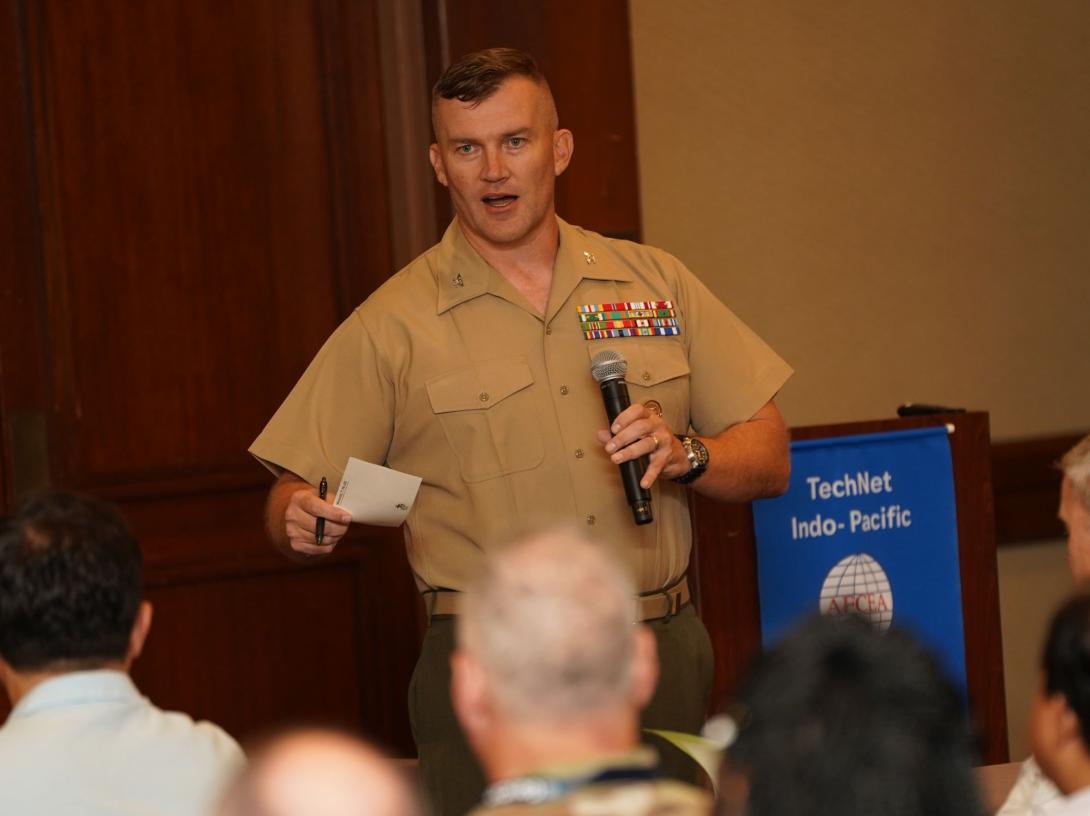
The Defense Information Systems Agency (DISA) is strengthening network resilience and cybersecurity across the Indo-Pacific with the establishment of the Regional Network Operations Security Center Pacific, a capability designed to coordinate cyber defense and support joint and coalition operations.
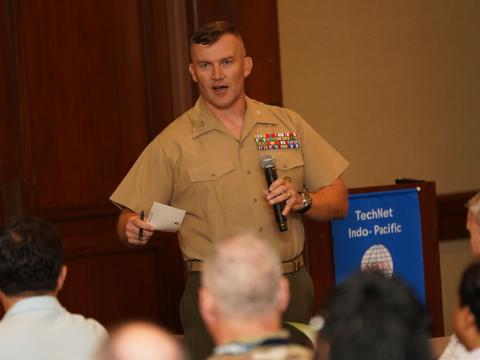
“We actually cut the ribbon tomorrow with General Stanton,” said Col. Michael Hlad, USMC, commander of DISA’s Regional Field Command Pacific, at TechNet Indo-Pacific 2026 on October 28.
The center will help DISA identify disruptions that could affect military operations, including damaged undersea cables, electromagnetic spectrum issues and service disruptions originating in the United States that impact the Pacific.
It also brings an increase in staffing to DISA Pacific’s headquarters.
“That was an increase in capability, visibility, technical skill, and about a 20% increase in manpower, which doesn't happen these days for our headquarters.”
DISA also piloted Cyber Defense Forces Pacific during Exercise Keen Edge, bringing together DISA and the Department of War Cyber Defense Command (DCDC) capabilities to improve visibility across data centers, helping teams identify threats and defend networks in support of operations and the combat commander.
“We've never put all of those superpowers together at the regional level to look at these problems,” Hlad said.
The need for a regional approach comes as advances in artificial intelligence, or super intelligence (SI), introduced new cybersecurity challenges.
“June of this year changed the operational environment for all of us, with the release of advanced frontier AI models,” he said. “We have to better secure our capabilities at an accelerated pace, and so bringing those closer to the warfighter with the architecture of the Pacific is something that we're looking to do.”
Hlad emphasized the need for a common architecture that can address threats spanning multiple combatant commands rather than relying on regional solutions.
“I applaud PACOM [U.S. Pacific Command] for delivering a zero-trust environment for PACOM Mission Network. But it's a PACOM solution, and the threats we face are not AOR [area of responsibility]-specific,” he said. “They are transregional between combatant command AORs, and we need a common architecture for the mission partner environment to tie our partners together for the threats that we face.”
I need an SI-enabled security operations center. It is a fact. We are in an agentic AI world with an agentic AI-enabled adversary, and we need the capabilities to defend at a much more rapid pace.
DISA is working to establish a common information environment that enables U.S. forces and allies to access the data they need while protecting information outside their authorized access.
“My magic eight ball doesn't tell me what the future holds. I guarantee, though, it's going to be joint and combined from a warfighting capability,” he said. “And we have to get the mission part environment right for the scope and scale of the problem that we have in the Pacific, as we're covering 52% of the Earth.”
Hlad identified three key areas where industry partners can support DISA Pacific’s efforts: data standardization, automation at machine speed and SI integration.
- Data standardization – “This only works if we get the data right, and we are still siloed, not only from a U.S. standpoint, but from some of our partners. And to make the big idea work, the data standardization has to be right.”
- Automation at machine speed – “We need to be operating at machine speed not only for the operation of the capabilities but also of the defense.”
- SI Integration – “I need an SI-enabled security operations center. It is a fact. We are in an agentic AI world with an agentic AI-enabled adversary, and we need the capabilities to defend at a much more rapid pace.”
Looking ahead, DISA aims to strengthen support for the joint force and combatant command by integrating critical capabilities developed by industry partners “so we deliver overwhelming strategic advantage, and that's really what it's all about.”
TechNet Indo-Pacific is co-sponsored by AFCEA International and AFCEA Hawaii. SIGNAL Media is the official media of AFCEA International.
Comments