
The Army Seeks Solutions To Respond Agentically to Cyber Threats
In a world where artificial intelligence capabilities are abounding, so are the adversarial uses, including for cyber attacks.
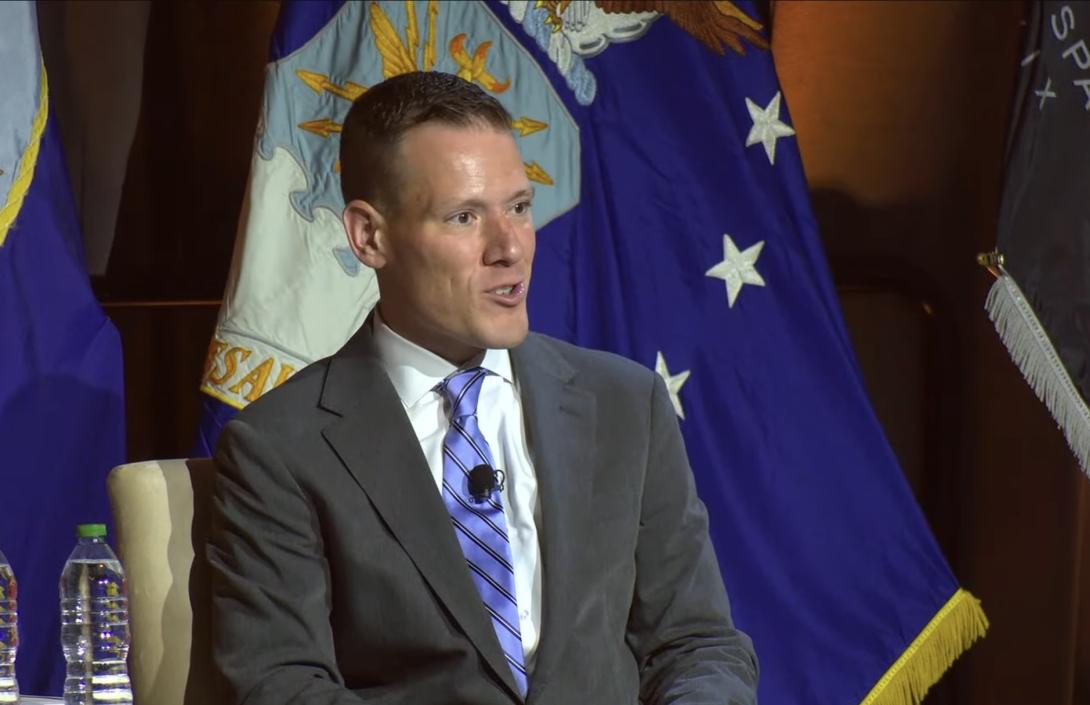
Imagine if thousands of AI bots were paired together in a mounted cyber attack against the Army or its critical infrastructure. This idea of this threat has led the Department of the Army’s Principal Cyber Advisor (PCA) Brandon Pugh to act quickly to find industry solutions to protect against such scaled, artificial intelligence (AI)-based cyber attacks.
The Department of the Army is looking for industry solutions that can agentically respond to cyber threats, and will issue a solicitation to the industry in the next day or two, under a Commercial Solutions Offering, or CSO,
“This is a new project we have,” Pugh stated. As the PCA for the Department of the Army, he advises the secretary of the Army and the Army chief of staff on all cyber matters, including issues of readiness, budget, capabilities and strategy.
Pugh spoke August 19 at AFCEA International’s TechNet Augusta conference held in Augusta, Georgia, August 17-20.
Modeling the Army’s Project ARIA (the Army Rapid Implementation of AI), which brought in innovative AI solutions for ground warfare, Pugh sought AI industry solutions for cyber through a tabletop exercise, or TTX.
“We replicated that specifically for cyber,” he said. “Earlier this year, we brought in 14 leading companies to the Pentagon. We gave them a hypothetical scenario where, if there was an incident where an adversary was leveraging thousands of autonomous cyber attacks at us simultaneously, how would we respond.”
The parties examined best practices and any network challenges involved in leveraging agentic AI-related protections. The leaders wanted to know which industry solutions could help the Army immediately.
The TTX led to the development of Project ARDIS—the Army’s rapid defensive cyber systems. The PCA identified about 20 different possible capabilities and then narrowed it down to three specific project areas.
“The first is Project Griffin, which was how do we automate our cyber detection agents and allow them to autonomously respond in conjunction with a human operator, or perhaps in the future even autonomously,” Pugh explained. “And I know there's different levels of policy and legal questions around that.”
The second area, which is under Al Mollenkopf, Army Cyber’s (ARCyber’s) science advisor to the commanding general, is called Panoptic Junction.
“It does a really good job of identifying potential threats,” Pugh noted. “And how do we now allow that to take action and actually do something . . . and how are we leveraging agentic deception agents?”
Next, come the purple teams, the third capability that the PCA is adding.
“Essentially, how are we assessing our current network and our vendors, and assessing their security posture agentically,” Pugh offered. “Those are the three lines of efforts. They are at varying stages.”
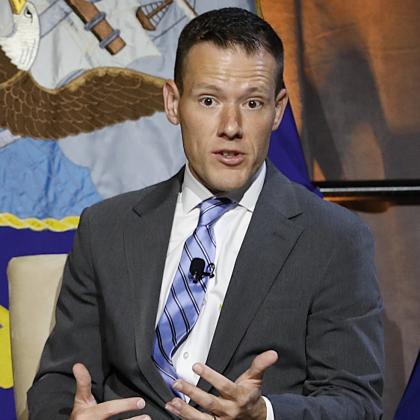
We will be looking for industry partners to think through what is the art of the possible when it comes to agentically responding to cyber threats.
Tomorrow, or soon thereafter, Pugh expects the department to release a CSO under Project Griffin, for industry to respond with related cyber protections and agentic-AI solutions.
“We will be looking for industry partners to think through what is the art of the possible when it comes to agentically responding to cyber threats,” Pugh noted.
Army leaders from the Defense and Cyber Warfare Project Management Offices will discuss further details of the CSO at TechNet Augusta tomorrow.
“They will elaborate on what that CSO will look like,” Pugh said. “That is something we hope to move with speed on. We don't want to have this language where this is open for months. We may or may not come out with a pilot. We are looking sincerely to find true solutions that we can bring in the Army quickly.”
TechNet Augusta is organized by AFCEA International with help from the U.S. Army Cyber Center of Excellence. SIGNAL Media is the official media of AFCEA International.


Comments