
Cyber Workforce Winds Up To Unleash Its Fastball: The Warfighter
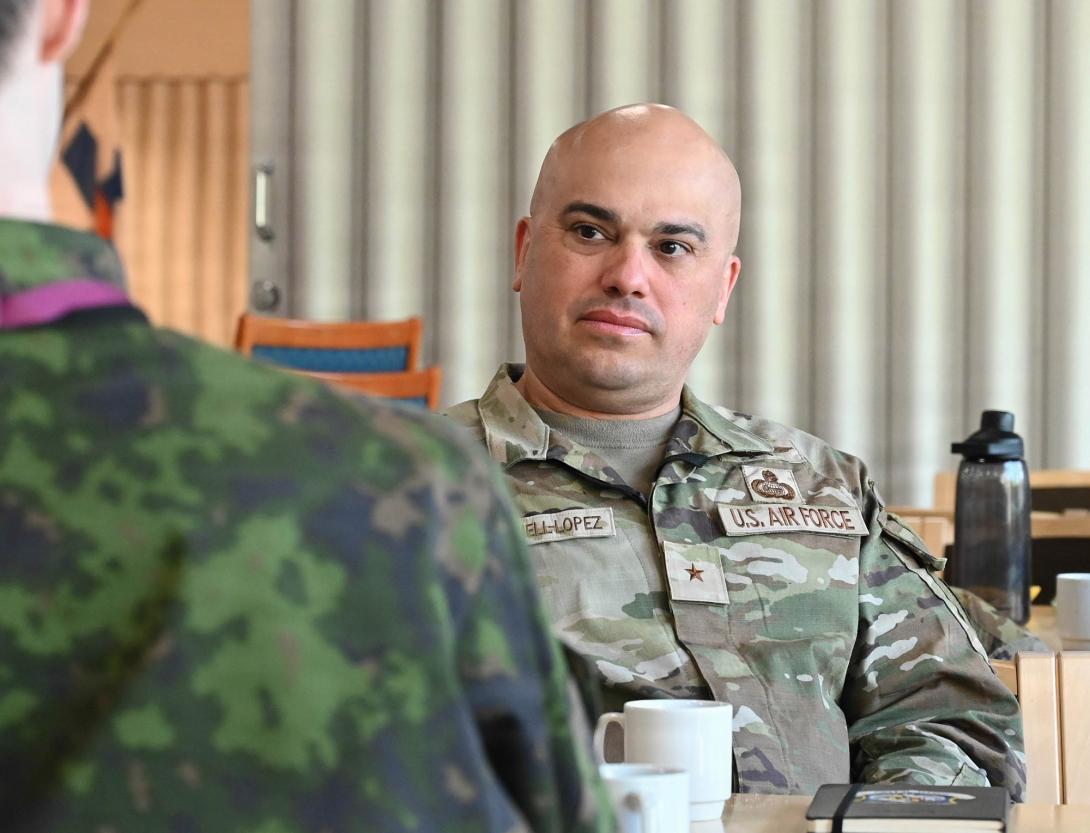
It’s no secret that the procurement and integration of new technologies and capabilities into the various branches and units of the military is helping make their tasks and operations more streamlined, attainable and effective; however, the armed forces cannot solely focus on and only use these technological advancements and forgo the vital role of human beings themselves, according to Col. Roger Koehler, commander of the 175th Cyberspace Operations Group of the Maryland Air National Guard, and Brig. Gen. Joed Carbonell-López, commander of the 175th Wing of the Maryland Air National Guard. The gentlemen stressed that the human being in the air or on the ground or at sea is the power that they are utilizing to confront the enemy.
“The human, the airman on the ground, is really the capability that we’re bringing to the fight and ensuring that we’re properly training that individual to be the best airman they can be,” Koehler said during an interview with SIGNAL Media. “So, I think [training on and having access to the most up-to-date technology]; some of that I don’t think matters, because in certain situations, we need those airmen to adapt with the capability that they have, so investing in that is hugely important.”
“I think some of the investments that we’re making now with human performance are critically important,” Koehler added. “Overall—when we look at our force generation model—I think there are a lot of improvements that we can make, but I think focusing on the human is where we’re going to be able to leverage our capability the most.”
Furthermore, to leverage the warfighter to the fullest extent, specifically within the cyber space, Carbonell-López is calling for a shift in perception toward the digital realm. Rather than seeing it as one, unified domain, Carbonell-López urged individuals to recognize and differentiate the several distinct roles and jobs that pertain to cyber, especially regarding training exercises.
Carbonell-Lopez suggested that lumping operators in with IT and cybersecurity professionals can adversely affect their development. “By lumping it all together and by—this is my personal opinion—having the forced development of these career fields managed from the chief information officer side or the cybersecurity side, it limits the development for our operational folks,” he said during the same interview with SIGNAL Media.
“How you train an operator to hunt an adversary either in friendly terrain or in not friendly terrain is a different skill set than how I defend my perimeter. “And then also how do you provide all source-critical intelligence to support these types of mission sets? So, there’s a military art piece that’s often forgotten [about] or not included in the cyber workforce development.”
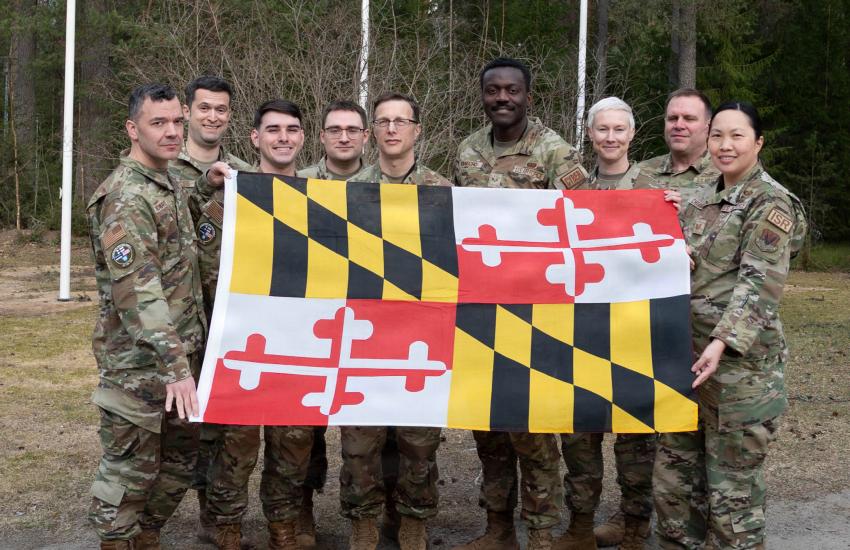
The cyber-related threats against critical infrastructure and military operations are not slowing down, so to combat these adversarial attacks, Koehler and Carbonell-López are striving to empower the warfighter by hosting exercises and creating initiatives. The former of these actions ideally gives servicemen and women chances to learn, foster and harness the skills they need to cover all the bases when it comes to defending the digital realm. For example, cyber officials in the Maryland Air National Guard recently teamed up with allied nations to participate in NATO Exercise Locked Shields 26.
Hosted by personnel with the NATO Cooperative Cyber Defence Centre of Excellence, the event produced several benefits.
Firstly, the scenarios on display at the event introduced or better acquainted partakers to the tactics, techniques and procedures of guarding all different types of cyber terrain, such as business systems and critical infrastructure, primarily within the energy and waterworks sectors, Carbonell-López specified, against any possible threats. The exercise consisted of red and blue team components, but the core of the exercise focused on the latter aspect, per Koehler. Maryland National Guard staff said there were 16 blue teams, whose job was to collaborate and coordinate with each other to restore functionality to systems that support military operations, energy grids, communications, among others that were damaged by simulated cyber attacks. In many instances, these teams were located across time zones and national boundaries, which provided an additional layer of difficulty. In addition to the restoring aspect, blue teams were also responsible for detecting, analyzing and responding to threats. As for the red team element, a single team worked on the offensive side, and their job was to launch the simulated cyber attacks.
On the other hand, more than 4,000 individuals from 40 different countries took part in NATO Exercise Locked Shields 26, according to Maryland National Guard officials. The event’s thorough representation across the globe opened the door for an increase in interoperability amongst participating nations. Military crews from the 40 countries had the opportunity to learn and build on the tactics, techniques and procedures offered by defense personnel from other countries. Additionally, they could use the exercise as a way to connect, improve communication, build trust and network with their partners and allies, Maryland National Guard members added.
“A lot of these exercises, especially when we work with our NATO allies, are a lot of that partnership piece of understanding them and having closer ties to how they do things, because it’s really informative to see what we could do better,” Koehler said. “Plus, when we start looking at the Department of War priorities of burden sharing, [these exercises are] helping them be able to take on more responsibilities as well, which is definitely important in this space, especially when a cyber attack can start from anywhere and go anywhere.”
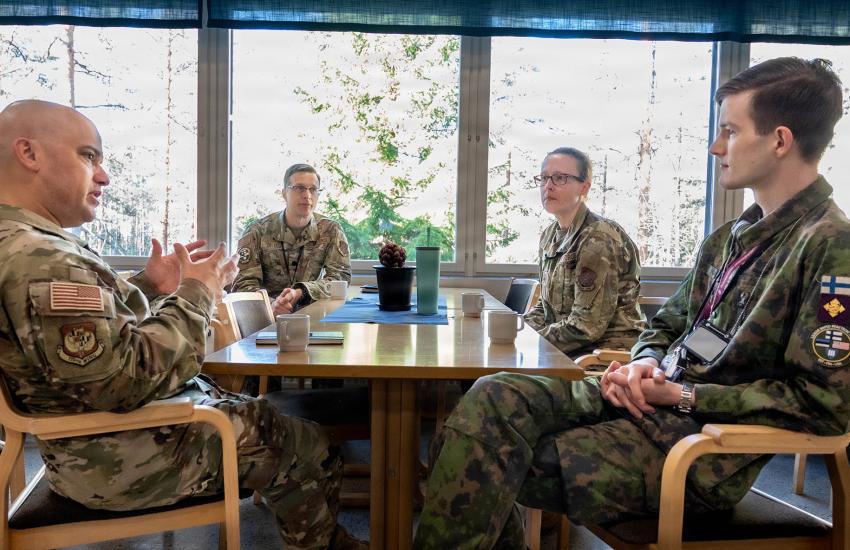
The cultivation of skills and relationships between countries positioned across several continents is propelled forward by a plethora of events similar to NATO Exercise Locked Shields 26, namely the National Guard’s Cyber Shield, the U.S. Cyber Command’s Cyber Flag and the collaborative Cyber Yankee series of exercises. Furthermore, through the National Guard State Partnership Program, each of the 54 National Guards are partnered with a single nation or group of nations, and they conduct exercises for years on end, according to Carbonell-López.
“The exercises are extremely beneficial, and I think as we look at the cyber workforce, one of the great things about the National Guard being able to work on some of these exercises is we’re able to bring in some of our people that work at top companies on the outside and bring in those skills to not only help other National Guard members that are elsewhere in industry but as well as a lot of times, active duty counterparts and NATO counterparts to really increase everybody’s skills,” Koehler said. “As we look at mastery as a priority of our cyber workforce, the skills that the National Guard brings are just so critical.”
Finally, the Department of the Air Force leaders have also created the Human Performance Team initiative. This idea focuses on building team chemistry rather than developing the proficiencies that crews need to complete their day-to-day tasks.
“It’s how do you enhance not just the physicality and resiliency of our individuals and cognitive ability, but then overall human resiliency to be better performers as an individual,” Carbonell-López said. “And then, the team aspect of that human performance team is to immediately start operating as an elite team, so there is an initiative that we’ve been piloting with under the Department of the Air Force to really grow that.”
“[The Maryland Air National Guard is] one of two units, the other one being in Ohio, that are in the Air Guard and really across the Air Force investing in it,” Carbonell-López added. “And that has literally nothing to do with IT or technical skills; it’s really investing in the humans, which is the ultimate weapon system here.”


Comments