
Developing the Next Generation of Cyber Talent Is a Priority for the Military's CIO
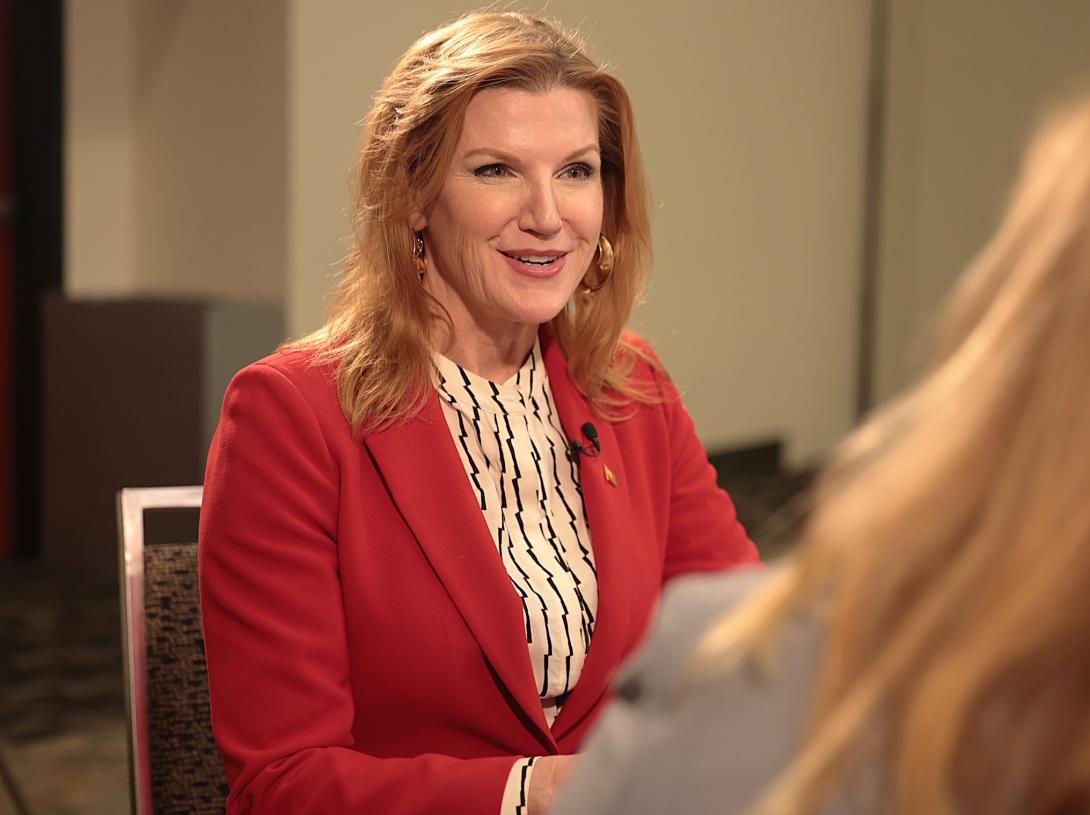
Kirsten Davies, the Pentagon’s new chief information officer (CIO), has emphasized that the transformation in information technology and innovation of the U.S. military has to apply to the defense industrial base, department and next generation of cyber specialists and technologists.
The complexity of the operating environment and risks from adversaries are too great, Davies said, presenting the keynote address on Tuesday at AFCEA International’s TechNet Cyber 2026 conference. She also sat down with SIGNAL Media for an interview.
“The character of conflict is changing at an unprecedented pace every day,” Davies said. “The battlefield is more connected, our adversaries more sophisticated, the weapons systems are more technically advanced, and innovation is intrinsic to our arsenal. These shifts are not evolutionary; they are revolutionary in their scale, velocity and in speed.”
The CIO has made a priority for growing the cyber workforce—in her multiple chief information security officer (CISO) roles in industry, including at Unilever, a Fortune Global 500 company, and at Barclays International, the British multinational bank.
“I have become known for looking for talent and developing talent in unusual ways and unusual areas,” Davies shared. “I built an academy in South Africa when I was there with Barclays. It was a combination of the South African government, Rhodes University and Barclays, who I was working for, I was honored to serve at the time. When I was at Unilever, We also built with an apprenticeship program with a women's organization in Nigeria.”
This organization provides comprehensive cross-training and upskilling for women ages 18-27 for cybersecurity roles, the CIO said.
Now, the department’s efforts feature “a multipronged approach to reinventing and reinvigorating the talent of today and of tomorrow,” Davies announced.
A cyber operator joined with her CISO perspective, Davies acknowledged that she was not always a cyber technologist.
“I did not start in technology,” the CIO stated. “I started in music, and they are related. It's all mathematical. And I always believe that if I could have as much success as I have had and I could be trained, then I can train anybody. This is an approach that we are also embracing at the department. We need to not simply try to poach talent from everywhere else. We need to build talent. We need to create the talent of the future in digitally native generations now and for the future to come.”
As such, the CIO’s effort will include new partnerships, an apprenticeship program and a novel educational model effort for artificial intelligence (AI) and cyber learning.
“We're doubling down on our partnerships with academia and creating new pathways for skills-based hiring,” she stated. “Our academic partners serve as the absolute bedrock for this effort.”
Part of that “bedrock” includes the 500 academic institutions that make up the network of the National Centers of Academic Excellence in Cybersecurity, “with 28 new universities just earning this prestigious designation,” Davies shared.
“But our talent pipeline cannot start and end at the university level,” she stressed.
So, for teenagers, the department is beginning a cyber apprenticeship program called Cyber RAP. It was important to the CIO that the efforts develop cyber talents early at the grassroots level, she said.
“We will win this fight by recognizing that cyber is a hands-on trade, just as much as it is an academic discipline,” Davies specified. “To aggressively expand our reach into high schools and vocational schools, we have just launched our new cyber registered apprenticeship program, Cyber RAP.”
The paid 12-month program provides dedicated U.S. students “a direct pathway into our mission, mastering real-world skills in security operations and threat analysis alike,” the CIO indicated. “It directly answers Secretary Hegseth's mandate for applied learning, because, as he reminds us, policies don't drive transformation, people do.”
The CIO also wants to revolutionize AI and cyber teaching by launching the new Ascend Challenge.
Davies described this effort as a "Shark Tank-style competition to source the most agile and innovative educational models for AI and cybersecurity.”
“The energy at the finale, hosted in Pittsburgh about three weeks ago, was absolutely electric. I want to again congratulate our winners from the University of Wisconsin-Stout, North Carolina A&T and San José State University. Their winning models will serve as a blueprint for scalable learning frameworks across this great nation.”
We will win this fight by recognizing that cyber is a hands-on trade, just as much as it is an academic discipline.
In addition, the CIO’s office is partnering with the Defense Information Systems Agency (DISA) and its skills-based hiring initiative.
“I've seen a few of our colleagues here, right here at TechNet Cyber, testing the department’s skills-based hiring initiative using on-the-spot assessments,” Davies said. “This is revolutionary, by the way. I'm thrilled we are doing this.”
Candidates who excel will be fast-tracked for follow-on interviews. The CIO stressed that the timeline will be much faster than the usual governmental 90 to 180 days. “It is an actual fast track to interviews,” she said.
Here, Davies would like to enable the talents of veterans trained for cyber and technology.
“How can we leverage, for example, the strength of the warfighters who are returning from overseas, who understand how the department works?” she stressed. “They have great technical savvy. How can we train them and equip them not only to serve better inside of the department from a technical, from a cyber perspective, but also train and equip them for jobs after they transition into retirement? I am hugely passionate about the veteran community, and the president and the secretary are as well.”
The CIO also wants to expand understanding of the military’s mission and importance of defense to rising stars who would usually seek startup experience.
“How do we attract talent to come serve at the department before they go to Silicon Valley, before they go to anywhere else to try their startup future?” Davies considered. “How can we get them to come and serve the nation and serve the mission of national security before they go to earn their millions? Because they can do both.”
Additionally, Davies is looking to work with Brig. Gen. Anthony Tata, USA (Ret.), who is now the department’s under secretary for personnel and readiness, on how the offices can partner to expand educational and workforce opportunities.
“I did not know this before I came to the Department of War, but the Department of War is the world’s largest K-12 education system,” Davies noted. “How do we then partner across with my colleague ... to reach in to K-12. Let’s reach into the military community, their spouses, their partners, who are potentially overseas or locally here. How do we reach into these communities and equip America for the jobs of the future?”
It is the people and the department’s partnerships that will give the military “our true decisive edge,” Davies emphasized. “There is no algorithm or AI agent that can replace a critically thinking, well-trained and decisive cyber defender.”
TechNet Cyber is organized by AFCEA International. SIGNAL Media is the official media of AFCEA International.


Comments