
U.S. Justice Department Offers Cyber Training for Ukraine
U.S. Justice Department Federal Law Enforcement Training Centers (FLETCs) officials plan to provide two cyber training sessions for Ukraine in 2026, according to John Riley, chief of FLETC’s Cyber Division.
FLETC’s mission is to train and support training for federal, state, local and tribal law enforcement officers and international partners that are responsible for enforcing laws, treaties and regulations within the United States and abroad. The Cyber Division has previously provided training in Malaysia, Africa, Germany, Italy and other countries across the world, Riley told SIGNAL Media in a recent interview. “I mean, you name it, we’ve probably been there,” he said.
The training sessions will last about a week, and the first will likely take place in April.
At the time of the interview, however, FLETC Cyber Division officials were still working on the details, such as specific dates and location(s) for the training. “We weren’t going to conduct it in the Ukraine for obvious reasons, but in an adjacent training facility, working with the State Department,” Riley said. “The State Department has training facilities around the world. Working with our International Law Enforcement Academies, we can find a location where the Ukrainians could come to without having to travel to the United States.”
Such international training sessions normally start with the State Department, Riley explained. “The request will originate from a State Department representative, and it’ll come through our Office of International Training at the FLETC, and then they’ll reach out to the respective training divisions. In my case, the Cyber Division will work through what we’re able to support.”
Riley’s number one priority for the Cyber Division is to “provide the most current technology training available to law enforcement investigations today.” His second priority is to “maintain a cadre of instructors who are trained to meet our number one goal.”
The chief said his division is a leader, and possibly the leader, for law enforcement cyber training in the United States. “There’s a lot of commercial entities out there. There aren’t that many government organizations that provide the type of cyber training that we have here at the FLETC, especially not to the extent that we do. So, I would say we’re pretty close, if not number one here in the U.S.”
Also this year, the FLETC Cyber Division, along with the Massachusetts Attorney General’s Office, will conduct a three-day training session during the state’s National Cyber Crime Conference in Norwood. “We’ve supported this event for the last six years, and they normally have about 1,000 law enforcement personnel from local, state and federal in attendance, so it’s very much meeting our goal to reach out and provide that support to law enforcement.”
Last year, the division worked with the Naval Criminal Investigative Service (NCIS). “Between January and March. We conducted export cyber training with them twice in Japan, in Okinawa and Yokosuka,” Riley reported. For those sessions, the FLETC cyber instructors were joined by two NCIS instructors, and the students included NCIS personnel and international law enforcement officials.
Last year also included training sessions in Bahrain and Seychelles, Africa, he added.
Additionally, in 2025, the division conducted 15 Basic Incident Response to Digital Evidence courses, primarily for state and local law enforcement agencies, 10 in different states across the country, five at FLETC’s Glynco, Georgia, training center. “Here at our Glynco site, the primary target for those is state, local and tribal, although we do train federal in some of our dedicated courses here,” he elaborated.
The Basic Incident Response to Digital Evidence course provides training necessary to any criminal investigator who may be a first responder in a situation in which computer-based evidence is or may be recovered, according to the FLETC website. The program provides a sufficient overview of technology to adequately prepare criminal investigators to identify, collect, acquire and preserve digital evidence.
The cybersecurity challenges, the technologies involved and the investigative processes for state, local and tribal law enforcement agencies are largely the same as for federal agencies, according to Riley. But there are some differences. For example, federal agencies are more likely to be granted access to computers maintained by a system administrator. That makes life much easier for personnel engaged in computer forensics. “In the state and local arena. They’re probably dealing with an individual or a small business, or even a big business for that matter, where you might have a system administrator that’s not willing to work with you and you’re having to deal with these devices that are fully encrypted. Finding ways to decrypt them can be very difficult because, to be realistic, these operating system manufacturers like Microsoft and Apple and Samsung are doing everything they can every day to make their systems more secure for their customers. Well, that makes life more difficult for law enforcement.”
Riley, who has been working in the law enforcement technology arena for 39 years, recalled that during his early career in computer forensics, storage devices were doubling in size nearly every year. The assumption back then was that the advances would eventually plateau. “Well, they’re still getting bigger. And in addition to that, new technologies are coming out every day. We’re having to deal nowadays with augmented reality, artificial intelligence, robotics, telematics systems in vehicles, drones, Internet of Things, smart watches, smart rings. You name it, it’s out there.”
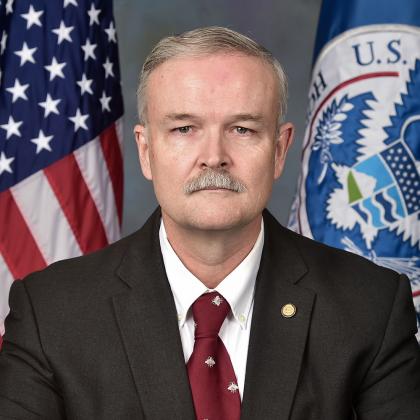
We’re having to deal nowadays with augmented reality, artificial intelligence, robotics, telematics systems in vehicles, drones, Internet of Things, smart watches, smart rings. You name it, it’s out there.
FLETC training evolves with the ever-growing array of technologies, but that training alone may not be enough, Riley indicated. “If you want to really keep up with this, you’ve got to seek out every opportunity to learn as much as you can. If you can get training from the commercial vendors or from other institutions or universities, please seek that out because there’s just no way to keep up if you don’t dedicate some of your time and really research and maintain a level of currency in this arena.”
The tactics, techniques and procedures of threat actors also change with technologies, so law enforcement training also must evolve when threat actors like Volt Typhoon emerge. Having instructors from various agencies assigned on detail to FLETC supports rapid evolution of training. “Our partners will actually detail instructors to the FLETC for the purpose of providing some currency to our respective training, but in addition to that, for us in the Cyber Division, it’s routine for us to work with the commercial vendors looking at the latest software and hardware tools and testing those tools for either consideration or incorporation into our training.”
FLETC partners include more than 130 federal agencies, as well as state, local, tribal and international partners. The training centers served about 73,000 students last fiscal year and expect closer to 90,000 this year. In addition to NCIS, the training centers work with the Army’s Criminal Investigation Division and the Air Force Office of Special Investigations and is in talks with the Defense Cyber Crime Center in Linthicum, Maryland, to potentially use the cyber crime center’s cyber range.
Cyber Division training focuses on identification, preservation, collection and analysis of evidence stored in digital formats, including digital video recorders, vehicle telematics systems, drones or computer clouds. It also offers training on electronic surveillance methods and tools to include Internet Protocol camera deployment.
Basic training programs have recently been updated to include Internet of Things devices like Ring cameras, Alexa and wireless. The division also recently procured a dog-inspired robot built by Boston Dynamics, which can be used for executing search warrants, among other tasks. Additionally, the division has used virtual and augmented reality systems for exams and is exploring the potential purchase of Microsoft-provided systems.
FLETC has streamlined its cyber courses to better meet the needs of law enforcement agencies. Two years ago, the Cyber Division approved two courses—Digital Forensic Examiner and Technical Investigations Level 1, which marked “substantial progress in an ambitious initiative to overhaul advanced cyber programs for law enforcement,” according to an online FLETC article. The streamlining initiative, introduced in the December 2021 Curriculum Advisory Meeting, is designed to enhance the efficiency and impact of cyber training amid expanding demands and cost concerns.
“The process of updating our training is a constant with technology changing so quickly. We are always looking at our cyber programs to make sure we’re meeting the needs of our respective partners, but that particular effort is almost complete. We’ve reduced our number of cyber advanced programs from 18 down to 14, and we’re still looking at content to see if there’s other ways that we can either streamline or better support the needs of our partners,” Riley said.



Comments