
DHS Science and Technology Directorate Reorganizes Research Capabilities
The Department of Homeland Security (DHS) Science and Technology (S&T) Directorate has reorganized its laboratories and centers of excellence to strengthen their alignment with mission needs.
The reorganization affected the Office of National Laboratories (ONL), which leverages a coordinated network of DHS and Department of Energy national laboratories to deliver technologies vital to the DHS and the national homeland security mission.
The office ensures the safe, secure, and compliant management and operations of S&T’s five in-house laboratories, which include seven sites located in five states:
Chemical Security Analysis Center – Aberdeen Proving Ground, Maryland
National Biodefense Analysis and Countermeasures Center – Fort Detrick, Maryland
National Urban Security Technology Laboratory – New York City (Manhattan), New York
Plum Island Animal Disease Center – Orient Point, New York
Transportation Security Laboratory – Atlantic City, New Jersey
TSL Detection Technology Center – Terrorist Explosive Device Analytical Center, Improvised Explosives Detection and Synthesis Center, Huntsville, Alabama
TSL Tyndall Reactive Materials Group, Tyndall Air Force Base, Panama City, Florida
While the office “has not necessarily gone away,” S&T has added some functions and capabilities, according to Jamie Wells, executive director of S&T’s laboratories and academic centers, who oversees the directorate’s intramural, enduring research, development, testing and evaluation (RDT&E). That includes the five laboratories, academic centers of excellence and academic internship programs. It also includes a couple of divisions focused on specific technology areas, one on biometrics identity and advanced computing, and the other on expeditionary and red team assessment.
“The Office of National Laboratories, prior to the reshaping that Science and Technology has done over the last year, was focused on managing those five laboratories within DHS S&T and also managing our relationship with the Department of Energy national labs. Those functions still absolutely exist within the laboratories and academic centers,” Wells reported during a SIGNAL Media interview. “We’ve essentially added on to what have traditionally been ONL capabilities to include those other functions.”
The reorganization also affected the Homeland Security Advanced Research Projects Agency (HSARPA). “We created the Homeland Security Advanced Research Projects Agency around a mission center concept. So, HSARPA is the portion of S&T that’s responsible for delivering research and development to our components in support of their operational needs, and we’ve organized that into three different mission centers that are aligned with the various missions within the department,” Wells explained.
Overall, the changes help the labs and academic centers to better support HSARPA projects, he indicated. “What this new construct enables us to do is have HSARPA focused on managing research and development programs that deliver capabilities to components, while the laboratories and academic centers maintain our enduring capabilities that assist in delivering discrete capabilities through HSARPA projects.”
As early as 2024, officials began pursuing more unified research and development investments. “We decided that the best way to unify our investment approach was aligned with DHS missions, and so we embarked upon doing a functional continuity analysis to figure out the various functions we conduct across the directorate, the underlying statutory and regulatory reasons behind those, and how we more efficiently organize ourselves to make sure that we’re delivering return on investment in terms of mission capabilities.”
The next year, President Donald Trump’s administration initiated “a number of staffing efficiencies” across the federal government,” Wells noted, which resulted in S&T losing about 30% of its staff. “That further gave us some opportunity to realize efficiencies in the way that we were organized. Once we lost a certain number of federal employees through natural attrition, through a variety of efficiency programs in the federal government, this reshaping allowed us to realize the mission alignment that we were originally focused on, while also taking into account our streamlined staffing model.”
The reorganization “has allowed us to take advantage of the staffing that we have and align that with mission delivery in a way that’s most efficient for the number of people and the budget that we have,” he added.
The directorate has gone through several rounds of reshaping the leadership team. “I would say at this point, we have formed the leadership team down through the supervisory level, and we’ve asked each of our laboratories and divisions to conduct a staffing analysis to look at what missions and functions they are charged with delivering or performing, and how their current staffing supports that and what changes might we need to make in order to ensure we have adequate staffing within each of the divisions and laboratories.”
That analysis was expected to be completed in August, he said. “That’s the analysis that we’re going through now to inform any further movement within our existing staffing or any additional hiring actions we might need to make,” he said in July.
Wells said officials may “beef up” S&T’s research and development abilities. “We are certainly still going through making sure that our laboratory and academic capabilities cover the waterfront of the mission space and identifying gaps where we need to perhaps beef up laboratory capabilities or add or modify academic centers of excellence. Sure, there’s a ton to go there, but I think we’ve already realized a lot of the internal budgetary and communication benefits of the reshaping.”
Asked for specifics on potential beefing up efforts, Wells deadpanned: “That’s obviously not a technical term.”
Then he added that the directorate will continue taking stock of laboratory infrastructure and potential new enduring needs within the mission centers. “That beefing up may mean that we have a particular laboratory that can do more or different things than they currently do that are going to be persistent needs, and perhaps we need to invest in that,” he said. “It may mean that we need to add new laboratory capability. That may not mean we’re building a brick-and-mortar lab, but it may mean we need some enduring testing and evaluation capability, and perhaps we can take advantage of an interagency capability that already exists that we need to establish a memorandum of agreement to access. It may mean that we need to go back to the board and say, ‘Hey, we really have an enduring need here. Let’s go see if we can budget for that and make the argument that it is a good investment for DHS.’”
Ultimately, the reshaping will allow S&T officials to make more intelligent, clear decisions about which mission spaces they invest in, and why, and how that aligns with department and administration priorities. Additionally, it may help the directorate to deliver solutions more rapidly. “We are increasingly looking to adopt private sector solutions first. If there is a space where industry has already invested in a capability, we don’t necessarily need to reinvest in research and development of that capability. We really need to be aware of it, identify it and help our components quickly adapt it or configure it for their use, which can be a much more efficient and cost-effective way of getting them the capabilities they need.”
We decided that the best way to unify our investment approach was aligned with DHS missions, and so we embarked upon doing a functional continuity analysis to figure out the various functions we conduct across the directorate, the underlying statutory and regulatory reasons behind those, and how we more efficiently organize ourselves to make sure that we’re delivering return on investment in terms of mission capabilities.
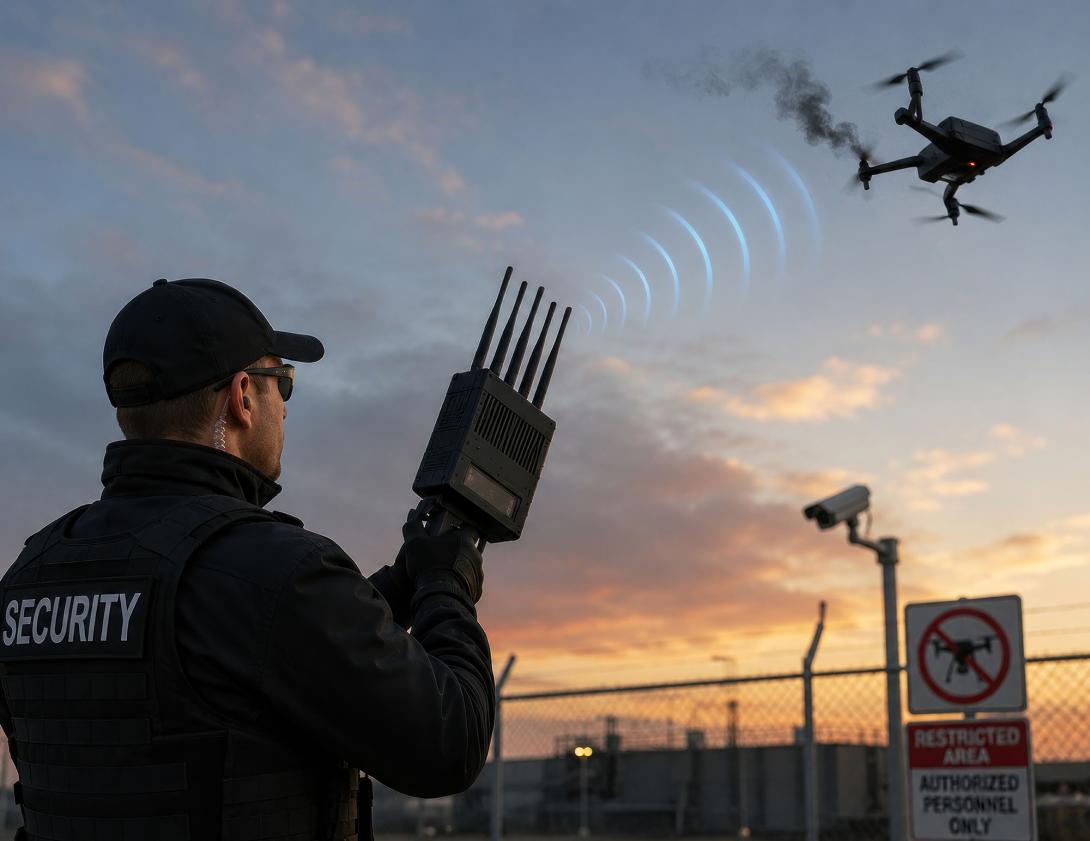
Also in the interview, the executive director highlighted the DHS’s and S&T’s support of the homeland security mission during the FIFA World Cup earlier this year. Countering unmanned aerial systems proved central to that mission. The National Urban Security Technology Laboratory assesses existing counter-UAS systems to help federal, state and locals decide where to invest and also played a critical role in surveying each of the World Cup sites to help federal, state and local leadership make smart decisions about how to integrate the various systems into a system of systems for counter-UAS solutions, according to Wells. “A specific task that they undertook was doing radio frequency surveys at each of the locations in order to make sure that you can deconflict all of the sensors and mitigation techniques for counter UAS.”
He foresees counter-UAS continuing to be a vital part of the DHS mission. “And so, counter-UAS has become a massive mission space for the department, and as a result, is also a major lift for S&T, both on the research and development side and on the testing and evaluation side. I would expect that to continue as we move forward, so that’s a space where we’re actively evaluating our enduring needs for RDT&E in counter UAS.”
Countering drones is important to homeland security, but the “yin and yang” is that the unmanned systems also enhance many homeland security missions. “The department is clearly looking for ways to leverage unmanned systems. We already do that along the border with aerial systems. We are going to increasingly look to do that on the ground, on the surface, and undersea capabilities,” Wells stated. “I think there’s tremendous opportunity there for the department across many of its mission spaces to take advantage of unmanned systems.”
He also highlighted digital identity and biometrics as a critical technology area for the department. S&T maintains the Biometric and Identity Technology Center at its Maryland Test Facility. “We actually just recently completed a remote identity validation test event there that helped industry come bring in their products and understand what capabilities they bring to the table and where they might be brittle to potential fraud. I anticipate digital identity and biometrics will continue to be a focus moving forward.”
S&T also operates the National Biodefense Analysis and Countermeasures Center at Fort Detrick, Maryland, which “has been a really important player both on the threat characterization side and in supporting the FBI’s bioforensics capabilities” and was expected on August 12 to celebrate its 5,000th consecutive day of operations.
Artificial intelligence (AI) also enables biodefense. “AI and machine learning in particular are an inherent part in how biometrics has been able to advance. So, I would say that biometrics and digital identity are operational applications of elements of AI,” Wells offered.
The Transportation Security Laboratory recently established an AI-enabled screening system for a data-sharing consortium through a cooperative research and development agreement. That allows equipment manufacturers, algorithm developers and federal partners to understand the different types of data used to train, validate and test algorithms and systems. “Most modern detection systems at this point use some sort of machine learning-enabled algorithms, and so our ability to understand how those algorithms are developed and how they are brittle to different presentations of threat articles is really important,” Wells added.



Comments