
DISA's Stanton: Network Architectures Should Work Like Legos
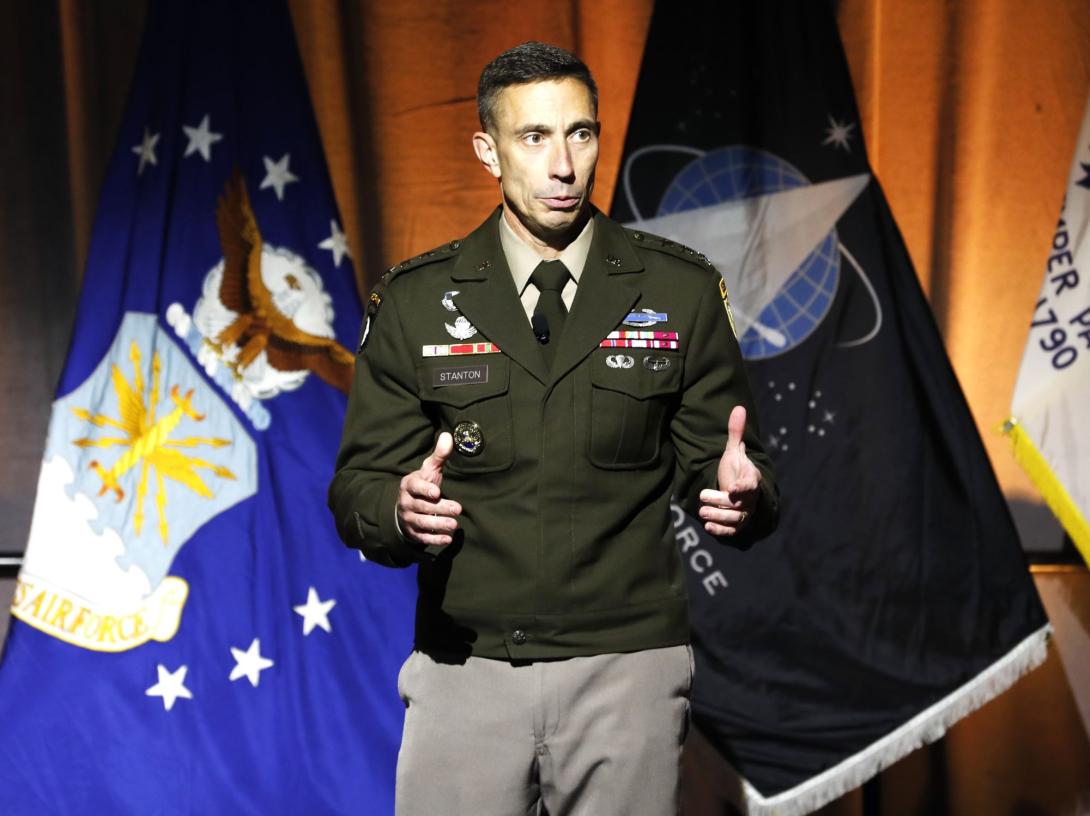
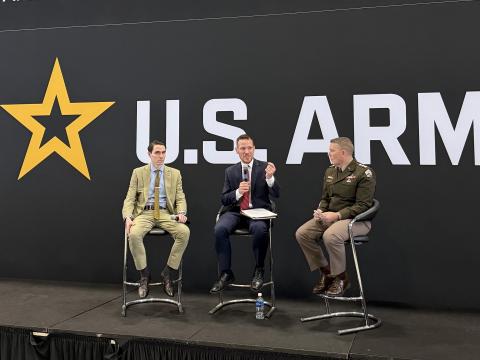
During his closing keynote address at TechNet Augusta 2026, Defense Information Systems Agency (DISA) Director Lt. Gen. Paul Stanton said that standardization will be critical to enabling the military to operate at the speed, scope and scale demanded by future warfare.
“You can’t make changes in the operating environment that potentially jeopardize troops in contact,” Stanton said, emphasizing the need for “the right controls in place in order to bound risk.”
Stanton challenged industry and government officials to recognize that automation and agentic capabilities are central to the future.
The key to meeting that challenge is standardization, he emphasized.
“If you are going to understand second and third order effects, you have to understand the operating environment. If the operating environment is so complex, made up of bespoke, unique solutions that you can’t see, then you can’t define the constraint model and then you can’t bound the risk,” he said.
The rule applies to data, the DISA director stated.
“When, not if, the enemy unleashes agentic capabilities against our operating environment, we do not have time to fight through network congestion because [we may not] know how to normalize data or network congestion because I didn’t standardize the architecture,” he stressed.
Stanton therefore called for further innovation into the solution space, while noting the success of the next generation command and control (NGC2) efforts.
“We all want to get there faster,” he said of the NGC2 initiatives. “But the design is 100% correct, purposefully vertically aligned through standardization with data flows that are well understood. The right data to the right place at the right time. Not all the data.”

You can’t make changes in the operating environment that potentially jeopardize troops in contact.
Stanton used a Lego analogy to illustrate the concept, emphasizing the need for common interfaces that allow different systems to work together.
“When you dump your Legos out onto the floor, you can connect them together in interesting ways because there’s a standardized common interface for Legos, and you can compose whatever you need or want, based off of connecting the Lego blocks together,” he said. “When you design the architecture that way, it supports the standardization that is an absolute requirement for a global fight.”
That approach, Stanton said, would allow an NGC2 corps headquarters and infantry division to “snap in” when moving into U.S. Pacific Command or U.S. Central Command.
“It doesn’t do that right now, but it must in the future,” he said, specifically highlighting a future fight as part of a coalition, which will bring “its own blocks of Legos” that will have to fit together in an interoperable manner.
TechNet Augusta is organized by AFCEA International with help from the U.S. Army Cyber Center of Excellence. SIGNAL Media is the official media of AFCEA International.
Comments