
DOW Works To Meet Post-Quantum Cryptography Deadlines

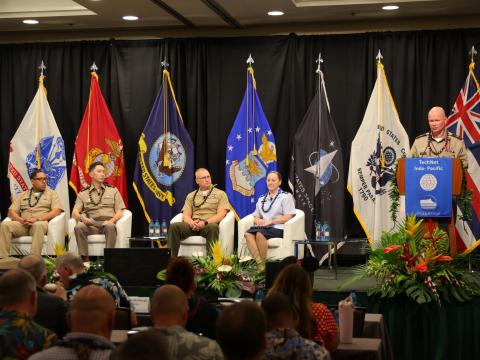
The Department of War (DOW) is working to meet its post-quantum cryptography (PQC) deadlines, but migrating legacy systems and replacing vulnerable technology present significant challenges. Experts discussed the transition at TechNet Indo-Pacific 2026 in Honolulu.
In June 2026, the DOW Office of the Chief Information Officer released its PQC strategy, establishing two milestones. By December 31, 2030, all department systems must support PQC or face being phased out. By December 31, 2031, all systems must actively use PQC, unless an approved exception applies.
The urgency stems from the risk that adversaries are already collecting encrypted information to decrypt when quantum computing capabilities advance. Known as “harvest now, decrypt later,” the approach could expose sensitive data in the future.
“Our adversaries are using quantum. How advanced are their capabilities? We don’t totally know,” said Matthew McFadden, vice president of cyber and distinguished technologist at General Dynamics Information Technology. He stressed that the time to move to PQC is now.
The discussion brought together military and industry perspectives, including Maj. Gen. Garrett Yee, USA (Ret.), vice president at General Dynamics Information Technology; Col. Tassi Davis, USAF, director of cyber operations and warfighting communications at Pacific Air Forces; Chris Dorney, federal platform director at IonQ; Michael Martinez, DSc, chief information security officer at U.S. Army Pacific G6; McFadden; and Capt. Victor Taylor, USN, director of N6 at U.S. Pacific Fleet.
Migration requires more than adopting new algorithms. The military must identify where vulnerable cryptography is used and determine which equipment can be upgraded and which must be replaced. As McFadden explained, “It’s hard to migrate what you don’t know that you have.”
The cost of replacing technology across the force adds another challenge, Martinez said.

Our adversaries are using quantum. How advanced are their capabilities? We don’t totally know.
Industry collaboration will be essential to addressing these obstacles. Davis emphasized the need for partnerships as the services face constraints on personnel and funding.
“We know we’re not getting any more manpower. We’re not getting any more money, but we have to solve these problems, and we can’t do it without the people that are in this room, the people that are at this conference,” Davis said.
Meeting the deadlines will require coordinated planning across the services, industry and existing technology programs. Panelists emphasized the need to prioritize vulnerable systems and incorporate PQC into modernization efforts to help the department transition without disrupting military operations.
TechNet Indo-Pacific is co-sponsored by AFCEA International and AFCEA Hawaii. SIGNAL Media is the official media of AFCEA International.



Comments