
Military Leaders Outline Next Steps for USPACOM's Warfighting IT Platform
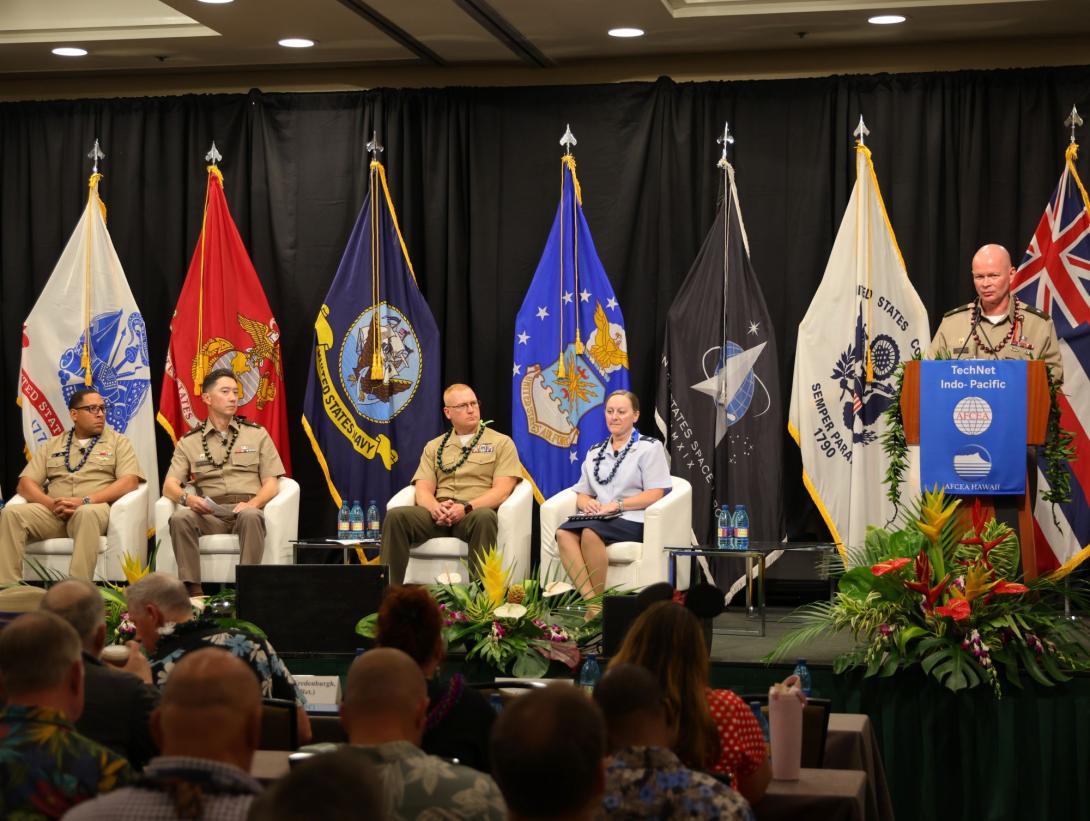
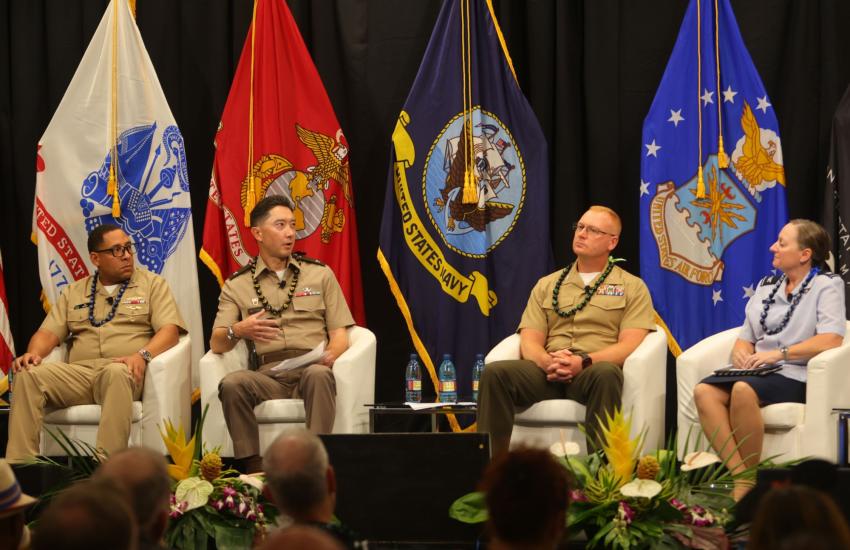
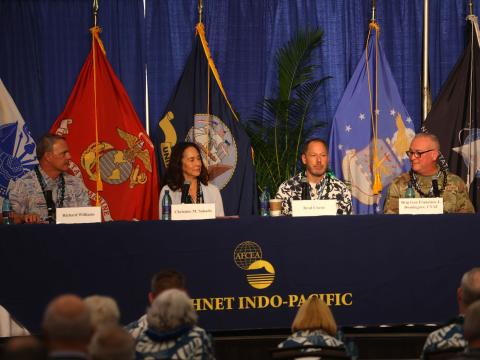
During a J6 panel at TechNet Indo-Pacific 2026, military leaders discussed how the U.S. Pacific Command (USPACOM) Warfighting IT Platform is bringing together U.S. service and joint networks, data and super intelligence (SI) tools to create a more connected operational environment across the Indo-Pacific.
They also addressed the theater's unique challenges, including vast geographic distances, natural disasters, cybersecurity threats and the need for greater interoperability with regional allies and partners.
The Warfighting IT Platform “is something we have developed over this last year,” said Brig. Gen. Michael L. Smith, USA, director for command, control, communications and cyber, J6, at U.S. Indo-Pacific Command. He described it as the “total collection of all service and joint network systems, applications, services, data and SI tools, formerly AI [artificial intelligence] tools.”
The platform brings together capabilities to improve interoperability and enable information sharing across joint and combined operations. That integration is already extending to allied forces in Japan.
"It is a massive framework of integration on the U.S. side that we have very rapidly rolled out to our partners during these recent exercises and persistently now,” said Smith. “Our Japan partners are using Maven Smart Systems that are embedded with our PACOM mission network.”
Maven is an AI-enabled software and data-integration platform developed by Palantir Technologies for the U.S. Department of War.
“From a Maven perspective,” partners in Japan are also using the Palantir Target Workbench to help the United States conduct “combined and joint fires to close those kill chains from shooter to sensor.”
While the new architecture is expanding operational coordination with regional partners, Smith noted that maintaining reliable communications remains a significant challenge in the theater, given the Indo-Pacific's vast size and scale.
He described the “tyranny of distance” and “tyranny of time,” noting that PACOM is 52% of the Earth’s surface and includes 16 different time zones.
The theater also faces frequent natural disasters, including typhoons and earthquakes, which can damage infrastructure and disrupt communications and sensing capabilities.
“From a humanitarian assistance, disaster recovery, also from a sea force cyber restoration perspective,” said Smith, “those are the things that we're dealing with.”
To address these challenges, military leaders are working to reduce reliance on manual processes through greater automation.
Col. Tassi Davis, USAF, director of cyber operations and warfighter communications for Pacific Air Forces, said that through recent work mapping mission-relevant terrain cyber, her team has identified critical assets. “We've been doing this for a couple years now,” she said. “I’m very excited about this next part of our journey because we are putting sensors and kits in theater that will be able to be accessed remotely, so that we can get past that tyranny of distance issue." The next step, she said, is deploying sensors and kits throughout the theater.
“What we're trying to do now is share with our partners in that process,” she said. “We really know where we need our sensors at, and where we can get that information to the leaders that need it to make critical decisions and give us the decision advantage.”
Maintaining those capabilities also requires planning for disruptions. PACE planning provides alternative ways to maintain communications and support mission operations. Smith emphasized that PACE (primary, alternate, contingency and emergency) planning must go beyond transport reliability and include resiliency across networks, systems, applications and SI tools.
“How do we create some sort of asymmetric advantage? It's building out those very robust PACE plans with a lot of tools,” said Smith.
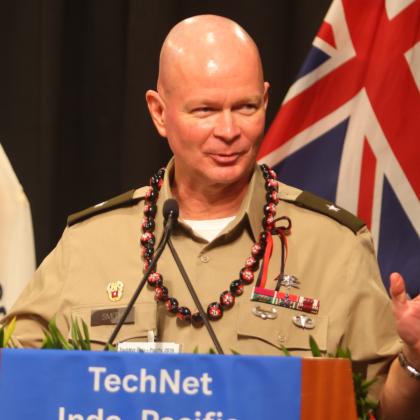
[The Warfighting IT Platform] is a massive framework of integration on the U.S. side that we have very rapidly rolled out to our partners during these recent exercises and persistently now.
Col. Kyle P. Hahn, USMC, director of G6 for U.S. Marine Corps Forces, Pacific, said the Marine Corps is evaluating a range of technologies for its PACE plans, including fiber-optic cables, microwave links and other options that do not rely on satellites. The approach also incorporates commercial satellite communications and 5G connectivity, along with traditional military communications capabilities such as high-frequency radio and military satellite communications.
Col. Glen Nettrour, USA, director of J6 for U.S. Special Operations Command Pacific, pointed to lessons from conflicts in Ukraine and Iran, emphasizing the need for a “deep bench in PACE.” He also stressed that planning must extend across both strategic and tactical operations, making it a shared responsibility.
Panelists also discussed how emerging technologies could accelerate kill-chain operations and help process information at greater speed.
“Instead of it being seven consecutive miracles that have to happen in a row to consummate a kill chain, wouldn't it be nice if we could leverage tools to help us identify that at a higher speed and scale, especially with the complexity that this theater provides?” said Capt. Victor T. Taylor, USN, director of communications and information systems, N6, for U.S. Pacific Fleet.
Developing a workforce with the skills to use emerging technologies was another focus of the panel.
Davis highlighted two Pacific Air Forces initiatives: mandated data citizen training for all personnel and “code fests” where developers work on problems using Maven Smart Systems.
“What I anticipate is that industry is going to get the opportunity to come and support us in those events,” she said. "We will love to have you out there because that's where the learning is really going to become more exponentially relevant.”
A consistent theme throughout the discussion was that technology alone isn’t enough. Achieving decision advantage in the Indo-Pacific region also depends on resilient networks, partnerships and a well-prepared workforce.
TechNet Indo-Pacific is co-sponsored by AFCEA International and AFCEA Hawaii. SIGNAL Media is the official media of AFCEA International.

Comments