
On Point: Q&A With Dr. Britta Hale

The Department of War’s (DOW’s) PQC (post-quantum cryptography) memorandum puts essentially everything in scope, such as weapons systems, business systems, Internet of Things (IoT), physical access control and operational technology. How do you even begin to prioritize when the perimeter is “everything”?
We have to start with the mission.
Because cryptography is the very foundation of security, including every individual device, user identity and data flow, the perimeter and scope of migration are indeed “everything.” This creates an unimaginable scale of vulnerability.
Additionally, this is a retroactive threat. Not only can an adversary with a quantum computer in the future hack our networks if not hardened to PQC, but adversaries can also harvest encrypted data today to decrypt it later or—even more critically in many cases—launch preprepared forgery attacks on authentication to take over command and control.
If we only patch select technologies in a piecemeal fashion, we leave other entry points vulnerable. An adversary only needs one quantum-vulnerable node to exploit a broader mission thread. The only effective way to prioritize across such a massive landscape is to map our cryptographic upgrades directly to operational capabilities.
The department’s core mandate is to deter war and ensure national security. By identifying the critical paths—the specific systems, links and data required to execute essential operational functions—we clarify exactly which technologies must be hardened first. We then prioritize accordingly. This shifts the focus from a hazy, indeterminant perimeter for the effort to clearer, concrete perimeters and actions. Whether it is a weapons system or a logistics database, if the system supports the critical path of the mission, it goes to the front of the line. This operational, mission-first prioritization model is a blueprint that both the department and private industry can—and must—use to navigate the quantum transition.
Notably, while migration is prioritized by mission thread, the discovery and inventory perimeter remains 100% of the enterprise.
How mature are cryptographic discovery and inventory tools today?
Automated Cryptography Discovery and Inventory (ACDI) [tools] have made commendable progress, but they are still in their infancy regarding true operational readiness.
Practical deployment and use of ACDI demands capabilities that span the range of protocols in standard information technology (IT) and operational technology (OT) use today, and the ability to categorize custom connection types, as well as tracing upstream information about cryptographic components and libraries. This diversity necessitates moving away from rigid, all-in-one platforms toward a modular architecture that integrates specialized vendor plug-ins.
Ultimately, cryptographic inventory is not an end state; it is an enabler. To be truly effective, these tools must evolve beyond the simple enumeration of vulnerable endpoints. The next phase of maturation must deliver interpretive and predictive analytics, allowing us to manage our cryptographic posture not just as an inventory list, but as a dynamic operational asset.
How will the department know the migration succeeded? What short-term and long-term indicators would tell you it’s working?
Integrating the department’s Acquisition, Testing, and Licensing Authorization for Security (ATLAS) process for authorizing PQC solutions—mandated in the November 18, 2025, memorandum “Preparing for Migration to Post Quantum Cryptography”—with DOW cryptographic inventory tools enables us to consistently identify which systems are PQC-enabled and align to policy, and which legacy assets must be replaced.
However, successful migration relies heavily on critical intermediate steps, not only the end-state. Foundational actions such as establishing coordination points, defining component-level road maps, building on cryptographic inventories, preparing the workforce, allocating resources, functional testing and ensuring reciprocity are all essential to a prepared enterprise. To track this progress, the department uses a comprehensive migration metric, managed by the DOW CIO (chief information officer), to assess milestones and sustained actions for PQC migration across all combatant commands, services and agencies.
Where is technology most ready for post-quantum migration today, and where do you see the biggest interoperability challenges?
Many cloud and web providers have extensively tested PQC for their solutions, putting PQC approaches that fit such environments ahead in the migration process. However, standards for data-in-transit protection and interoperability for cloud and web uses do not functionally support most IT and OT use cases.
The current challenge lies beyond those environments. Operational technology, IoT, vehicles and transport systems, medical systems, power and other critical utility infrastructure, tactical systems, satellites, logistics systems and other common technologies represent a substantial frontier. These systems have vastly different performance, connectivity, hardware and life-cycle requirements, making PQC approaches that support both data-in-transit protection and functional needs a critical area for development in international standards bodies.
Fortunately, industry is making notable progress on updatable rekeying solutions for network security. This innovation offers opportunity beyond simply salvaging systems from quantum threats to actual functional and performance improvements over legacy approaches within a quantum threat environment.
How should organizations test and validate PQC-enablement before committing them to production, and what failure modes worry you most in immature implementations?
Simply using an approved National Institute of Standards and Technology (NIST) post-quantum algorithm does not guarantee PQC security. An algorithm is only one component; real risks emerge from how algorithms are integrated into protocols, implementations and overall architecture. Organizations cannot just insert a new algorithm, check a “PQC box” and assume they are protected. Just as third-party red teaming is standard for software, independent cryptographic analysis under normal network adversary models must be the baseline. PQC must be secure by design, not secure by label.
Rigorous analysis prevents common failures, such as deploying key encapsulation mechanism algorithms without protocol integration—an error that exposes systems to decades-old attack vectors—or use of symmetric key distribution protocols. To avoid these risks, we must incorporate analysis as the baseline expectation and aim for standardization over custom, non-interoperable approaches. Utilizing vetted, standardized cryptographic rather than untested custom mutations saves time, reduces operational risk and ensures reliable security across the enterprise.
How should the defense industrial base coordinate with the department on PQC readiness, and what do you need from contractors that you’re not yet getting? What lessons are you learning?
The defense industrial base is essential in the post-quantum migration. The department does not develop, build or operate its technology in isolation. PQC readiness must be a true partnership between government and industry. To streamline this cooperation, the DOW uses the ATLAS process as a rapid authorization gateway for PQC solutions. This gateway accelerates the deployment of industry PQC-hardened technologies to DOW components by increasing confidence in commercial solutions, enabling expedited authority-to-operate approvals, reducing duplicative testing and baselining PQC-secure capabilities for our warfighters.
Critically, the department relies on industry to drive and facilitate interoperability. Significant gaps currently exist in standardizing and testing PQC data-in-transit protection for use beyond commercial cloud and web environments. There are key need areas for other IT and OT uses, including standards for communication among devices with mixed capabilities or in bandwidth-limited use cases. While promising initiatives are underway within the Internet Engineering Task Force for asynchronously updatable data-in-transit protections, we need industry to expedite standards and deliver solutions that use them. Industry-to-industry collaboration is key to ensuring relevant PQC data-in-transit protections are highly interoperable and drop-in ready, and the department highly values solutions that demonstrate immediate interoperability and built-in cryptographic libraries for agility.
How does PQC migration intersect with other major initiatives like zero trust and software supply chain security? Are these competing priorities or force multipliers?
Because cryptography is already in active use across systems today, PQC is not a new technology area we are introducing, but rather a necessary upgrade to our existing architecture. It addresses a technical debt, ensuring that our current and future digital systems and initiatives can function securely in a quantum threat environment.
PQC is a force multiplier. Major initiatives like AI, zero trust, cloud computing, software modernization, autonomous systems all depend on cryptography, including trusted identities, secure communications, protected data at rest and authenticated software. If the cryptography underpinning those capabilities becomes vulnerable, the capabilities themselves are at stake.
Notably, software supply chain security assessment must be extended for the age of quantum threats. It no longer suffices to ensure that a software vendor is trustworthy or maintains basic security hygiene; their entire pipeline must also be quantum-resistant. If the development environment or transmission medium for software is not PQC-secure, then quantum attacks and malware injections can occur upstream before procurement. Consequently, industry-internal transition to PQC is an indispensable partnership effort that has direct impact on the security of national defense.
Migration at this scale is as much an organizational-change problem as a technical one. How do you drive urgency across hundreds of components with different missions, budgets and cultures without the effort collapsing into compliance theater?
The PQC migration requires more than a technical procurement; it requires a cultural shift and a national transformation. Historically, cryptography has lacked dedicated organizational attention, often treated as a footnote to other cyber activities. This transition highlights the urgent need for a holistic mindset change, moving cryptography out of the shadows and managing it responsibly as a critical mission enabler.
Ultimately, this reaches the question at the heart of any technological transition: “Why is the change occurring?”
When people understand what the change is, you can get compliance theater. When they also understand how the change must occur, you can achieve actual compliance. When they truly understand why the changes are necessary, actual change becomes achievable. Cultural change goes even deeper: when people personally identify with the mission behind the technological transition, that change becomes unstoppable. Building a culture of responsible cryptographic management and quantum defense is the ultimate key to preparing the department for the quantum age.
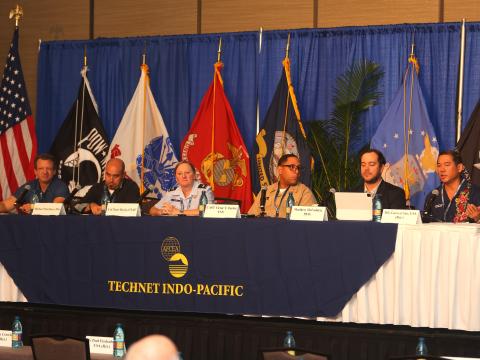
Interview conducted by Dr. Diane Janosek on behalf of the AFCEA International Cyber Committee.


Comments