
Turning the Tide in AI Mechanical Engineering
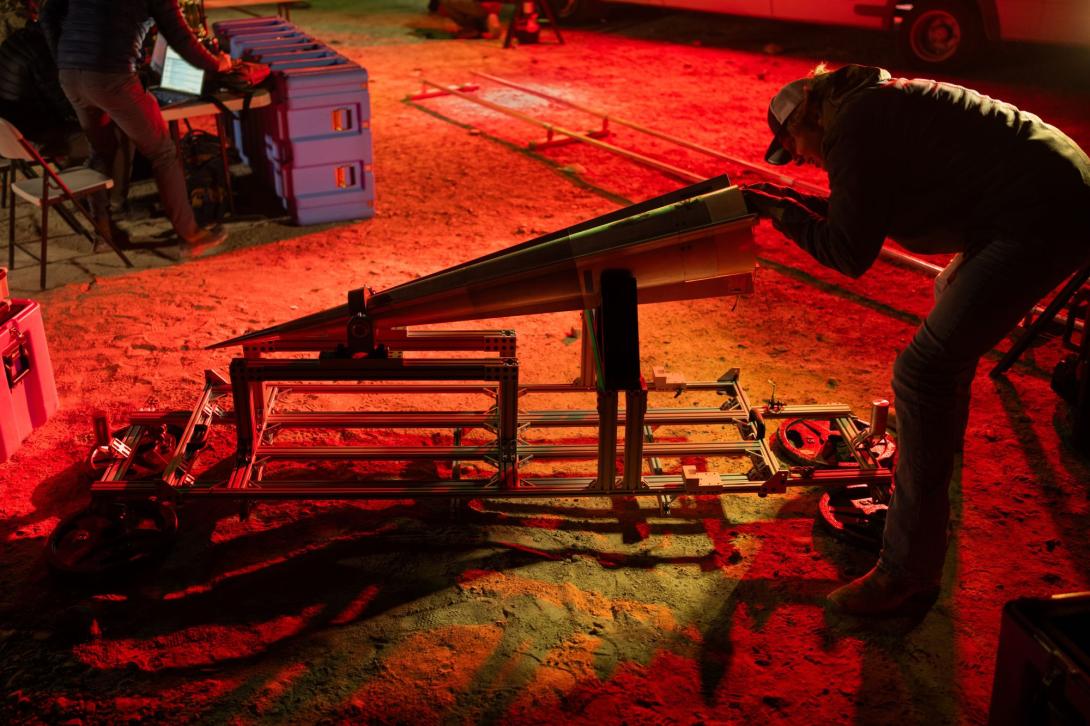

Researchers at Sandia National Laboratories are advancing mechanical engineering in ways not seen before, thanks to the use of artificial intelligence (AI) and 3D manufacturing.
As part of the Department of Energy (DOE) National Nuclear Security Administration’s (NNSA) breakthrough Genesis Mission that leverages a network of AI-enabled supercomputers and tools, engineers from Sandia worked with NNSA officials, researchers from DOE’s Los Alamos National Laboratory, Lawrence Livermore National Laboratory and the NNSA’s Kansas City National Security Campus to create the Aires Tide aircraft.
Aires Tide is a proof-of-concept flight test vehicle. The engineers wanted to validate the goal of going from engineering to flight testing in a highly compressed time schedule and at significantly reduced costs.
Daniel Turner, Sandia’s lead for Aires Tide and Patrick Hylton, Sandia’s chief of staff for the Genesis Mission, told SIGNAL Media in an interview that achieving mechanical integration of AI in the design process was a groundbreaking feat.
“Being able to use AI to design different aspects ... it is the ability to come up with these revolutionary new designs, and then the fact that we can manufacturer it at different scales, that is a big step forward,” Turner said. “And to do that quickly, that is considerable.”
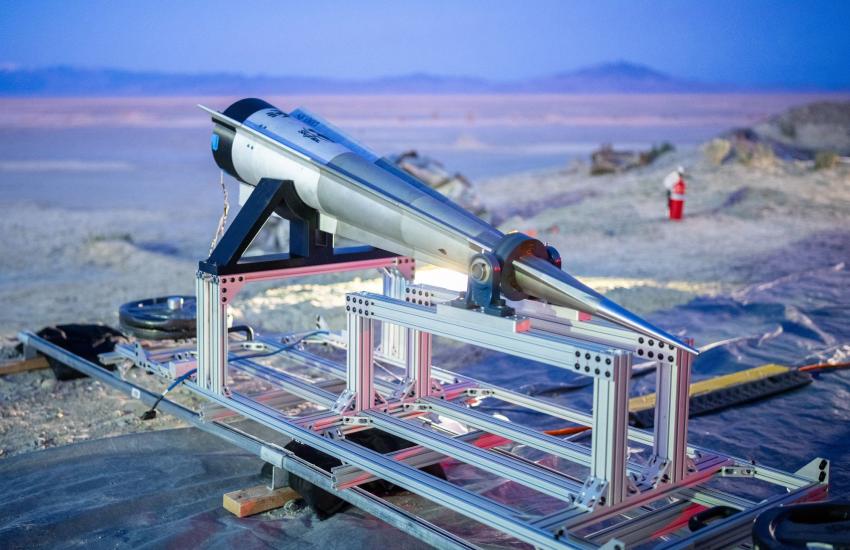
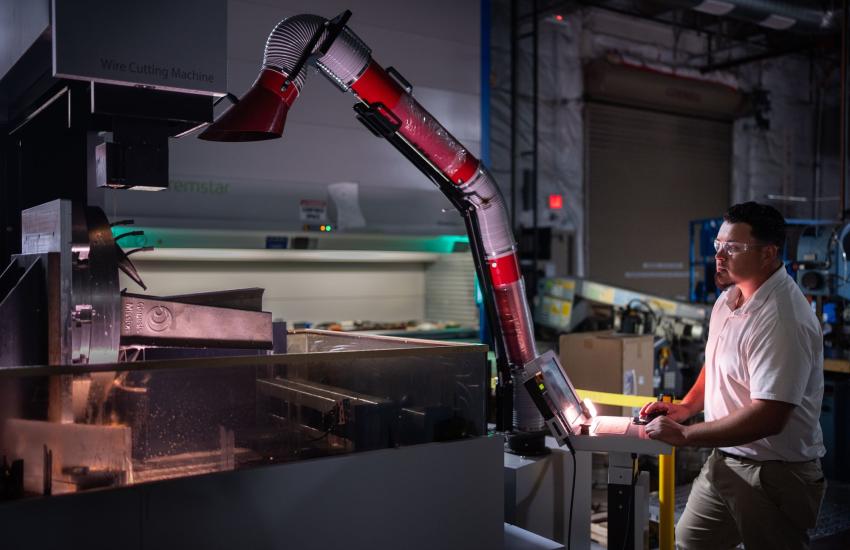
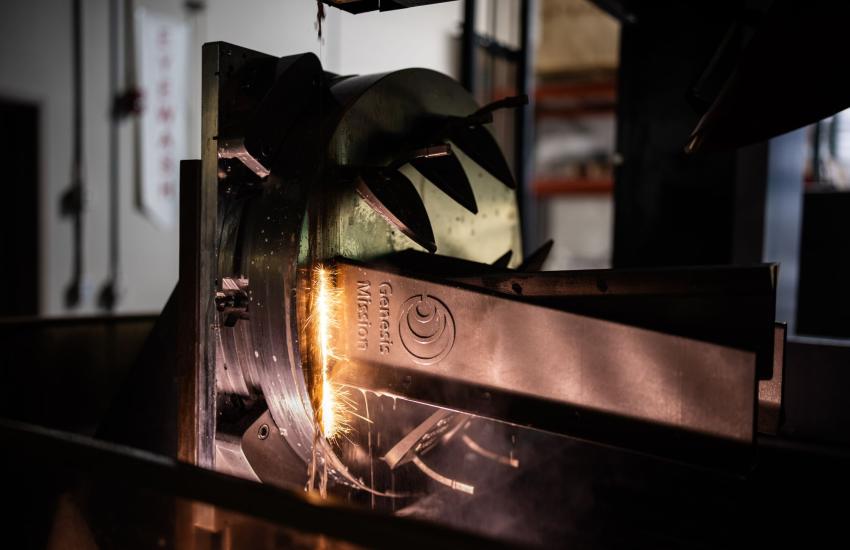
The researchers created several versions of the Aires Tide aircraft, some as long as 11 feet. The engineers 3D printed the fuselage structure, using an additive manufacturing platform, a Sapphire XC Velo 3D printer and artificial intelligence-based design processes.
To create the cone-like structure of Aires Tide in the 3D manufacturing process, the engineers used a nickel-chromium-based “superalloy,” called inconel, known for its exceptional strength and performance in extreme thermal environments.
Usually in the design process, engineers would have to manually create different scenarios and evaluate the designs, which takes quite a bit of time. The ability of AI to interact with their design models and run iterations was tremendous, Turner shared.
“We created a connection between AI and the modeling and simulation tools that we used,” Turner said. “Then to design for optimization, the AI would reach out to those models and run them for you. If I want to make a structure to hold the payload in a certain place in the aircraft, but I didn’t want it to heat up when it was going through the atmosphere, the AI runs some models, it checks out the results, it compares things and presents you with a variety of options.”
Using AI to facilitate the iterations of the mechanical designs freed engineers to perform more difficult tasks.
“So, the engineer, rather than spending 99% of his or her time setting up all that, they can think about other things and doing the engineering that they really like to do,” Turner continued.
As a result, the whole process using the mechanical integration of AI, supercomputing and additive manufacturing, went from “code to cone” in five months, the Aires Tide lead noted. In addition, the engineers were able to print seven nested Aires Tide pieces simultaneously, which significantly reduced manufacturing time and costs. The entire structure was printed in four or five days.
“If we had to do this with standard manufacturing, it would take us forever,” Turner shared. “And costs would have been much higher. We have data on doing things like this, so we can do cost and time comparisons, and it is substantially faster and less expensive going this route.”
The researchers relied on an impressive mix of tools and supercomputers, such as the large computing clusters from Los Alamos and Livermore; the AI-specific computer, called ANATO; Livermore’s El Capitan machine that performed all the modeling of heat flow and vibration; and OpenAI Version 3.
“That is one of the big draws of the Genesis Mission that Patrick is leading,” Turner stated, speaking about Hylton’s efforts to develop an integrated platform that connects the labs’ best supercomputers, experimental facilities, AI systems and unique datasets over the next decade. “It is the ability to tie all these big super computers and models together that have been made available for us to use in a national security context and then tie together with the engineer. It is a ton of really big capabilities.”
“This was really the flagship demonstrator for the Genesis program,” Hylton confirmed.
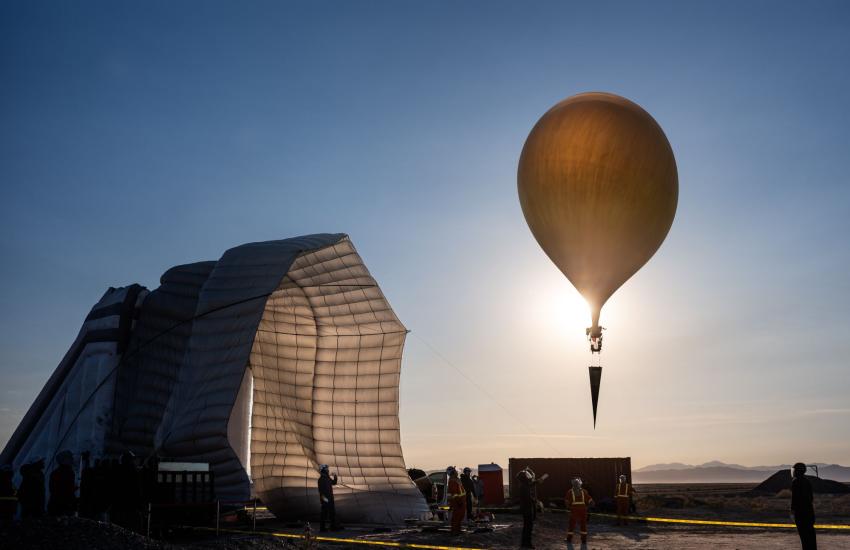
After the design and manufacturing phase, the engineers conducted a whole series of flight tests, including ones held at the wind tunnels at Sandia. They flew two smaller versions of Aires Tide at the U.S. Army Dugway Proving Ground in Utah, dropping the aircraft from a hydrogen-filled, high-altitude balloon from about 32,000 feet above the ground.
The aircraft had basic flight maneuverability, with telemetry and flight controls to make sure it dropped from the balloon in a stable fashion. Key sensors measured shock and vibrations, important metrics that any engineer likes to know about for aircraft, weapons or other components.
After the launch, the researchers were able to recover one of the two Aires Tide aircraft, which they will use for evaluation.
One of the challenges of the effort, the engineers said, was not the technology or the mechanical engineering. It was the digital thread, Turner said, and making sure all the project partners across all the various laboratories in different locations could communicate and share the design files and resources.
Hylton confirmed that intra-lab work could include 17 national laboratories, as well as production plant and site partners. “Trying to partner with all of those people, plus our federal partners, that can be a bit challenging,” he said.
However, the researchers made it work, and the whole effort from start to finish was speedy, Turner added.
“This is a tremendously fast program for the government,” Turner said. “It is rare that you see the national labs and government entities move faster than industry. Industry partners are trying to develop AI-embedded design. We have already executed and put that into production, and that is really impressive. And so, this is not only a demonstrator of the abilities, but a demonstrator that we actually move faster than the industry.”
Leveraging tools from the government’s advanced manufacturing initiative called CAMINO, or the Center for Advanced Manufacturing and Innovation, helped in that aspect. They found that industry partners were not able to print the fuselage at the scale and speed that they needed.
Now that they have baseline data from the Aires Tide flights, the engineers’ next steps will be to examine how to optimize their designs since they have gone through the entire process, Turner said.
They are also looking at the possibility of doing such advanced manufacturing potentially on location at the flight test range.
Hylton shared that the project was one of the more spectacular things he has seen in the last decade or so.
“The team has absolutely crushed it with this,” the Genesis Mission chief of staff said. “This is one of the most impressive things I have seen—I have only been here about 15 years.”
For Turner, he thinks they are just beginning to see what is possible.
“I think we are really just scratching the surface,” Turner said. “I walked away from this thinking that we had just opened a door to a whole new way of thinking about it. It’s a representation of where we could go. We know that it is a crazy variation from our typical way of doing things, but we were happy to say, ‘Let’s just go and see. Why not do it this way now and keep pushing in this direction.’ Because even this little bit of work that we have done has shown big dividends.”
Comments