
LLNL Experiment Marks Major Step Forward in Nuclear Weapons Modernization
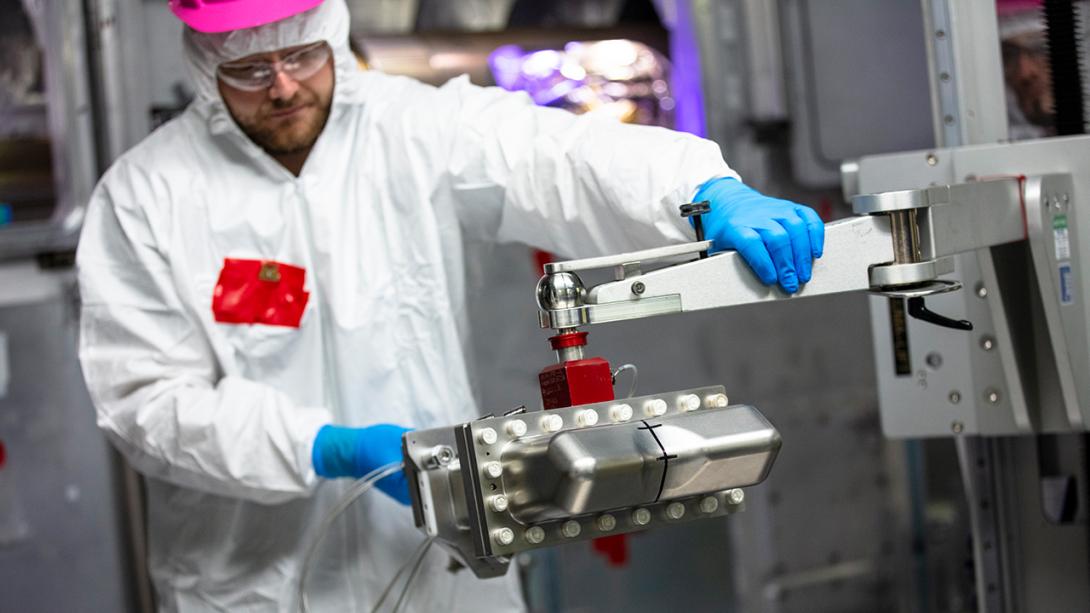
A new experiment conducted at the National Ignition Facility (NIF) assessed the ability of U.S. nuclear weapons to survive encounters with adversary missile defenses and reach their targets.
The experiment, conducted by Lawrence Livermore National Laboratory (LLNL), exposed weapons-grade plutonium samples to pulsed thermonuclear-neutron radiation for the first time.
In a press release, LLNL Deputy Director for Strategic Deterrence Brad Wallin said that the experiment demonstrates how this cutting-edge science drives the design and production of nuclear weapons. “By providing first-of-its-kind data on plutonium performance, NIF gives us the insight we need to modernize the stockpile and ensure the nation’s deterrent remains credible for the future.”
The October experiment delivered 2.065 megajoules (MJ) of laser energy to its target, producing a fusion yield of 3.6 MJ, which is about 1.7 times more energy than was delivered to the target.
The LLNL is a U.S. government-owned, contractor-operated research facility in California that focuses on national security. Established in 1952, its primary mission is to develop and advance nuclear weapons science and technology to ensure the safety, security and reliability of the nation's nuclear stockpile.
The experiment recreated some of the conditions that a U.S. weapon could encounter from enemy missile defense systems, and the results provide data to assess the resilience of these weapons, such as the W8701 warhead, in hostile environments.
This is essential to the National Nuclear Security Administration’s (NNSA) ongoing efforts to modernize the U.S. nuclear deterrent and ensure its reliability and effectiveness.
Read more here.



Comments