
On Point: Q&A With Alice Hong
What do you hope to accomplish in 2026 and beyond?
2026 promises to be a pivotal year for NUSTL. We remain steadfast in our mission to test and evaluate the tools and technologies that first responders depend on to advance public safety and homeland security. This year, we are bringing technical expertise to support state and local responders as they purchase and deploy unmanned aircraft systems (UAS) and counter-UAS (C-UAS)—domains where evolving policies and major events like the World Cup accelerate demand for advanced capabilities. Adaptability is essential as technology evolves at an unprecedented pace, bringing increasingly sophisticated solutions to the public safety community.
Artificial intelligence, drones and robotics are reshaping the field, challenging first responders to keep pace while fulfilling their primary roles. NUSTL plays a vital role in this evolving landscape. Our multidisciplinary team partners with America’s front-line responders to provide actionable insights and effective tools that strengthen their safety and resilience.
How is NUSTL helping agencies adopt drone technologies?
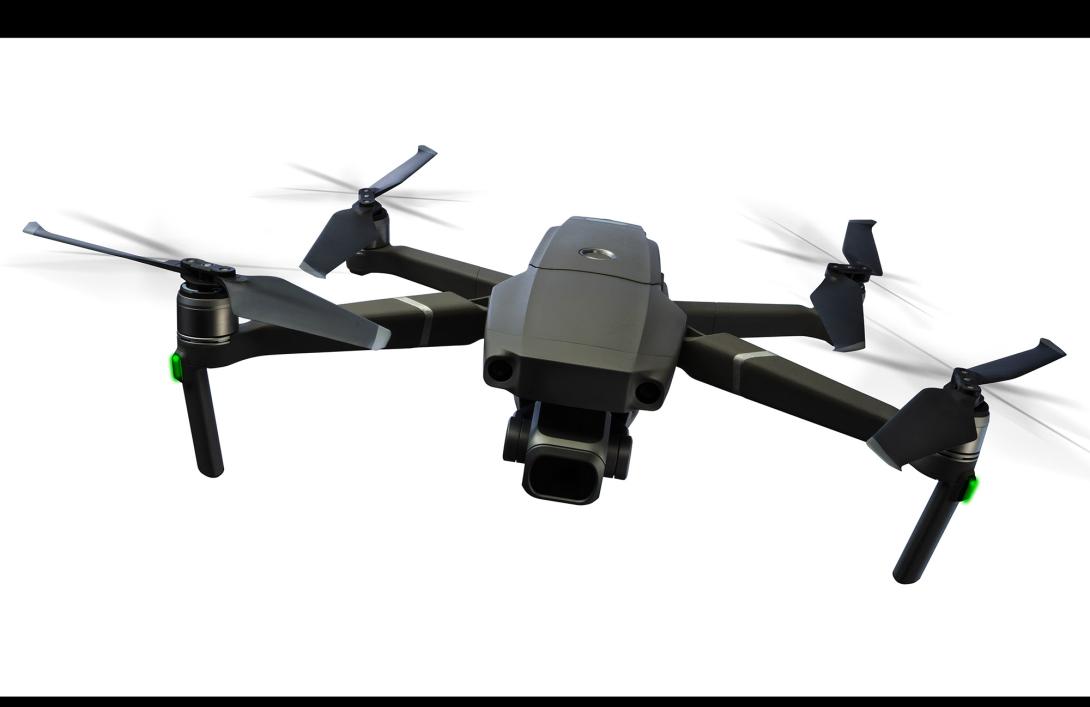
Drones are transforming incident response for police, fire, and search and rescue teams by making operations safer and more effective. However, a drone that performs well on the southern border may not be suitable for dense urban environments like New York City, where high radio-frequency noise and urban canyons present unique challenges. NUSTL’s rigorous testing and technical expertise help agencies identify which platforms best meet their specific needs.
We recently published the results of our field tests on Department of War-approved “Blue” UAS for first-responder missions, along with a comprehensive drone program toolbox to help agencies establish effective governance and policies for UAS programs.
These resources make drone adoption safer and more straightforward for public safety agencies.
Can you tell us about the Counter-UAS grant program?
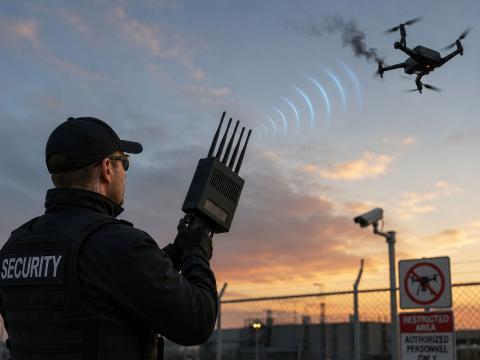
DHS’s newly established Counter-UAS Grant Program allocates $500 million to state, local, tribal and territorial agencies. The initial $250 million for C-UAS equipment purchases was awarded to the 11 states hosting FIFA World Cup 2026 matches. With over a decade of experience testing C-UAS, our team offers valuable technical advice to ensure operators have a common understanding of capabilities and systems, empowering them to select and deploy the most effective solutions.
We developed a Purchasing Tool that compares C-UAS products. It lets decision-makers evaluate options based on important factors like terrain, infrastructure, budget, interoperability and system performance. We introduced it during a national webinar with over 300 participants to help agencies get the most value from their grants.
What other efforts would you like to highlight?
Our System Assessment and Validation for Emergency Responders (SAVER) program is often described as “Consumer Reports for First Responder Technologies.” We provide market research and unbiased evaluations of equipment for public safety agencies. The SAVER website features over 1,000 reports covering a wide array of technologies, offering real-world performance insights from our comparative product assessments with responders.
Since most agencies do not have in-house engineers or scientists, SAVER provides information to support technology selection and investment decisions. This service is especially critical as technologies advance rapidly and budgets tighten. Our mission is to equip the public safety and homeland security community with the knowledge needed to adopt the most effective tools.
What innovations have you brought to NUSTL?
I use a grassroots method for horizon scanning, relying on strong relationships with state and local responders and daily conversations to identify emerging hazards and threats. Through these exchanges, I’m able to spot trends early. For instance, our partners alerted us to lithium-ion battery fires and dangerous drone activity well before these became national concerns. Our C-UAS work began in 2014, when law enforcement partners brought early drone incidents to our attention. This decade of experience ensured we were ready when the 2025 Executive Order: Restoring American Airspace Sovereignty was issued.
I encourage the lab to focus equally on operators and technology. We involve first responders throughout, from defining requirements to evaluating technology in operational environments. Ultimately, what matters is how these tools perform in the unpredictable situations first responders encounter daily.


Comments