
U.S. Army Entering Era of Acquisition Concurrency
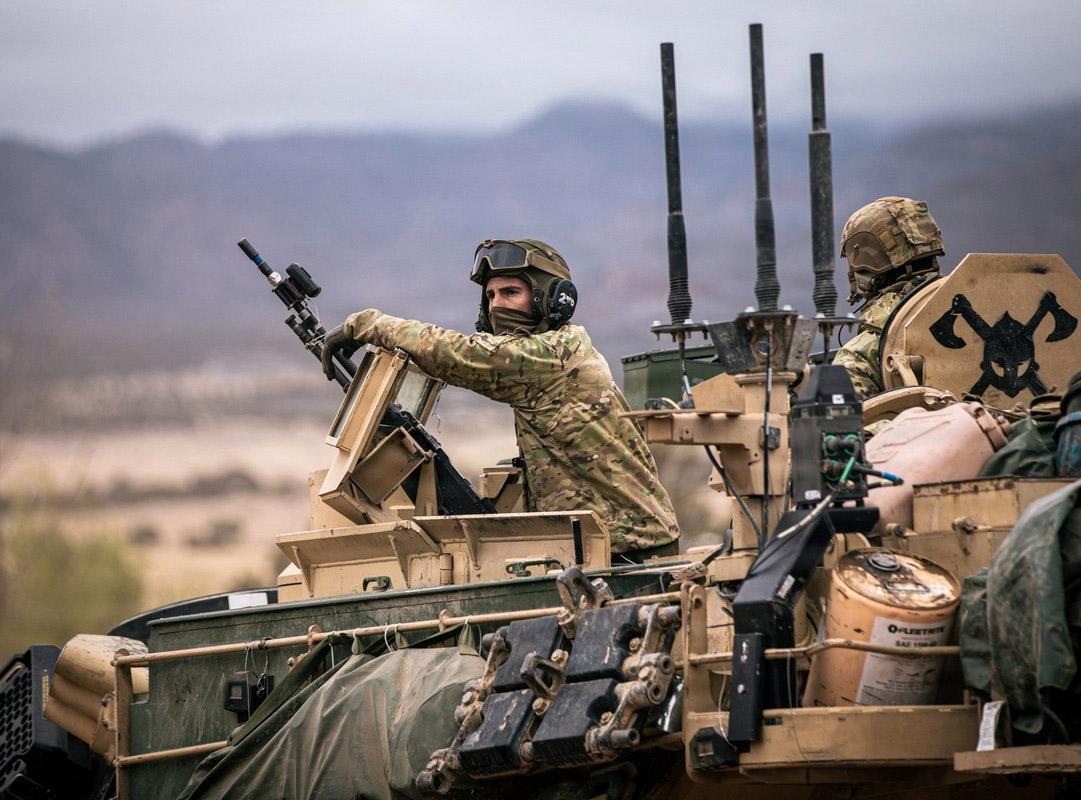
With its Next Generation Command and Control (NGC2) modernization effort, the U.S. Army is moving beyond the traditional linear process of developing, acquiring and delivering technologies and is instead adopting what might be described as an everyone-at-once approach to more rapidly deliver new capabilities to soldiers.
In recent decades, military acquisition of new systems followed a complex and time-consuming process that included: release of a request for proposals (RFP); industry questions and answers; proposal submissions; proposal evaluations; discussions and negotiations with select vendors; final proposal submissions; source selection; and contract award.
Following the contract award, an official program start would be followed by requirements refinement and system design, detailed design and development, integration and testing, operational testing, low-rate initial production, full-rate production, and then fielding and deployment, followed by system sustainment.
The process could take years, by which time the capability being bought could become obsolete before it was even fielded.
But that era is done, according to the man responsible for delivering NGC2 capabilities, Brig. Gen. Jack “Shane” Taylor, capability program executive for Command, Control, Communications, and Information Network (CPE C2IN).
“Those days are gone. If the industry has ideas, we’re willing to have those discussions. We’re building a process to where there’s a single kind of interface into the organization as new technologies come online,” Taylor said in a SIGNAL Media interview. “It’s been a whole-of-enterprise approach, and everybody has been just tremendous partners. The entire community—from the requirements process, through the sustainment community—that whole chain has bought in. And we’ve been able to shorten the cycle, because it’s not linear. Everything’s concurrent now.”
The general credited a dramatic cultural shift enabled by the portfolio acquisition executive (PAE) construct, an Army acquisition reform aimed at enabling the service to develop, test and field cutting-edge capabilities faster than ever before.
“I think the major accomplishments have been really around the cultural approach that we’ve taken from an Army perspective. We’ve seen over the last 12 months the realization of what we’ve done with the PAE construct and how we’ve tailored the requirements process for Next-Gen C2 that has given us the ability and the flexibility to rapidly inject new capabilities and base those new capabilities off of commercial availability, not a strict set of requirements,” he said. “The fact that the requirements community is now a part of that has been a huge enabler.”
He backed the assertion with a real-life anecdote involving the 4th Infantry Division (4ID), which, along with the 25th Infantry Division, is commonly referred to as a “prototype division.” The two units engage in a series of operational training events with NGC2 prototypes designed to expedite the Army’s command and control and networking transformation.
Taylor recalled a vendor delivering to the 4th ID a single transport communications solution, exactly what the Army requested in its requirements document. But given the opportunity, the vendor asked questions of the division personnel, the requirements team, the acquisition team and test community personnel, all of whom were present.
“We were able to, basically for a very similar price point, add a lot more capabilities to that system based off of commercial availability, so it’s five times more capable now,” Taylor reported. It has multiple types of transport, and that is simply because we opened up the requirements process.” He declined to name the specific vendor or system, but added that the system offers L-band, low-Earth orbit and geostationary-Earth orbit, as well as teleport, infrastructure and services management.
In another example, the CPE C2IN website says the program manager for C2 data and artificial intelligence is responsible for delivering an integrated, artificial intelligence/machine learning-enabled, and threat informed, scalable, resilient, converged and meshed data platform with sufficient capacity at each echelon, enabling a dynamic and collective warfighting command and control while operating in a disrupted, disconnected, intermittent and low-bandwidth tactical environment aligned to the Army’s NGC2 concepts.
That may sound like an old-style RFP with requirements explicitly defined and a long list of capabilities that might result in “perfect getting in the way of good,” as military officials often like to say about the more traditional acquisition process. Taylor, however, indicated that the long list of capabilities came from this new era of acquisition.
“We were doing what I would call alpha requirements with the requirements community, based off of working with these division commanders, going out there supporting these exercises, identifying where they have gaps or where they identify needs, and then working with commercial industry right there in the dirt to bring to bear some of those new capabilities,” Taylor said. “Then we use the technology to inform the requirements, as opposed to the other way around, where the requirements are driving developmental efforts that take an extended period of time. What we’re finding, for the most part, is there’s a lot of dual-use capabilities.”
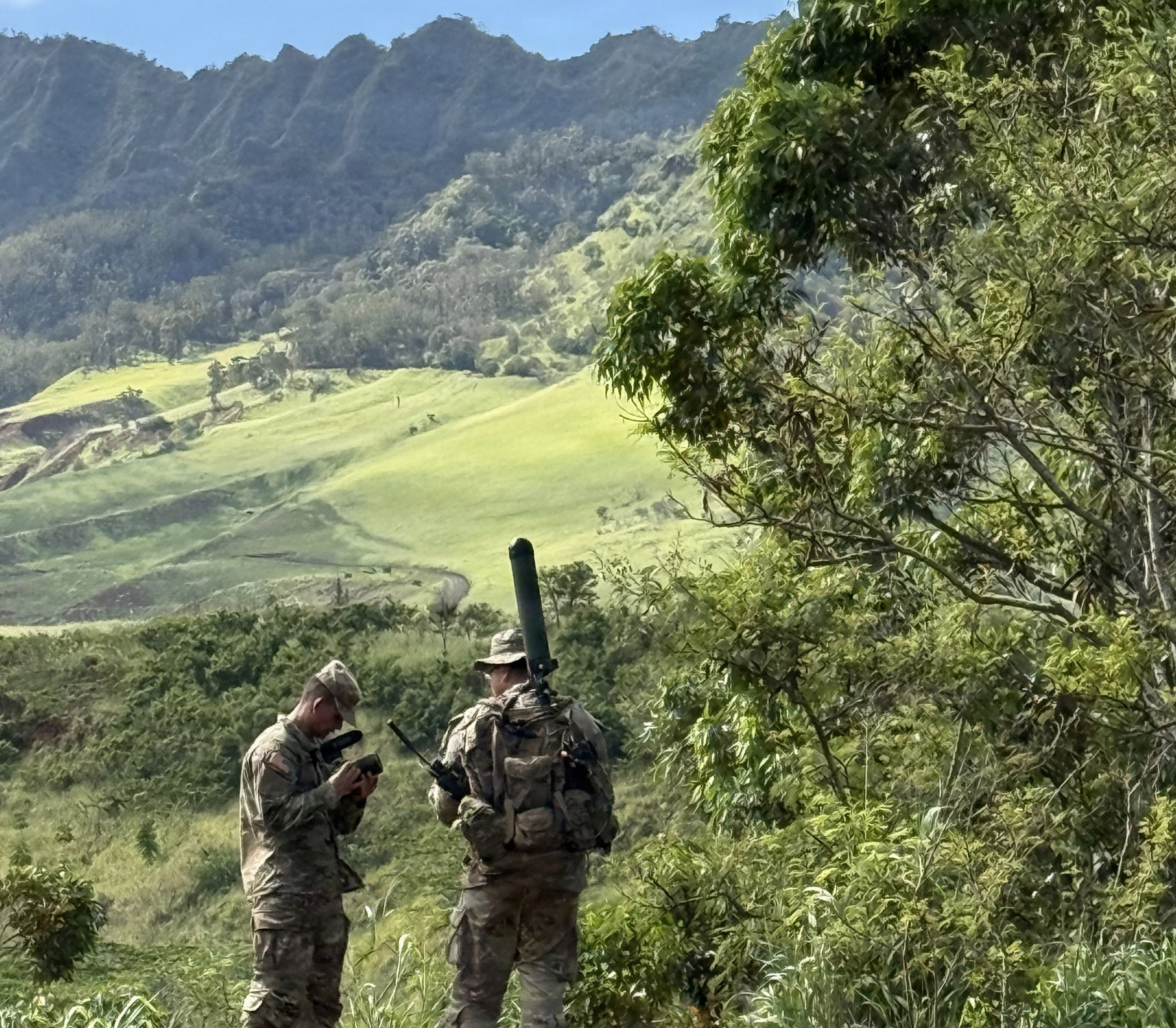
The NGC2 ecosystem delivers information across all warfighting functions to enhance commanders’ decision-making and speed, with artificial intelligence playing a key role in quickly processing and analyzing huge volumes of data at the battlefield edge.
Additionally, the Army can remain flexible and update requirements as necessary. “We continue to iterate that way as new gaps are identified, as new threats emerge. That’s kind of the approach that we’ve been taking. It’s just allowed us to go really fast, and we’ve gotten out of this two- to three-year requirements process to two-to-three-year development process to deliver something five years later that’s already four years old, and so we’re able to do much faster turns now.”
Because the two prototype divisions are different in their formations and the way they fight, the CPE offered, they are providing “decent information and data about how we want to proceed with next-gen C2.” The service will move into “continuous delivery” in the 2027 fiscal year and continue to mature systems, “where we’re getting close to culminating with 4ID with PCC,” he said, referring to the Project Convergence Capstone event.
“And then we’ll also culminate at 25th ID at JPMRC [Joint Pacific Multinational Readiness Center] in November. Using those two, it’s a best-of-breed approach,” he said.
The general noted that the two divisions are not competing against one another. “It’s really learning from both of the different environments. In the near term, basically we’re going to take the best of breed and turn that into—you could call it a converged architecture—but we’ll call it a best of breed of what works between those two formations.”
The focus next year will be on I Corps, including its two Stryker brigades, 1st Stryker Brigade Combat Team, 2nd Infantry Division, and 2nd Stryker Brigade Combat Team, 2nd Infantry Division. “Next, right now, we are slated to go to I Corps, some of their down trace units, Seventh Infantry Division Headquarters, and the two Stryker brigades out at [Joint Base Lewis-McChord].
The general emphasized that NGC2 will provide the flexibility to continuously update capabilities as new technologies become available. “As we go into [20]27 as we go to I Corps, and best-of-breed,” he began, using the term as a verb, “this capability, there’s still going to be new technologies that come online within the year of execution that this ecosystem is going to allow us to bring into it, whether it’s in the transport layer, whether it’s in the infrastructure, definitely new apps,” he said. “There will be an abundance of new apps in the marketplace that we’ll want to continue to onboard, whether they be soldier-made, industry-developed, or some other kind of checkpoint. This is a living ecosystem that will continuously update and evolve.”
Comments