
1-Year-Old JIATF 401 Awards $7 Billion Counter-Drone Contract
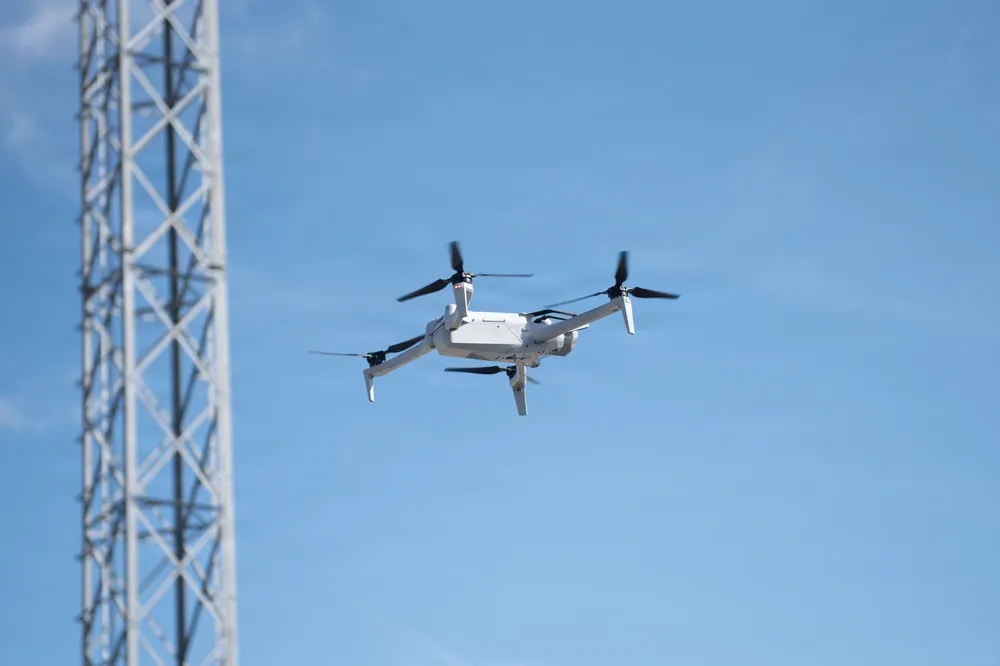
The Joint Interagency Task Force 401 (JIATF 401) announced Tuesday indefinite-delivery/indefinite-quantity (ID/IQ) contract awards of $7 billion for counter-unmanned aircraft systems (C-UAS).
“That is right, $7 billion,” said Brent Ingraham, assistant secretary of the Army for Acquisition, Logistics and Technology, speaking to reporters by phone. “I can tell you from being in this business for a number of years, this is a real achievement. And, it really took the entire team to get here.”
The JIATF 401, based at the Pentagon and stood up in August 2025, is charged with rapidly advancing counter-unmanned aerial system (UAS) technologies against smaller drones (Group 1, 2 and 3 UAS).
“We are doing everything we can to move quickly against a problem that is evolving rapidly,” said Brig. Gen. Matthew Ross, director of JIATF-401, also on the call with Ingraham.
This series of ID/IQ awards, through the Army Contracting Command, provides additional contracting capacity to support the Pentagon’s Domestic Shield homeland security effort. The contracts will also support other requirements across the joint force.
“Domestic Shield is focused on the defense and providing counter-UAS capabilities to defend critical infrastructure,” Ross said. “It was one of the first efforts that we took on, and we made a ton of progress there. What I have seen from this position is that countering against the threat of drones is both a warfighting and a homeland defense imperative."
A series of 10 ID/IQ awards made Monday are for counter-UAS capabilities, including “sensors to effectors to command-and-control systems,” Ingraham said. “It really gives us options as newer requirements emerge.”
The awards went to:
- Allen Control Systems Inc. (ACS): $500 million base ID/IQ award
- Digital Force Technologies LLC (DFT): $500 million base ID/IQ award
- DroneShield LLC: $500 million base ID/IQ award
- Echodyne Corp.: $250 million base ID/IQ award
- Napatree Technology LLC: $500 million base ID/IQ award
- PVP Advanced EO Systems Inc.: $250 million base ID/IQ award
- RADA Technologies LLC: $500 million base ID/IQ award
- SmartShooter Inc.: $150 million base ID/IQ award
- SRC Inc.: $500 million base ID/IQ award
- L3Harris WESCAM: $500 million base ID/IQ award
The JIATF expects more ID/IQ awards to follow.
“I'll tell you there isn’t one answer to the drone threat,” Ingraham stated. “So, we didn’t build around one solution. That is why there was multiple enterprise-wide contracts. Ultimately, we’ve heard a lot from industry over the last years ... and we have talked about how we get closer to commercial processes and how we changed the acquisition structure.”
The task force effort features a marketplace approach to include both an unmanned aircraft systems marketplace and a counter-unmanned aircraft marketplace to leverage commercial capabilities.
The marketplaces are available not only to the joint military but also state, local and tribal governments, as well as allies and partners, and provide different capabilities to meet various needs.
“With the 5th Fleet or the Air Force in Europe, you would see different requirements,” Ingraham said. “We want to make sure that all of those tools are available for our users.”
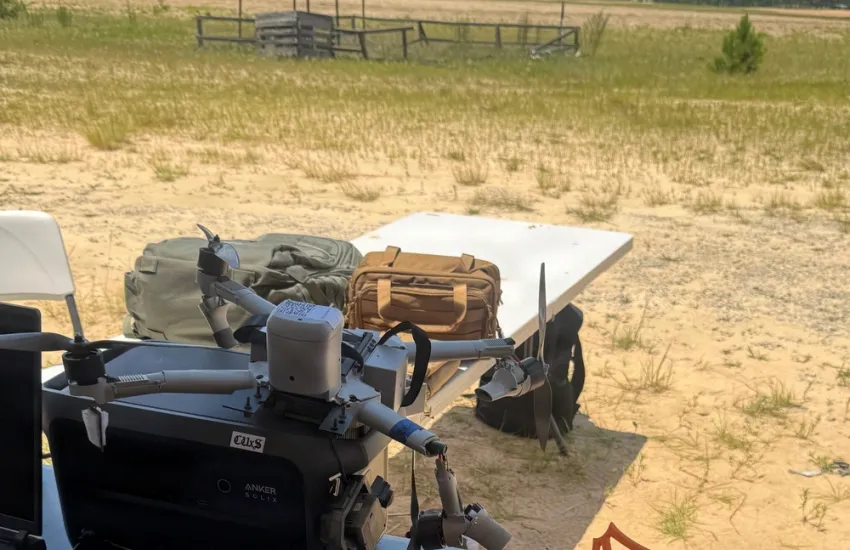
In addition, the contracting approach stresses open system architecture and is what Ingraham calls an advancement on MOSA, the military’s modular open systems approach, with the multivendor marketplace enforcing strict open architecture standards with interchangeable components that break proprietary vendor lock.
“I would argue that MOSA is an old term,” he said. “What I would like you to use going forward is we are actually beyond MOSA now. When we look across the sets of capabilities out there, whether it be radars, cameras, acoustic sensors, different effectors, you go through the gamut of capabilities that can either detect, defeat or track [adversarial drones]. We no longer have to buy a system of systems, because we are beyond MOSA. We have actually implemented across the Army an API [application programming interface] marketplace where these systems can now plug and play.”
Additionally, the $7 billion effort builds upon June's $13.8 million contract award for unmanned aircraft system detection and mitigation capabilities for the Joint Task Force-Southern Border to employ in support of the U.S. Department of Homeland Security and U.S. Customs and Border Protection needs in securing the southern border.
This past summer, the JIATF was also busy with a directed-energy counter-unmanned aircraft systems pilot program at Whiteman Air Force Base, Missouri; Fort Huachuca, Arizona; and Fort Bliss, Texas, as well as Naval Base Kitsap, Washington; and Grand Forks Air Force Base, North Dakota. The task force’s goal is to advance the evaluation and fielding of high-energy lasers and high-powered microwave systems in a counter-drone capability. And the pilot included “rigorous testing and operational assessments” of lasers on drones for homeland security and southern border applications.
Additionally, Ross confirmed the international aspects of the JIATF program are advancing well, especially with Australia.
“The first ally and partner that we are doing the ‘walk, crawl, run’ approach was Australia,” he shared. “About 10 days ago, Australia successfully procured, in this case it was a UAS, off the drones.mil marketplace under FMS [foreign military sales].”
In April, the U.S. secretary of the Army signed an agreement with Romania’s minister of national defense, enabling Romania to procure counter-unmanned aerial system capabilities from the U.S.-based marketplace. The leaders see more than two dozen countries as part of the effort.
“These awards build on JIATF 401’s broader efforts to expand enterprise-wide access to counter-UAS capabilities through streamlined acquisition pathways that support validated operational requirements,” the task force said in Tuesday's statement. “By expanding access to technologies informed by applicable test data and life-cycle considerations, JIATF 401 is helping equip warfighters with layered counter-UAS capabilities against evolving unmanned aircraft threats at home and abroad.”

Comments