
President's Commentary: Software Acquisition Is Strategic Advantage
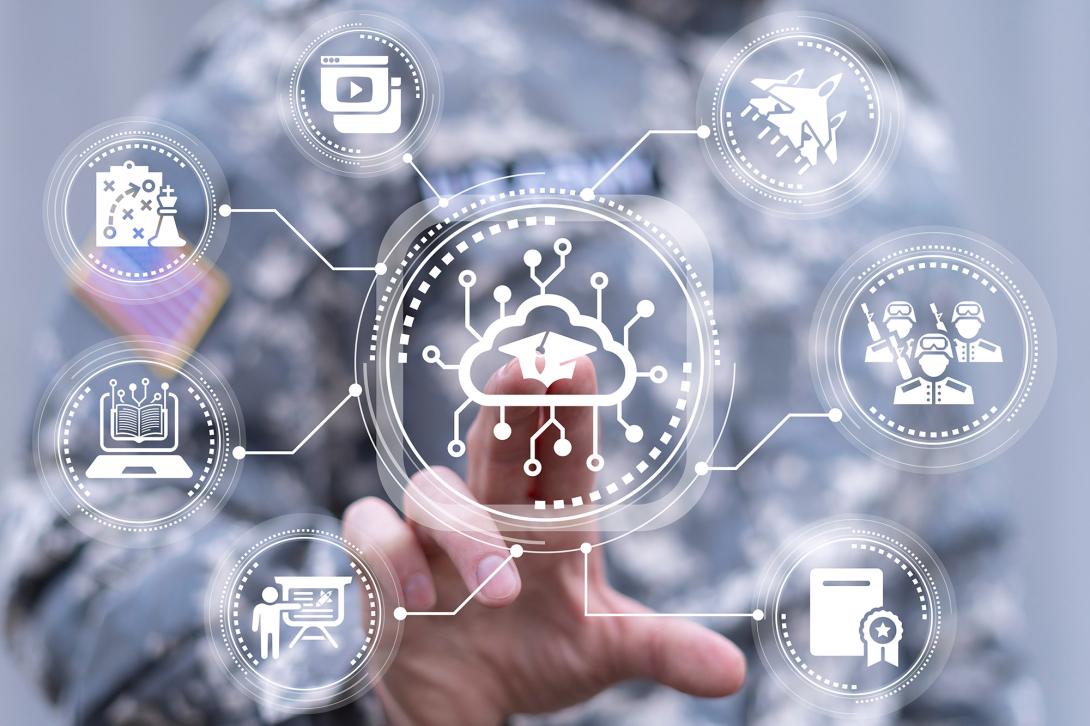
Across the defense and intelligence communities, software is the driving force at the center of how we operate, analyze, defend and decide. It is embedded in nearly every weapon system, command-and-control (C2) capability and intelligence platform. For our military, our civilian agencies, our allies and our industry partners, software is a source of strategic advantage, and success increasingly depends on organizations’ ability to adapt at speed and scale.
Last year, Secretary of War Pete Hegseth directed all Department of War components to use the Software Acquisition Pathway (SWP) as the preferred approach for software development efforts. The guidance reflected a growing understanding that software-defined warfare is today’s operational reality. It also signaled a fundamental shift in how military advantage is created and sustained.
In today’s environment, the ability to rapidly develop, securely update, seamlessly integrate and operationally deploy software at mission speed is becoming just as important as, and in many cases the key enabler of, the hardware our warfighters rely upon. Across the Department of War and the federal government, decision-makers are working with industry to accelerate the acquisition and fielding of critical software-defined technologies.
Ultimately, software advantage is inextricably linked to decision advantage: the ability to sense, understand, decide and act faster than an adversary while preserving our own C2 in a contested environment.
Software acquisition also offers a practical advantage: the ability to deliver more capability with greater efficiency. In May, the department announced a five-year enterprise agreement for Microsoft services that is expected to save approximately $422 million annually while providing a common digital foundation across the military, intelligence community and U.S. Coast Guard. As mission demands continue to grow, software presents an opportunity to increase operational effectiveness while making better use of taxpayer resources.
Few examples illustrate this shift more clearly than operations in Ukraine. Throughout the conflict, software has played a decisive role in battlefield operations, from targeting and intelligence sharing to command and control.
The intelligence community faces a similar imperative. As data volumes grow and decision cycles accelerate, intelligence professionals increasingly depend on modern software architectures to transform information into actionable intelligence.
The urgency of software acquisition is equally evident in the Indo-Pacific region, where vast distances and contested operating environments place a premium on agility, interoperability, resilience and rapid decision-making. Maintaining a competitive advantage in the region will depend on the ability to securely share data, integrate capabilities and adapt to emerging threats faster than potential adversaries.
Allies are reaching similar conclusions. NATO’s Software Factory demonstrates how governments are investing not only in software development, but also in the infrastructure, processes and partnerships needed to securely deliver and continuously improve digital capabilities. The lesson extends far beyond Europe: maintaining operational advantage increasingly depends on the ability to develop, integrate and field software at mission speed.
This month, AFCEA and our Hawaii Chapter bring together government, military and industry leaders at the annual TechNet Indo-Pacific strategic conference in Honolulu. There may be no better forum to discuss the challenges and opportunities associated with software acquisition and modernization. Success in this consequential region will depend on strong partnerships among those who develop, acquire, deliver and sustain the capabilities required for future conflict.
As we gather, I welcome the opportunity to continue this dialogue with leaders from government, the military, industry and academia. Industry, in particular, plays a vital role, as the challenges we face move too quickly for any one organization to solve alone. Industry must come to the government and military with solutions already in mind. Government, military, industry and academia must continue to communicate and work together to deliver interoperable, resilient and scalable capabilities faster, reduce barriers and accelerate outcomes for the warfighter.
In a competitive software-defined era, maintaining our collective advantage will require more than innovation alone. It will require trusted partnerships, agile acquisition and a shared commitment to delivering mission capability at the speed of relevance. Success ultimately depends on the people who apply these tools to mission outcomes: the acquisition professionals, developers, operators, analysts and leaders who turn digital capability into operational effect. Software may accelerate decisions, but the differentiator will always be our continued investment in people.

Comments