
Building an Intelligent Network Fabric for Command, Control and Defense

Integrated sensing and communications for improved spectrum utilization.
The United States is in a race to strengthen defense of facilities, venues, critical infrastructure and borders, and safeguard against new threats such as unmanned aerial vehicles (UAVs) in an increasingly contested electromagnetic environment. As adversaries exploit spectrum congestion, electronic warfare and emerging counterspace capabilities, resilient communications alone are no longer sufficient.
Future defense architectures will require networks that can both communicate and sense—simultaneously and intelligently—within the same spectrum resources. Integrated Sensing and Communications (ISAC) represents a pivotal step in this evolution.
The objective
Military spectrum superiority is the ability to control and exploit the electromagnetic spectrum (EMS) for friendly forces while denying it to adversaries, ensuring secure, reliable operations across land, sea, air, space and cyberspace. It is crucial for modern communications, intelligence and weapons systems, acting as a key enabler for the Joint All-Domain Command and Control (JADC2) initiative.
There are constraints—both physical and policy—on how spectrum is assigned and used. According to the National Telecommunications and Information Administration (NTIA), which is responsible for allocating frequencies for federal use:
“Until recently, advanced technology has always kept slightly ahead of the demand for spectrum. As demand for spectrum has increased, technology has developed radios that can perform the same function at higher unused frequencies or increase spectrum efficiency and re-use of existing frequencies. Now, demand for spectrum is growing rapidly, both from expanded use of current services like cellular radio and precision landing systems for improved aviation safety, and the development of uses, such as PCS, digital audio broadcasting, advanced television, and satellite sound broadcasting.”
The military, too, is expanding its use of the spectrum it has been assigned. Just think of the advances in using wireless capabilities—such as controlling UAVs and acquiring intelligence, surveillance and reconnaissance (ISR) data.
This is where the evolution of ISAC is essential. By converging sensing functions with advanced wireless communications, ISAC enables distributed situational awareness across terrestrial and space-linked domains without relying on dedicated radar spectrum. In other words, U.S. forces in a contested space can use emissions from communications systems such as 5G networks and tactical radios to detect, identify and track threats.
For the Department of War and broader defense community, ISAC offers a pathway to augment existing sensors and radar systems, improve spectrum efficiency and strengthen resilience in contested environments. AI-native network architectures further enable adaptive spectrum maneuver, real-time interference mitigation and autonomous optimization—capabilities essential for defending both homeland and orbital assets.
Tackling the ISAC challenge
“Radar systems require electromagnetic spectrum to sense and track physical objects. Communication systems, e.g. 5G/6G, require electromagnetic spectrum to exchange digital information. With ISAC, the idea is to repurpose the communication networks to enable sensing,” said Steve Vogelsang, chief technology officer of Nokia Federal Solutions.
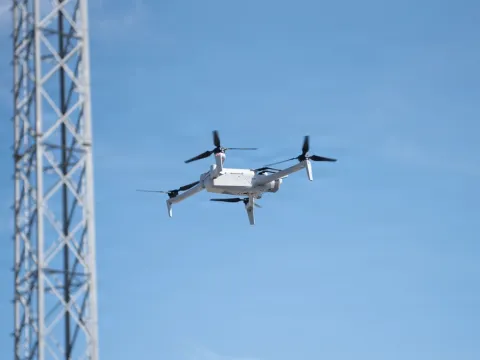
To that end, Nokia Federal Solutions, AT&T and Texas Tech University (TTU) are collaborating at the Critical Infrastructure Telecom Ecosystem Incubator featuring ISAC acceleration, located in the Reese National Security Complex in Lubbock, Texas. “Sensing, like radar, involves processing the received signal using algorithms similar to those used in purpose-built radar. Thus, the 5G hardware can be used with modified software to perform that sensing processing,” said Dr. Brenda Connor, senior technical managing director of TTU’s Critical Infrastructure Security Institute. “We are researching energy-aware object detection (e.g., there is a blip), tracking (e.g., the blip is moving), categorization (e.g., is the blip a drone or a vehicle), and classification (e.g., is the object a threat) to protect critical infrastructure such as microgrids, oil and gas, and water/wastewater.”
Connor said the exciting aspect of integrated sensing and communications is that the same spectrum frequency can be used for both cellular communications and for sensing at the same time. For example, rather than radar-like sensing competing with cellular communications, the RAN scheduler will determine whether each symbol of the Orthogonal Frequency Division Multiplexing (OFDM) waveform will be “transmit” or “receive” and whether the symbol will be cellular communications payload or sensing payload—a very efficient spectrum sharing capability.
Vogelsang said ISAC can repurpose communication networks to enable sensing in a number of ways, including passive sensing, where a sensor detects and characterizes existing emissions from the communications networks to look for reflections from an object or identify a control signal (e.g. drone control signals); integrating sensing into the communication network (e.g. 5G / 6G), where the network systems listen for reflected signals much like a radar; or extracting and analyzing key performance indicators from the network and/or user devices that can indicate the presence and location of emitters or physical objects.
More simply: “We’re using part of the spectrum for sensing, some for communications, sliced in time and frequency,” he said.
In practical terms, ISAC sometimes leverages existing capabilities; in other cases, new sensors are added to look at existing signals. It may also sometimes add new emitters or add new signals to existing emitters, Vogelsang said.
6G is standardizing ISAC for multivendor interoperability and is also exploring optimizations as part of the development of 6G telecommunications. Merging ISAC with AI is a cornerstone of 6G, enabling networks to simultaneously communicate and “see” their environment using shared spectrum and hardware. AI optimizes this integration, enhancing real-time detection, tracking and resource management.
“In the 5G/6G context, these are steps toward AI RAN,” Vogelsang said, “that potentially enables you to put models in your network to do the first level of analysis, reduce the information flow. That’ll be a big part of any ultimate solution, some analysis at the edge, some in more central locations … whether it’s just tracking something or triggering a mitigation.”
ISAC as a concept is much more on the defensive side of the equation, Vogelsang said. “Adding situational awareness [in] initial use cases, the biggest push is more CONUS-based to protect critical infrastructure, major events, the border … I think the technology will get worked out more on protecting U.S. infrastructure, then it can be taken out into more of a tactical environment.”
Using ISAC has real-world benefits for the military. Anything that extends situational awareness beyond the range of purpose-built radar installations—as when troops are advancing in a contested space—provides advance warning of prospective attack. Having that capability at hand, using existing communications devices, means no additional equipment to carry. And upgrading software, for instance, in those communications devices is fast and cost-effective.
ISAC as a part of Golden Dome
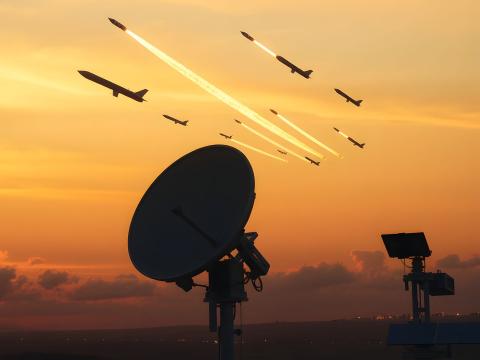
Golden Dome is a planned multi-layered missile shield intended to protect the U.S. from ballistic, hypersonic and cruise missiles. It envisions a constellation of thousands of satellites equipped with sensors and interceptors to provide global “boost-phase” defense. Through the Scalable Homeland Innovative Enterprise Layered Defense (SHIELD) indefinite-delivery/indefinite quantity (IDIQ) contract vehicle—$151 billion over 10 years—TTU is an awardee that is focused on the lowest layer of defense, called the “Limited Area Defense.” Nokia Federal is also included on the SHIELD IDIQ contract vehicle.
“We are focused on using the telecommunications ISAC feature to sense objects which threaten critical infrastructure, such as drones and vehicles with a focus on remote energy-challenged environments,” Connor said. “We are also innovating with the Open ISAC processing interfaces, which would feed a sensing data stream to an AI-enabled fusion layer such as a common operating picture for situational awareness. It actually is the AI-enabled fusion function, which would assimilate the information provided from the telecommunications sensing capability, with other information, to determine appropriate countermeasures.”
Vogelsang and Connor explained that this ISAC solution means Nokia’s RAN will provide an API that provides the sensing data set representing the detected objects movements. The TTU AI fusion engine will digest the sensing data set feed from the Nokia RAN and, perhaps combined with other data, perform object categorization, i.e., whether it is a vehicle or a drone.
“There’s a lot of complicated information that needs to be organized so it can be understood,” Connor said. “How can we make it more efficient, both the sensing and how you share that information.”
The potential for ISAC extends beyond providing early warning of objects approaching, Vogelsang said. “It could include looking for a command-and-control channel to a drone; it could include extracting data out of a [hostile] mobile network. There are techniques to get information from the network itself.”
Conclusion
For the Department of War and broader defense community, ISAC offers a pathway to augment existing missile defense sensors, improve spectrum efficiency, and strengthen resilience in contested environments. AI-native network architectures further enable adaptive spectrum maneuver, real-time interference mitigation and autonomous optimization—capabilities essential for defending both homeland and orbital assets.
Industry research and public-private collaboration will be critical to maturing these capabilities. As the electromagnetic battlespace grows more complex, the integration of sensing and communications may prove central to achieving spectrum superiority and mission assurance for Limited Area Defense in the next era of missile defense.
For more information visit Nokiafederal.com

Comments