
The Complex Relationships of East Asia
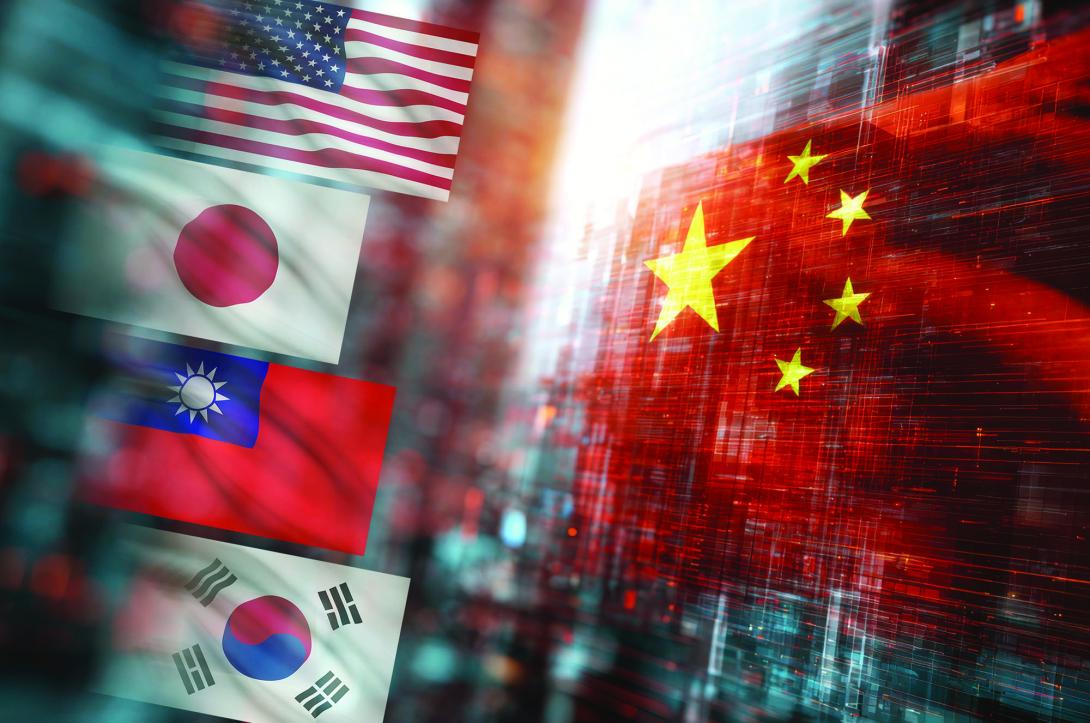
The United States and East Asian countries, such as Japan, South Korea and Taiwan, have juxtaposed priorities economically and militarily, especially as the People’s Republic of China (PRC) makes moves to be the dominant superpower, dictating world order to their view.
The Indo-Pacific is an important region for U.S. national security. And given the complexities and the tyranny of distance for U.S. military operations in the area, one foreign policy expert is calling for an important change in East Asia.
The U.S. military should set up an additional combatant command in the region—such as a “Northeast Asia Command”—in addition to the existing U.S. Indo-Pacific Command (INDOPACOM), advises Retired Army Special Forces Col. David Maxwell, vice president, Center for Asia Pacific Strategy; senior fellow, Global Peace Foundation; and editor, Small Wars Journal, in an interview with SIGNAL Media.
“The INDOPACOM combatant command is the largest in the world, over the largest territory, the largest body of water, and the geography is such that it is really too much for one command,” Maxwell said. “And while it is hard to have multiple commands, we really need to put a ‘Northeast Asia Combatant Command’ in Seoul. A war in Korea is not going to be contained only to Korea. China and Russia are going to play a role. And INDOPACOM is going to have a real challenge dealing with a contingency in Taiwan in the South China Sea, and a contingency in Korea.”
That may be a prudent move, especially as some in the United States think that China will invade Taiwan in 2027, given their leader Xi Jinping’s stated military readiness goal, that their People’s Liberation Army (PLA) “be ready” to seize Taiwan by the time of the PLA’s centennial anniversary that year.
However, others, like RAND Corp.’s Rafiq Dossani, senior economist, do not think the PRC will invade Taiwan. U.S. military leaders should understand that any invasion of Taiwan by the PRC’s People’s Liberation Army (PLA) is not a given, nor do most Taiwanese see China as adversarial, Dossani told SIGNAL Media in an interview.
Dossani is also professor of policy analysis at the RAND School of Public Policy. “I think the last thing China wants in the next 10 to 15 years is to have a military fight with America,” he stated.
Other experts agree that it may not be a kinetic invasion, but stipulate that it will involve other PRC actions, designed to make Taiwan capitulate, without China ever having to resort to kinetic attacks.
“China is taking the ultimate indirect approach,” Maxwell said. “One of the things that China tries to do is to present the threat to us, so we focus on that threat while the PRC is conducting political subversion and political warfare inside Taiwan, infiltrating its media, infiltrating its political systems.”
Speaking at a Foundation for Defense of Democracies (FDD) event in Washington, D.C., in November, Rear Adm. Mark Montgomery, USN (Ret.), senior director of the FDD’s Center on Cyber and Technology Innovation, said, “What we think the Chinese Communist Party is conducting today [is a] cyber-enabled economic warfare campaign that targets specific sectors in Taiwan with diplomatic, economic, administrative and lawfare tools, supported or enabled by malicious cyber activity, influence operations and then military feints as well,” he said. “All of that combined together, with the goal of trying to create a breakdown in societal resilience in Taiwan.”
The FDD has orchestrated a series of tabletop exercises, analyzing the PRC’s efforts to engineer possible conditions for Taiwan’s capitulation without launching an all-out conflict.
The latest, held in Taipei last summer with the Taipei-based Center for Innovative Democracy and Sustainability, Taiwanese government and private industry stakeholders, looked at the risks of Taiwan’s energy dependence, explained Montgomery, speaking with Kenan Arkan, managing director of commodities origination at J.P. Morgan; Craig Singleton, senior director of the FDD’s China Program; and Politico’s China correspondent, Phelim Kine.
Because Taiwan imports roughly 98% of its fuel, a successful Chinese energy blockade would force the island into difficult choices—between powering its hospitals, schools and homes or powering its industrial capacity, including advanced chip manufacturing and hundreds of associated supply chain companies, the FDD panel said.
“We entered into this last year thinking that energy was a core or critical vulnerability, but I walked away [from the tabletop exercise] thinking it is the critical vulnerability,” Singleton emphasized.
For electricity generation, the country relies on natural gas, in the form of imported liquefied natural gas (LNG), for 50% of its generation. Coal makes up just over 30%, and renewable energy accounts for around 12%, said Arkan.
Taiwan’s electrical grid already operates at a high use level, meaning it runs closer to full capacity. “It is one of the most fragile in the OECD [Organisation for Economic Co-operation and Development], with more than 70% of the grid in use,” Singleton explained. “Now this is a compliment to Taiwan that their economy is growing faster than their grid can support, but it is also a crisis for Taiwan, because it is one more issue that puts them at risk.”
The tabletop exercise revealed that the PRC could achieve its goals just through lawfare, Singleton said. For example, the adversary could require mandatory port safety inspections or apply domestic and diplomatic pressure on an LNG supplier, like Qatar, to disrupt shipments to Taiwan. Even if just one shipment per week was disrupted, that could really degrade Taiwan’s operations, as the country has limited LNG storage of about 10 days.
With heavy disinformation added to the scenario, the officials see how the PRC could achieve a lot of its adversarial objectives without launching kinetic strikes, Singleton noted.
“The net effect of all of my [simulated] coercion was very serious,” he stated. “In the scenario, we saw price increases, we saw panic buying, we saw, obviously, power instability, but the real net effect was the political and psychological pressure on the population to achieve my political goals. And while tremendous work has been done to enhance societal resilience in Taiwan, they are starting to wrap their heads around the worst-case scenario. And what we are realizing is that paperwork can be more damaging than projectiles.”
Singleton suggested that the PRC will calculate and keep their actions just below the level of outright warfare. “So, the United States will have to take action based on Chinese actions that do not break a red line,” he said. “That is the hardest part. What we have to do is establish that this kind of pressure warrants a response, whether it is an energy response, a maritime response or cyber response.”
The PRC already conducts unremitting malicious cyber warfare on Taiwan, which, per capita, is much more significant than the cyber attacks against the United States, the FDD panelists reported.
“They started stories that the United States was drawing blood samples from Taiwan, so we can develop a weapon that is genetically targeted on the Chinese—this is the kind of nuttiness that China spreads,” Montgomery said. “But every little story like that leaves a kernel of doubt in people’s minds. The whole idea is to create the perception the United States is an unreliable or a dangerous ally for Taiwan.”
Additionally, the PRC would also like to influence Taiwan’s next presidential election, Montgomery continued. “The whole goal here would be to make President Lee unelectable in a second term,” he said.
Moreover, the most critical aspect of Taiwan’s industry—and to the entire world—is the Taiwan Semiconductor Manufacturing Company Limited (TSMC), and the one-of-a-kind chips they make. The company’s manufacturing infrastructure and expertise have taken decades to develop, and as one of the world’s most lucrative chip manufacturers, TSMC is very attractive to the PRC, Maxwell noted.
U.S. companies, such as Apple and NVIDIA, depend on TSMC’s chips-on-wafer-substrate and other high-tech nano chips, as does the U.S. defense industry for its critical military technologies.
“Obviously China wants to take them intact,” Maxwell said.
Notably, the people of Taiwan have mixed feelings about the PRC. Some people have family or businesses in China—and they often travel back and forth—and do not see the PRC as a threat—although sometimes that depends on their political party beliefs, Dossani stated.
“For the man on the street in Taiwan, working for a Chinese company is very normal, as is working in China, or dealing with a company’s subsidiaries in China, or working with Chinese design companies,” Dossani explained. “This is a very common thing. So, they do not see it as unusual in any way, and certainly not a security threat.”
In addition, Taiwan’s economy and its gross domestic product is tied to China, in both high- and low-technology industries.
“The reason for Taiwan’s recent high growth is closely linked to China,” Dossani noted. “This is also seen in China, from Taiwanese investment in China, which is the largest of any country. And although they’ve cut back certain fields, under pressure from U.S. in high tech, it is still big.”
For the man on the street in Taiwan, working for a Chinese company is very normal, as is working in China, or dealing with a company’s subsidiaries in China, or working with Chinese design companies.
The PRC’s crackdown on Hong Kong has been a “wake-up call” for some in Taiwan, Maxwell continued.
“What you see now is a greater spirit within the Taiwan population, where they are resisting, and preparing to resist an invasion,” he stated. “Of course, they look to Ukraine and see how Ukrainian people have resisted, how they fought back. But of course, Taiwan is not going to be an easy place to invade.”
China itself may have already considered it a difficult proposition geographically to invade, and given that the PLA is made up of soldiers who were part of the PRC’s one-child policy, public sentiment for an invasion will be harder, Maxwell suggested.
“Every one of those soldiers is the end of a bloodline to a family back in the mainland, and so consider that,” he noted. “It is something I would hope that the Taiwanese would exploit to undermine popular support in China for any kind of military venture going into Taiwan.”
Meanwhile, the United States’ relationship with South Korea, under the long-standing Mutual Defense Treaty, is stable, Maxwell reports. “Our alliance is 72 years strong now, and our relationship, I think, remains on solid ground,” he said. “But as the political winds change in Seoul and in Washington, there can be friction. Certainly, our military alliance is strong. We are sustaining our exercises, maintaining a combined readiness posture, which, of course, contributes to deterrence, and is really job one on the Korean peninsula, to prevent war.”
From a technology point of view, the South Korean military, which is now the fifth most powerful in the world, is leveraging high-end military equipment, tanks and artillery from its defense industries, Maxwell shared.
“And of course, South Korea backfilled all the 155 ammunition that we sent to Ukraine—they replenished our stocks here in the United States,” he added. “They are, of course, buying cutting-edge technology from us, the F-35. They are a major shipbuilder. China, Japan and South Korea are the largest shipbuilders in the world.”
One of Korean President Lee Jae Myung’s policies is to help improve American shipbuilding, with the Korean country investing in the Philadelphia shipyards, with more possible deals to come, Maxwell said. The United States and Korea also agreed at the APEC Summit in Gyeongju, Korea, in October to support Korea building a nuclear-powered submarine and to help secure Korea’s right to reprocessing nuclear fuel and develop nuclear enrichment capabilities, “at peaceful levels,” Maxwell cited.
On an economic level, South Korea is also intertwined with the United States, with South Korea’s large direct investments into the U.S., such as information technology factories—including Samsung—and automobile manufacturing, including electric vehicles and batteries, Maxwell said.
He warned that any attack on South Korea by adversary North Korea would greatly impact several East Asian countries, as well as China and the United States, to a lesser extent.
“If there was a war, it would devastate the economies of South Korea, Vietnam, Japan, and it would affect China, and if there is a regime collapse, the same thing could happen,” Maxwell warned.
North Korea, itself, is undergoing instability, the foreign policy expert noted, asking, “We tend not to look at the problems that are going on inside North Korea. We tend to look at the nuclear weapons, the missile threats, the threat of war, but also there is a tremendous threat of internal instability inside North Korea.”
Maxwell also warned about the collusion of the so-called “Dark Quad,” China, Russia, Iran and North Korea. “The collaboration between these four powers is really troubling,” he said. Congress is taking some steps, starting with a provision in the 2026 National Defense Authorization Act that calls for interagency efforts to disrupt activities of the Dark Quad.
In Japan, the new prime minister, Sanae Takaichi, took office last October and is a disciple of Shinzo Abe, the country’s longest-serving prime minister of nine years, who was assassinated in 2022. So far, Takaichi has taken a hardline stance against the People’s Republic of China, Maxwell explained.
This has angered the PRC. Xi Jinping, the PRC’s president, told Chinese citizens in November to stop their leisure, business and student travel to Japan in retaliation to Takaichi. One of the PRC’s diplomats to Japan, Xue Jian, threatened to behead Takaichi after she advised the Japanese Parliament in November that any Chinese military blockade of Taiwan would create a need for Japan to defend itself and deploy its Japanese Defense Forces, given the proximity of Japan to Taiwan and the Strait, Maxwell said.
The defense of Taiwan is key to Japan’s security, Takaichi has said, and Japan is prepared to support Taiwan.
“She has started off really quickly standing up to China,” Maxwell noted. “I think she is going to continue to build up the Japanese military, which is very formidable. They’ve got challenges with their pacifist constitution, but they have said that the defense of Taiwan is key to Japan’s security, and that they will contribute to the defense of Taiwan. I think they are making some pretty bold statements and actions by developing their military capabilities.”
Lastly, Maxwell also advised that the United States figure out its dual portion forces, with forces in Japan that are apportioned to the defense of Korea, versus the forces needed for Taiwan.
“That has to be adjudicated,” he said. “Our traditional boundary lines may no longer be practical. We really have to think about the overlapping influence of different countries. We can’t put China in one combatant command or in another, because China not only operates in Asia, in the Indo-Pacific, but around the world as well. We have got to think new about new ways to organize for our national security.”
Comments