
A Deep Dive Into a Critical Domain
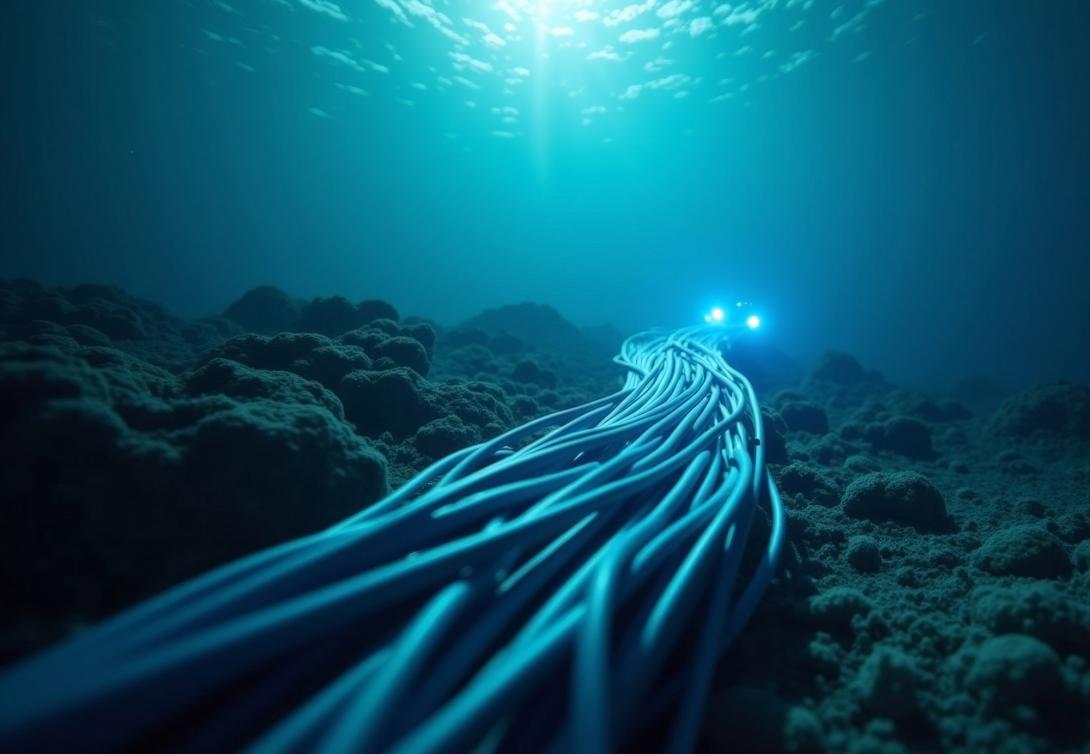

Today’s rapidly changing warfare landscape underscores the critical need for synchronization across all domains. Meanwhile, emerging technology trends are shining a light on what’s beneath the surface. Underwater robotic systems, including autonomous vehicles paired with artificial intelligence, could help provide a clearer understanding of this largely unknown domain.
“When I was out at Task Force 59 in the Arabian Gulf, I really started to see when we started talking about the seabed and how vulnerable it is ... and how little we really understood it or could monitor it,” Colin Corridan, who served as a captain with the unit, told SIGNAL Media in an interview.
After more than 25 years of service to the U.S. Navy, Corridan recently retired. His responsibilities included time as the acting director for the disruptive capabilities office, where he operationalized the Navy’s first maritime robotics and artificial intelligence task force. Today, Corridan serves as the head of government and defense for startup Bedrock Ocean Exploration, a dual-purpose seafloor data company.
While exquisite underwater systems do exist in today’s market, Corridan’s concern is the pace of today’s threat. Recent conflicts in Europe and the Middle East have brought attention to unmanned aerial systems and the need to develop countermeasures for emerging technologies. Corridan emphasized that a similarly proactive approach is needed for the underwater domain.
“There’s so many important, critical underwater pieces of infrastructure, whether it’s fiber optic cables or pipelines, just having an understanding of the seabed, and we need to know more about it,” he stated.
The maritime domain has already proven vulnerable, with threats emerging in recent years, including consequential subsea cable-cutting incidents in the Baltic Sea and the Taiwan Strait. Additionally, just this September, undersea cable cuts in the Red Sea caused internet disruption in parts of Asia and the Middle East.
“I think that using robotics, autonomous systems and artificial intelligence to get a better understanding of the undersea domain is huge, but it’s also great for keeping human beings safe and out of danger,” Corridan said.
Today’s technological landscape allows robots to take part in dangerous operations at a much lower cost. “It’s more effective,” the former Navy captain said. “[Robots] can be down for a long time. You can do everything from using robotics to do what we had human divers doing manually to replacing large, expensive ships ... and the technology is advancing at such an incredible pace,” he continued. “We’re getting better fidelity on our data from these robotics than we do with a surface vessel towing a sensor.”
Programs like the Defense Innovation Unit, the Navy’s Disruptive Capabilities Office, and Europe’s NATO Innovation Fund leverage dual-purpose technologies to deliver tactical innovation to warfighters.
“There’s a lot of venture capital money being placed into Silicon Valley companies for commercial efforts that we can partner with them and make very minimal tweaks to these systems and then have an advantage in the defense space,” Corridan said.
The best way to move fast is to embrace mature commercial dual-use tech, he stressed, an idea echoed by the NATO Innovation Fund mission. While the NATO Innovation Fund, or NIF, is not an official part of the Alliance, the for-profit venture capital firm does work with NATO to meet its needs. The NIF’s portfolio currently comprises 22 companies, spanning various industries including quantum, autonomy, AI, space, next-generation communication, energy and biotechnology.
In July, Norway’s Kongsberg Ferrotech company announced a nearly $14 million investment round by the NIF and Investinor, a Norwegian investment fund. Founded in 2014, Kongsberg develops advanced robotic systems for maritime use.
“All of our repairs are based on real-time defect data, advanced digital twin simulations and built in-situ from off-the-shelf raw materials,” the company’s general manager, Christopher Carlsen, wrote in an email.
For the NIF, Kongsberg Ferrotech’s technology holds promise for protecting subsea infrastructure in a safe, cost-effective and sustainable way. “We have great confidence in this deeply experienced team and their robotic technology, which will strengthen resilience across the Alliance by efficiently and sustainably ensuring the security and longevity of our subsea assets,” NIF partner Patrick Schneider-Sikorsky said.
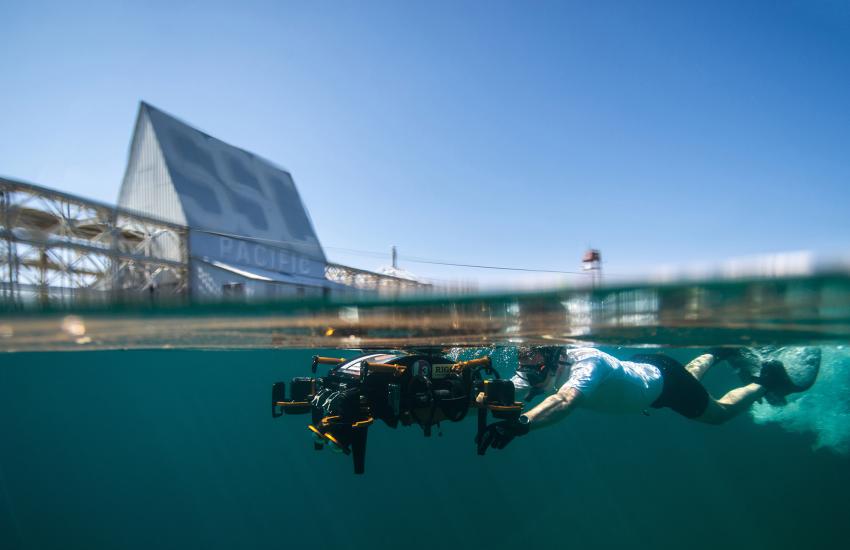
Detection capabilities could be gamechangers for the modern seabed. Kongsberg Ferrotech’s robotic technology, for example, can reduce underwater operations time by 70%, an NIF spokesperson told SIGNAL Media.
Meanwhile, Bedrock develops its own AI algorithms for sensor peak detection and further data management.
Numerous companies are also working on similar technologies, highlighting the rapid market growth.
“We were so hyper-focused on aerial vehicles,” Corridan said. “Now, all of a sudden, people are seeing these bad actors disrupting, creating latency on our data when they disrupt a fiber optic cable.”
Corridan also brought attention to the complex challenge of underwater mines. “It’s such a difficult problem,” he said. “It’s so easy for a bad actor [aboard a] fishing boat to go out and just dump [mines] over the side, and now all of a sudden warships can’t go there anymore.”
Autonomous robotic systems can remove humans from harm’s way by detecting explosive devices hidden on the ocean floor.
“Maritime modern warfare can be incredibly disruptive. Now, you put mines out there and all of a sudden, you’ve got a real problem,” Corridan said.
Comments