
FY26 NDAA Text Outlines Acquisition Reform
The House and Senate Armed Services Committees are urging their fellow lawmakers to pass the final negotiated text of the National Defense Authorization Act for fiscal year 2026 (FY26 NDAA). The plan could make room for further acquisition reforms and technological advancement within the Pentagon.
“To deter national security threats, our warfighters need to be equipped with the latest technology,” a House Armed Services Committee report reads. “But the defense acquisition system is broken and too slow, rigid and bureaucratic to meet evolving threats.”
FY26 NDAA, which is up for a legislative vote in the coming days, aims to transform the current acquisition process into a more agile approach to meet warfighter needs at scale.
The solutions offered within the document also include prioritizing commercial solutions, eliminating "costly regulatory burdens," developing a defense acquisition workforce and reforming foreign military sales.
“The nature of warfare is changing,” said Emil Michael, under secretary of war for research and engineering, and chief technology officer for the Department of War, or DOW.
Michael spoke to reporters at the December 8 Defense Writers Group luncheon in Washington D.C.
“There are conflicts around the world and potential conflicts with what you all know as a near-peer adversary in China, which has really undergone the most significant military buildup in military history in the past 10 to 15 years,” he continued. “That requires sort of a different mindset, and that’s why you see acquisition reform, requirements reform.”

In his role, Michael is working on creating an environment in which research and engineering can meet the demands of today’s pacing threat. Just last month, Michael announced the Pentagon’s six critical technology areas, all of which are mentioned in FY26 NDAA.
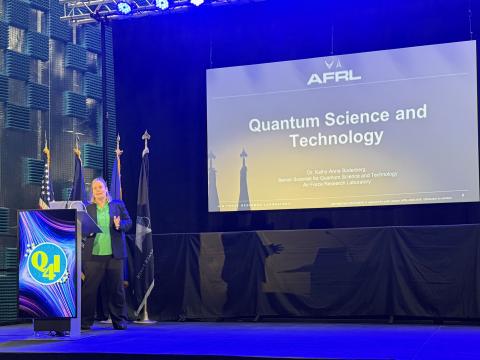
Notably, FY26 NDAA authorizes $145.7 billion for research, development, testing and evaluation efforts “to field the innovative new technologies.” The technologies, according to the report, would include artificial intelligence, quantum computing, autonomous systems, space-based capabilities and directed energy systems.
Additionally, $2.7 billion is authorized for logistics capabilities expansion and essential military construction projects in the Indo-Pacific region.
If passed, the bill would authorize $900.6 billion in national defense spending in total.



Comments