
Experts Call for New Approaches To Combat Global Drone Threat

As drone use and production intensify worldwide, there is no one solution to counter the evolving threat. Instead, subject matter experts claim that a combination of technological capabilities and industry-government partnerships can help combat the growing risk.
Unmanned aerial vehicles, or UAVs, have transformed today’s environment, from modern warfare to everyday use.
In Ukraine and in Iran, the use of UAVs highlights access to low-cost weapons for mass production. Similarly, today’s unmanned surface vessels, or USVs, can conduct sensing missions with kinetic purposes.
And as technology continues to advance, so does the software aboard, allowing each tool to remain up to date and connected.
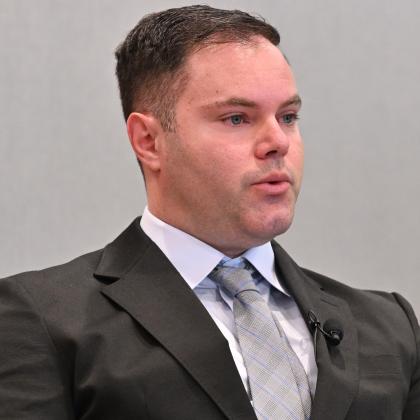
Gathered at the 2026 Intelligence & National Security Summit in Bethesda, Maryland, experts discussed solutions and opportunities with the rise of unmanned technology. Panelists included Eric Paterson, executive director at the Virginia Tech National Security Institute; Scott Menoher, director of intelligence at the Joint Interagency Task Force 401; Ravi Ravichandran, vice president and chief technology officer of intelligence and security at BAE Systems Inc.; Jorge Rivero, Russian/unmanned systems analyst at the Institute for Defense Analyses; and Adam Scheer, director of special activities at Saronic Technologies.
Around the globe, state and non-state actors are seen using drone systems for kinetic and psychological warfare. In Mexico, cartels are using low-cost UAVs at scale, said Rivero before painting a gruesome picture.
“One scenario that I’ve seen multiple times . . . [the cartels] would ambush a rival cartel member . . . they’ll cut off his head, put it on a drone and then fly it to the rival cartels,” he described. “They’re actually doing this in towns; they’re doing this across cities for intimidation purposes.”
Similar tactics, while on a small scale, can be seen across Colombia, Brazil and Ecuador, Rivero said. “Now we’re seeing a lot more in the last six months in Africa. State and non-state actors are using drones.”
Drone activities also continue to grow across the Middle East and Myanmar. The issue has become a global problem, Rivero emphasized.
Speaking from a government perspective on the shift from single theater to simultaneous USV conflicts, Menoher made his call to industry.
Menoher argued that the government-industry partnership must evolve beyond traditional acquisition models, with industry becoming a long-term partner in developing, refining and adapting capabilities.
“What you’re looking at in the adaptive space is that relationship doesn’t end when the system is delivered; that relationship continues because what you have to do in the adaptive space is iterate over time,” he said.
The Ukrainians and the Russians are utilizing various defense-in-depth lines. For example, anti-air teams that will intercept the drone as it gets closer to the individual or to the asset, and then the final line of defense is the shotgun.
Meanwhile, the U.S. Navy and U.S. Army launched their USV and UAS marketplaces, respectively, within the same week, noted Scheer.
“I think the large amount of momentum in the private capital side really helps buy down the government’s risk greatly,” he said. “The Navy’s USV industry marketplace, it’s calling for a payload-agnostic platform. I think that’s a key feature as well.”
In meeting the mass drone threat, there is no one solution, Rivero stated.
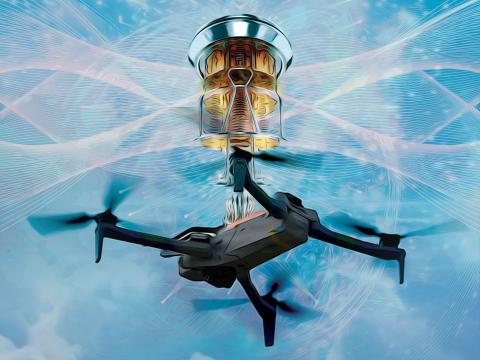
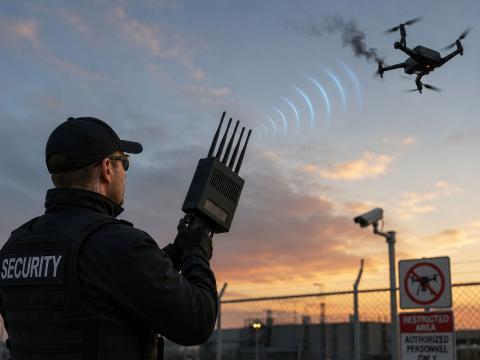
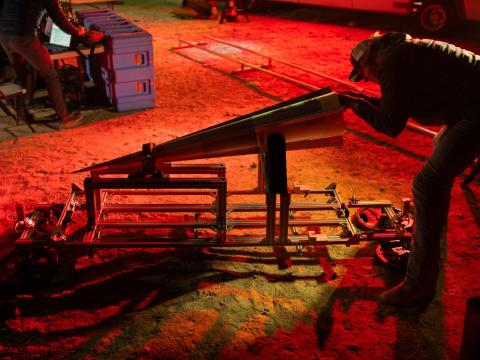
“You have to have a defense in depth where you’re utilizing multiple assets at different length or different locations to be able to reduce that number,” he said. Rivero listed electromagnetic warfare, laser technology and microwave technology as possibilities.
“The Ukrainians and the Russians are utilizing various defense-in-depth lines,” he continued. “For example, anti-air teams that will intercept the drone as it gets closer to the individual or to the asset, and then the final line of defense is the shotgun.”
Menoher echoed Rivero’s comments, saying the department is moving in the right direction by pursuing a range of counter-drone solutions. He noted that defeating large numbers of low-cost drones will require a layered defense strategy with affordable interceptors and other protective measures to disrupt enemy attacks.
The 2026 Intelligence & National Security Summit is co-hosted by AFCEA International and INSA. SIGNAL Media is the official media of AFCEA International.
Comments