
Industry Officials Call for Enhanced Collaboration With Military
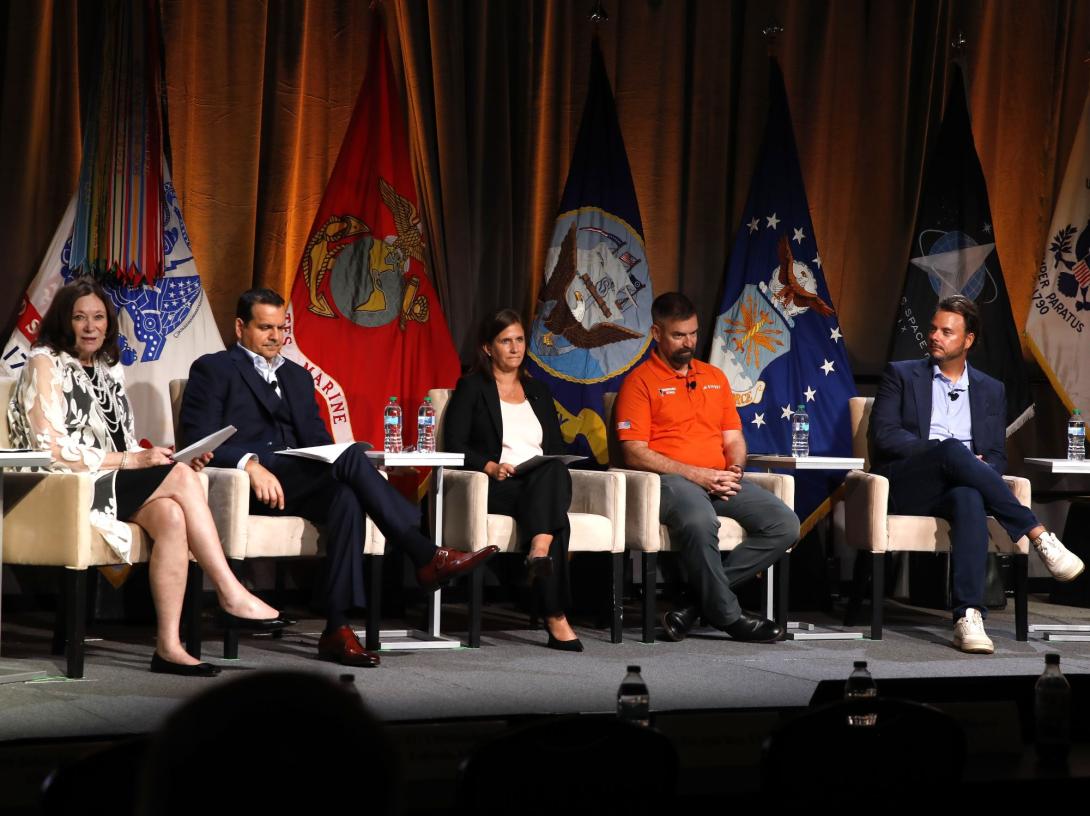
Transparency between the private and public sectors plays a key role in propelling technologies forward and subsequently protecting soldiers on the battlefield. Because of its importance, during a panel at TechNet Augusta 2026 titled Iterating at the Speed of Relevance: Insights From Our Industry Partners, four individuals in industry urged for more thorough and extensive collaboration processes with their military counterparts, especially regarding defense acquisition. More specifically, they demand to know and understand the exact end goal of certain missions and the needs of warfighters to survive the fight.
Michael Grochol, vice president of technology at GDIT and former AC-130 gunship crew member with Air Force Special Operations Command, provided an example of how better collaboration can lead to an increase in readiness and lethality and reduce and erase confusion. During a closed air support mission with a special mission unit, soldiers requested four specific weapons to demolish a building. However, the weapons they asked for were not fit to accomplish the operation. With better transparency, this could have been avoided, Grochol suggested.
“I think what pushing industry looks like is helping industry understand what the outcome is that you’re trying to drive to. This is what will ultimately get us into a position to communicate better, to protect lives, etc.,” Grochol said.
Heightening collaboration will give industry officials the opportunity to inform their military partners about which technology is the most effective and best suited for a particular mission. Furthermore, pushing industry to be the best version of itself can be the difference between life and death on the battlefield, Grochol added.
“Continue to push industry to be better to prove that it is not summer camp,” Grochol said. “Everyone does not get an opportunity to play. You have to be good enough to protect people’s lives because with what I've done, I’ve been on the battlefield, and I’ve definitely watched good guys not go home to their families on more than one occasion, and that is something that sticks with you. And frankly, [it’s] not something that I’m willing to tolerate, and why I want to build capability now that brings people home to their families.”
Another panelist, Leslie Hulser, executive vice president of corporate strategy at Persistent Systems, reemphasized the importance of collaboration in the defense acquisition process, indicating that it is a need rather than a want.
[The synergy between industry and the military] has to be a collaboration,” Hulser said. “Years ago, when the requirement was written over a period of 10 years and then handed across the table to industry, and industry was like, 'I don’t know what you want. I don’t know how to deliver it.' Now, the conversations that we’re having are: What is your operational need? What’s your biggest problem? Let’s understand it. Let’s try and work at it.”
Hulser warned that even with increased collaboration, industry personnel will not be able to solve the problem tomorrow, but they will be able to work with military leaders to attack the issue.
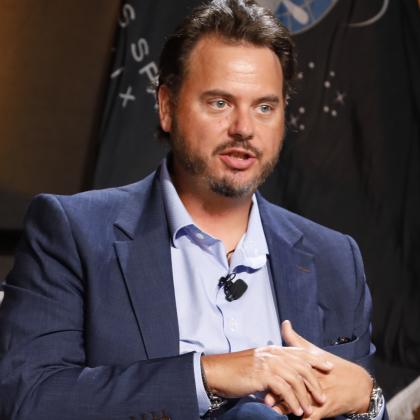
I think what pushing industry looks like is helping industry understand what the outcome is that you’re trying to drive to. This is what will ultimately get us into a position to communicate better.
Ross Guckert, area vice president for the Department of War at Oracle’s Defense & Intelligence business, agreed with Hulser, saying the defense acquisition process needs to be collaborative. Guckert offered additional tips on how the armed forces can ease this protocol, such as understanding what industry can provide, avoiding prescriptive language in the requirement and allowing private-sector crews to bring the capability for feedback and improvements.
“Let’s iterate on it, and if we can structure—I’ll go back to the contract mechanism and how we incentivize those types of behavior—a contract like that, that can be pretty powerful,” Guckert said. “I think we got a lot of examples of where we’re doing that, but we can probably institutionalize it much better.”
In addition to enhancing collaboration between industry and the military, private-sector employees must start thinking outside the box. For instance, Jared Shepard, chief executive officer at Hypori, advocated the idea of keeping data where it’s created and then making it accessible somewhere else rather than distributing data to the edge. Because the edge is susceptible to threats, data should stay clear of this space, he said.
“Collapse the edge,” Shepard said. “The edge is the threat surface and will continue to be so. It’s the hardest thing to defend in real time.”
TechNet Augusta is organized by AFCEA International with help from the U.S. Army Cyber Center of Excellence. SIGNAL Media is the official media of AFCEA International.

Comments