
Increasing the Pace and Agility of Intelligence
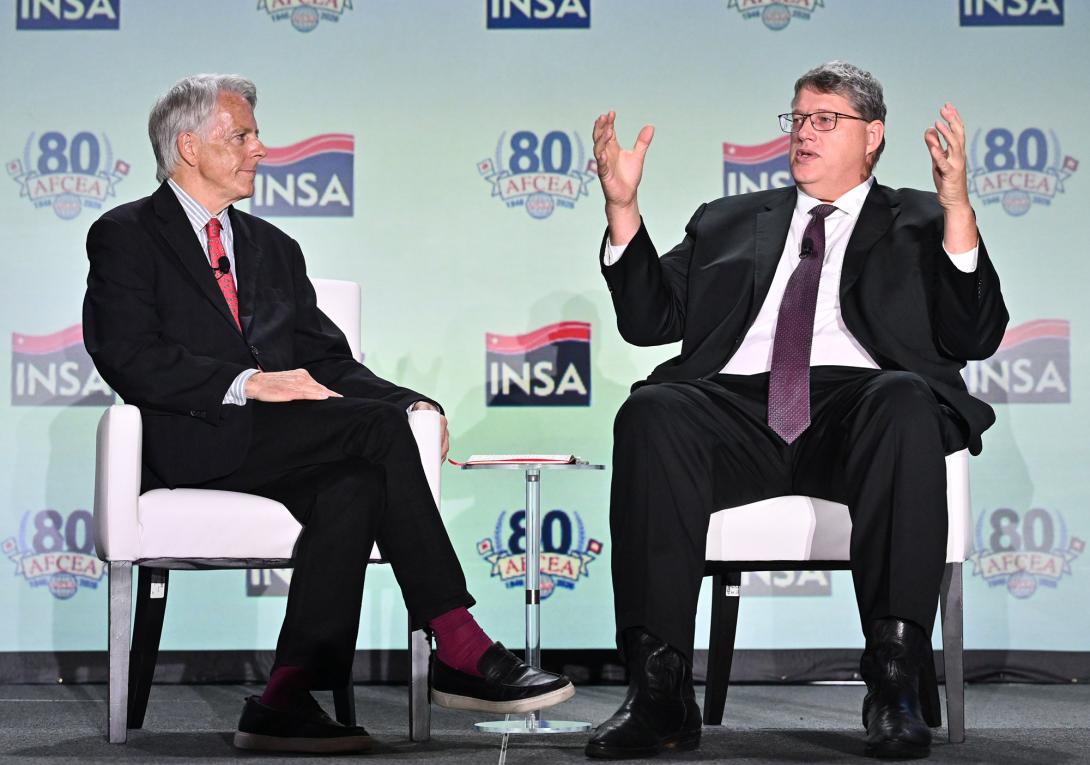
The U.S. intelligence community is facing a number of issues, says Greg Ryckman, Defense Intelligence Agency (DIA), special advisor to Lt. Gen. James Adams, USMC, the director of the DIA.
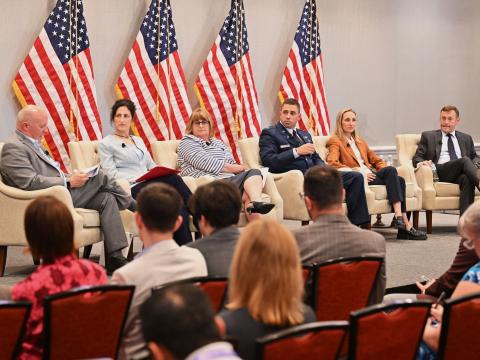
A fundamental matter remains how to get actionable intelligence into the hands of decision-makers when they need it most, Ryckman said, speaking August 26 in North Bethesda, Maryland, at the 2026 Intelligence & National Security Summit, annually co-hosted by AFCEA International and the Intelligence and National Security Alliance.
“One of the most persistent challenges is how do we translate intelligence for collection and analysis into operational effects,” he stated. “The pace, fidelity and agility of our intelligence, we have to be fast enough to be relevant. We have to be agile enough for decision-makers . . . but we still have to maintain our accuracy and fidelity.”
The fact that the opportunity to inform decision-makers from an intelligence perspective has been narrowing over time makes the environment more difficult, Ryckman warned.
“And long-range weapon systems completely change the timeline when we have to be able to deliver intelligence at that targeting fidelity level of use, and that is different,” he said. “And it moves a lot of solutions and a lot of information to the left in terms of the intelligence cycle.”
This issue is made more complex by a confluence of other factors: shifting geopolitics, the global nature of warfare and an operating environment full of advanced sensors and an explosion of data.
For example, adversaries are aligning in unprecedented ways, such as the People’s Republic of China providing satellite intel and drone training to Russia during its invasion of Ukraine, or North Korea sending soldiers to aid Russia.
“That inflection of adversarial alignment, we used to talk about it academically,” Ryckman explained. “[About how] it is really bad that these organizations, these countries, work together. But we are in the middle of that. That adversary alignment is a real thing that is happening now, which complicates how we do our business.”
Given the swirl of technology and a complex environment, he warned about the difficulty and complexity facing intelligence analysts.
“We are in the middle of one of the most interesting confluences of events that I've ever seen, and that inflection point makes that fight even more complicated,” Ryckman noted.
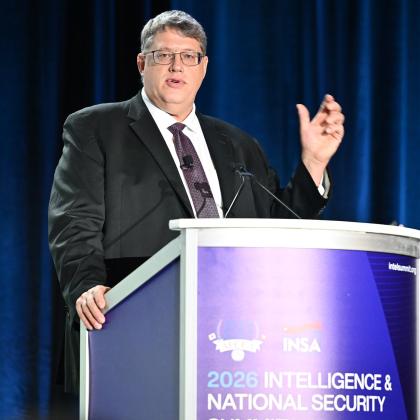
We are in the middle of one of the most interesting confluences of events that I've ever seen, and that inflection point makes that fight even more complicated.
As such, those in the intelligence community need to respond thoughtfully.
“We have a choice,” he noted. “We can either recoil from the complexity . . . or we can lean into it, and if we lean into it, we can actually leapfrog our capability developments.”
Lastly, he urged those in government and industry to avoid settling.
“Don’t be complacent as individuals,” Ryckman said. “Don’t get complacent as organizations. Make sure you're keeping up. Lean in.”
The 2026 Intelligence & National Security Summit is co-hosted by AFCEA International and INSA. SIGNAL Media is the official media of AFCEA International.

Comments