
Dutch MoD Unveils Short- and Long-Term Plans To Achieve Information Readiness

Leaders of the Netherlands military have released a plethora of initiatives and proposals to help them attain and gain an advantage in an essential component of the present-day battlefield: information readiness. At TechNet Europe 2026, one Dutch Ministry of Defense (MoD) official revealed details about the Defence White Paper 2026 and long-term vision 2035.
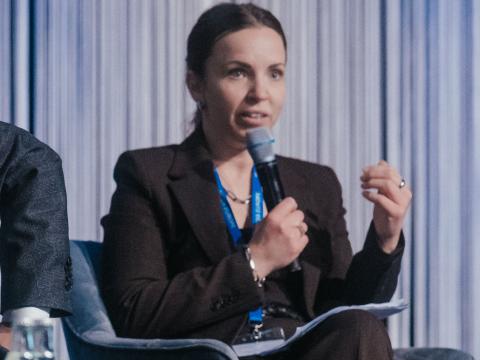
The Defence White Paper 2026 includes codified guidelines and goals regarding information readiness, according to Talitha Born, program director of the Defense Open in Order (DOO) and director for Enterprise Governance in the Ministry of Defense of the Netherlands. The document introduces information readiness and establishes it as a “vital” objective for the Dutch defense team.
“The white paper makes it clear: possessing and applying the right information is vital for every single task performed by defense,” Born stressed during a keynote address in Berlin. “It’s about the soldier in the field and the airmen.”
Born also announced that the Netherlands MoD has laid out its extended vision 2035 for information readiness; however, she did not reveal specifics about the plan.
Furthermore, Dutch military leaders are propelling information readiness forward by revolutionizing their business approach across the department. This approach is integrated, and through it, personnel will attempt to advance information readiness via different avenues that they have categorized into four pillars: technology, processes, user adoption and I-governance and application management.
As part of the technology pillar, crews are pursuing advanced capabilities, including a digital toolset and integrated systems.
In the processes pillar, officials are seeking to enforce and carry out unified processes.
Additionally, the user adoption pillar focuses on ensuring that individuals are engaged in the assignment at hand and equipped with the knowledge and skills they need to procure data and apply information to the mission.
Lastly, as part of the I-governance and application management pillar, the Netherlands defense team is striving to create a reliable government and management system and structured administration.
Born summarized and described the four pillars during her speech.
“Through our transformation, we are changing this [process] end-to-end,” Born said. “On the technology pillar, we are integrating a document management system with built-in workflows to keep in control. On the processes pillar, we harmonize how requisitions, contracts and deliveries are handled across all services. We make sure everything is stored securely.”
She added that they do similar tasks associated with the user adoption pillar. “We train buyers, planners and commanders to work with the new tools and information they have. We teach them to be aware of the important role in this information process and what is expected from them in their role and responsibility. On I-governance, we define who owns the data, how it is validated and how it is audited, but also who is responsible for the technology and how it is kept up to date.”

We must recognize a fundamental truth: no operation, no matter how well-manned or well-equipped or well-planned, can succeed without operation of information.
Nearing the end of her presentation, Born painted a picture of what it would be like if they achieved their information readiness goal and the significance it would have in the fight.
“The result: a commander in the field knows what is available, where it is and when it will arrive; a political leader can account for every euro spent; and society can trust that defense spending is transparent and effective,” Born concluded her speech by saying, “One transformation impacts across all three contexts: military, political and societal.”
These numerous developments come as acquiring information in the military space becomes ever-increasingly important to winning the fight. Dutch military personnel understand and are addressing this requirement, as signified by the implementation of these actions.
“We must recognize a fundamental truth: no operation, no matter how well-manned or well-equipped or well-planned, can succeed without operation of information,” Born said. “Information is no longer just a tactical preference; it is a strategic mandate. It is the foundation upon which all stability and decisive action are built.”
TechNet Europe 2026, taking place in Berlin, is an international event organized by AFCEA Europe in cooperation with the AFCEA Bonn E.V. Chapter. SIGNAL Media is the official media of AFCEA International.

Comments