
Romania, Already Set To Field Lightning IIs, Can Also Leverage U.S. Counter-Drones
The Joint Interagency Task Force 401 (JIATF-401) announced on April 29 that the U.S. Secretary of the Army had signed an agreement this week with Romania’s minister of national defense. The move enables Romania to procure counter-unmanned aerial system capabilities through the JIATF-401's marketplace.
“This initiative demonstrates how we can extend access to proven capabilities beyond the Department of War while maintaining alignment with our allies and partners,” said Army Maj. Matt Mellor, lead acquisitions specialist for JIATF-401. “Expanding the marketplace to include Romania is a critical step in strengthening the broader C-UAS ecosystem.”
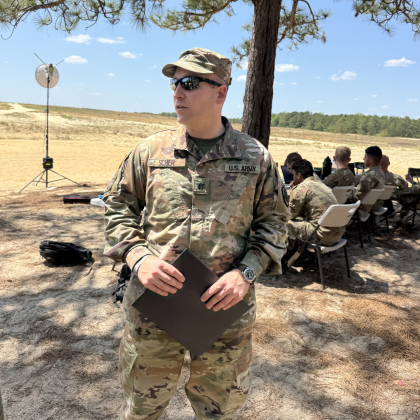
The effort with Romania is part of the Army’s broader initiative to expand partner nation access to critical capabilities and reinforces JIATF-401’s role in supporting that vision, Lt. Col. Adam Scher, USA, strategic communications advisor, JIATF, stated in the announcement.
The JIATF 401, based at the Pentagon and stood up last August, is charged with rapidly advancing counter-unmanned aerial system (UAS) technologies against smaller drones (Group 1, 2 and 3 UAS). Having capabilities to interdict adversarial drones is a priority not just across the joint forces and interagencies but also with allies and partners.
“As the organization leading the Department of War’s efforts to rapidly field C-UAS systems, JIATF-401 is helping align allies and partners around a shared approach to countering the prolific and rapidly evolving threat of drones,” Scher noted in the April 29 release.
The JIATF’s marketplace for counter-UAS capabilities allows partner nations to purchase equipment through the marketplace with a government sponsor facilitating Foreign Military Sales, Scher explained to SIGNAL Media in an email.
“The marketplace connects a wide range of capabilities with a growing set of users who require scalable, effective solutions that are interoperable,” he stated.
The JIATF does have future plans to allow partners to make commercial sales directly from the manufacturer through the marketplace. “JIATF-401 is continually working to cut through red tape and rapidly deliver C-UAS capabilities,” Scher said.
The expansion of the marketplace to more partners increases the demand signal to counter-drone fabricators and related component manufacturers, shaping the future of the C-UAS industrial base. The goal is to increase marketplace access to 25 partner nations by the end of this summer.
“We are expanding the market for counter-UAS,” said Brig. Gen. Matt Ross, director of JIATF-401. “This is not just about the most exquisite systems. It’s about a range of capabilities that can meet the needs of different users, from the tactical edge to critical infrastructure protection in our homeland and for our allies and partners. As the market grows, the C-UAS industry must be positioned to scale their production and meet the needs of this broadening customer base.”
The United Kingdom already has access to the JIATF-401 marketplace, based on a Joint Declaration of Intent that the United States signed with the country in March.
The agreement will also create common data standards for C-UAS technologies, which will enable the partners to seamlessly share data, driving improved sensor fusion and accelerating new technologies, Scher explained.
“In the rapidly evolving world of counter-UAS, the ability to share data at pace is essential, and this commitment to common standards represents a critical milestone in our technical interoperability,” Scher offered. “This agreement will benefit the entire C-UAS enterprise, including our industry partners, ensuring that together, we can deliver fully interoperable capabilities to the warfighter at the speed of relevance, safeguarding our forces and enhancing our collective security.”
The task force will continue to work with the partners to gain lessons learned as counter-drones are acquired, tested and put into operations.
“Partner feedback is necessary to improve how C-UAS technologies are integrated across the Department of War and interagency partners,” Scher told SIGNAL Media. “Continued collaboration between JIATF-401 and partners such as Romania will be essential to developing those layered defenses and ensuring effective integration of C-UAS technologies, supporting our warfighters at home and abroad.”
Continued collaboration between JIATF-401 and partners such as Romania will be essential to developing those layered defenses and ensuring effective integration of C-UAS technologies, supporting our warfighters at home and abroad.
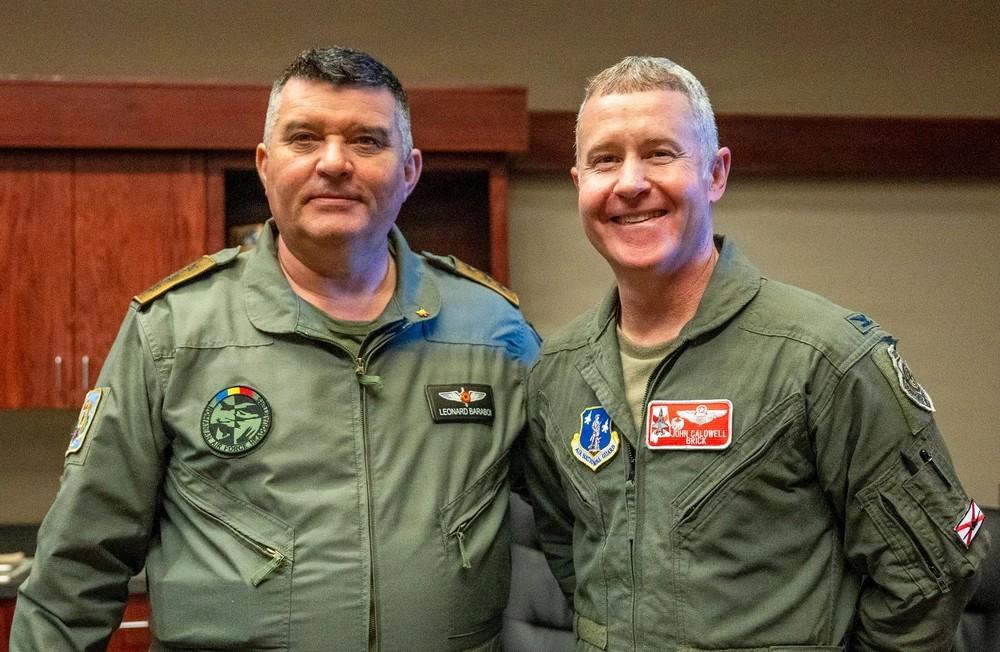
Additionally, the U.S. military is also working with Romania’s Air Force through the U.S. National Guard’s State Partnership Program and the 187th Fighter Wing of the Alabama National Guard.
The two nations met at the wing’s Dannelly Field, Alabama, in April, according to a May 1 release from Capt. Michael Luangkhot, 187th Fighter Wing.
“Over three decades, the relationship has built trust and familiarity that continue to shape how both forces train and operate together,” Luangkhot stated in the release.
Romania is preparing to receive 32 F-35A Lightning II fighter jets from the United States’ Foreign Military Sales program. The “A” variant of the F-35 has conventional takeoff and landing and is equipped with an advanced sensor package aimed at providing a decisive advantage. Other European allies, such as Belgium, Italy, Norway, Poland and the United Kingdom, fly the F-35A.
The wing, which started its use of F-35A's in late 2023, is sharing how it has adjusted to the fifth-generation aircraft.
“Sharing our conversion process and lessons learned gives our partners firsthand insight into what it takes to support one of the most advanced aircraft in the Air Force,” said Senior Master Sgt. John Helms, 187th Fighter Wing quality assurance chief inspector, according to the release. “We look forward to continuing to build on this relationship through future exchanges and joint operations.”
Luangkhot noted that the Alabama Guard and Romania have conducted numerous joint exercises, training events and exchanges over the years, and they look forward to the partnership evolving further alongside mission requirements.
“It is always a pleasure to come back to our partners, brothers and sisters, with whom we share more than 30 years of strong bonds,” said Romanian Air Force Commander Lt. Gen. Leonard-Gabriel Baraboi. “I was impressed with the progress the 187th Fighter Wing has made and the professionalism of its people. We look forward to sending Romanian technicians to train on the F-35 in the future. Only together is not just a motto, it is our shared creed.”


Comments