
The Layered Defense Model: How the Army Is Attempting To Achieve This Approach
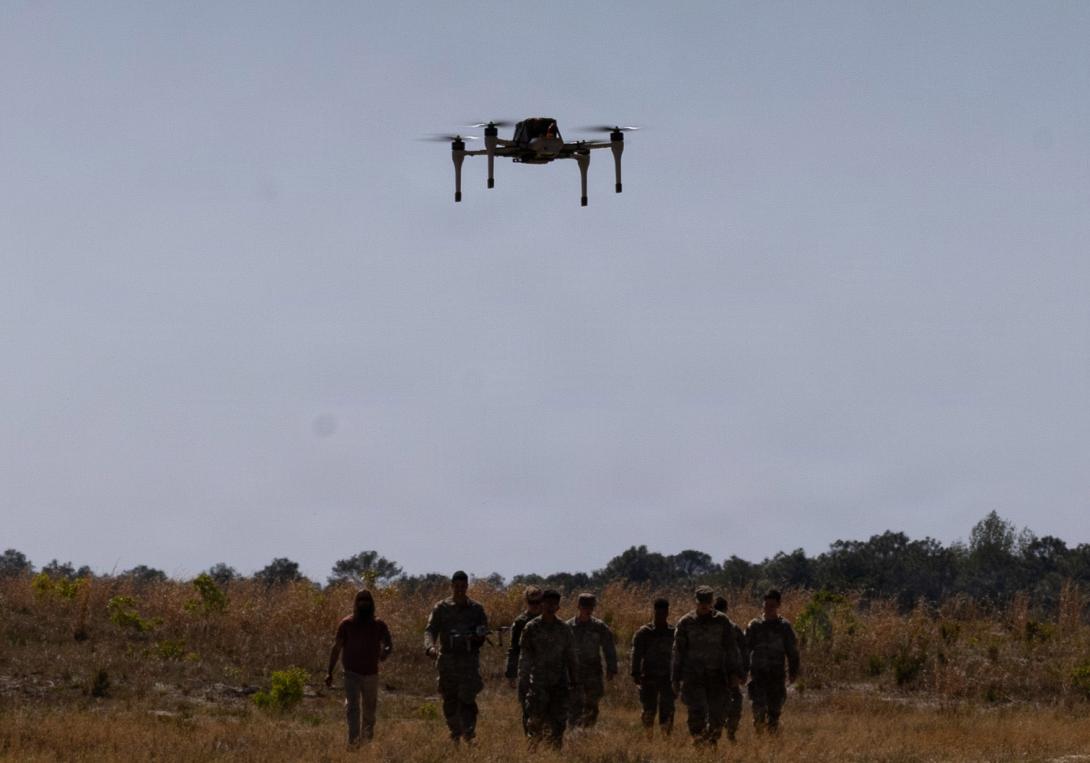
The rapid integration and utilization of unmanned aircraft systems (UAS) and counter-unmanned aircraft systems (C-UAS) in the modern-day fight provide commanders and soldiers with an innovative and efficient way of carrying out their duties and protecting individuals and infrastructure on and off the battlefield. U.S. Army leaders are acknowledging the importance of UASs and C-UASs, signified by the implementation of several different actions and objectives, such as hosting field-related events; releasing an online store to revolutionize drone acquisition; and procuring and investing in more advanced technology to improve, bolster and fill in the gaps within this space. The last point will be SIGNAL Media’s focus of this story.
Achieving this goal can assist in creating and establishing a layered defense model within the Army, specifically within its UAS and C-UAS operations. The rollout of a layered defense approach, which one Army official called “the future,” can help the branch stay ahead of what they think the next threat will be, according to Maj. Vince Wiggins, chief of air missile defense in the 82nd Airborne Division.
“The future is to continue to add different layers to our defense posture, whatever that is, so in both the dedicated air defense realm as well as the non-dedicated air defense realm,” Wiggins explained during an interview with SIGNAL Media. “What specific system will it be tomorrow? We can’t give you a definitive answer on that, because it may not even be developed yet. Someone may be making it right now, but the concept of it does not change.”
“We need capabilities that are modular,” Wiggins elaborated. “We need capabilities that are tactical, that service members can carry with little or no lift requirements, and we have some of that, and we’re continuing to get more.”
Currently, the dedicated and non-dedicated air defense spaces are well-equipped, but as Wiggins said, Army leaders are looking to add tools to both areas.
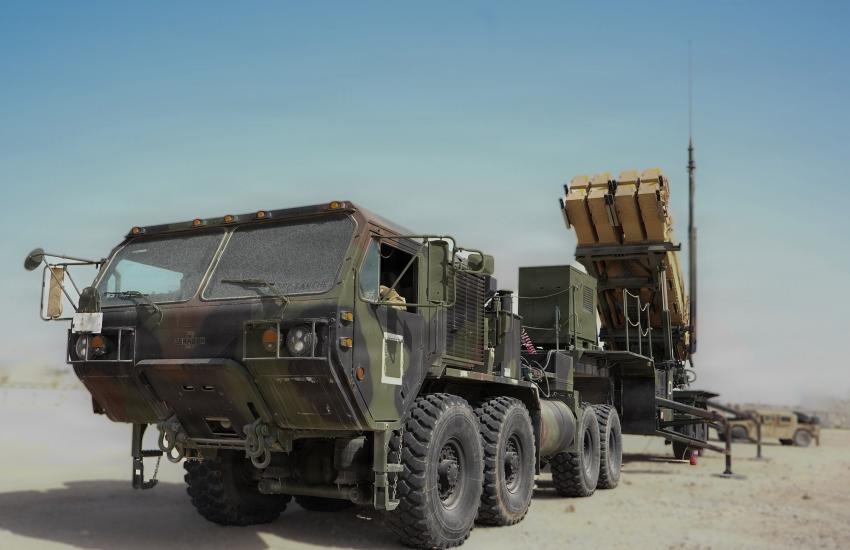
Dedicated air defense technologies are devices issued by the government and/or the Army, intended to be deployed by dedicated air defense military occupational specialty personnel. This type of system can be any device that gives air defenders the ability to demonstrate this layer of coverage. The Army’s Low, Slow, Small UAS Integrated Defeat System (LIDS) family of systems and the PATRIOT defense system are examples of capabilities that are classified as dedicated air defense systems, per Wiggins. The LIDS series of systems, which includes Fixed Site-LIDS (FS-LIDS) and Mobile-LIDS (M-LIDS), is designed to counter larger groups of drones, according to Jilliene Huffman, chief warrant officer 2 and tactician in air missile defense systems in the 82nd Airborne Division.
Tools in this category cannot manage everything, so Army officials also need non-dedicated air defense systems for optimal coverage. These devices can provide an overarching coverage bubble that fills in the gaps and resolves any additional vulnerabilities in the air defense space. Some examples in this group include the Pitbull and Wingman portable C-UAS devices. Pitbull is designed to stop or disrupt a potential drone-related threat, and Wingman detects drones and warns soldiers in advance, allowing them to take evasive measures or eliminate the threat, per Wiggins. He added that dedicated and non-dedicated air defense systems work together, and a layered defense that consists of both types is “ideal.” Huffman also noted that these two systems are additional evidence of Army leaders pouring time and resources into procuring advanced technology to help their forces gain the advantage they need to win the fight.
“One of the best reasons for why the 82nd [Airborne Division] needed [Wingman and Pitbull] was based on the previous older technology,” Huffman said. “When you think about airborne operations and the systems that they had, like the Modi was a backpack, and that’s just not conducive to airborne operations, so they invested in newer technology for ground infantry forces. Then, if there is something that gets through, say smaller drones that aren’t able to be detected, then the Wingman and Pitbull can detect it and then potentially jam those specific drones.”
Speaking of filling in the gaps, 82nd Airborne Division personnel are always watching out for possible vulnerabilities in their airborne operations, especially regarding the counter-drone arena, Huffman said. Once a vulnerability is discovered and located, they scramble to patch it up. One hole that 82nd Airborne Division crews have identified is that they do not have access to a larger C-UAS capability that can confront UASs of differing proportions and neutralize UASs via air drops. They are attempting to fill in this gap, Huffman ensured.
“[We’re asking] are there any phases that are not protected with C-UAS?” Huffman said. “From that aspect, we’re looking, or we have been looking, into acquiring newer technology that can counter specific group sizes of drones, more specifically during airborne operations prior to air land, because systems, larger systems, like FS-LIDS and M-LIDS, are not able to be airdropped; they have to be airlanded. So, if anything, if any operations are happening prior to that, then there is no larger system for C-UAS that can basically make those engagements.”
In addition to the influx of game-changing capabilities, Army officials are adapting to the rising significance and usage of drones on the battlefield by addressing the training aspect of this development to ensure soldiers are prepared to use and operate these types of devices. To accomplish this proactive approach, leaders have implemented extensive training-related requirements, per Colton Johnson, chief warrant officer 2 and technician of UAS operations in the 82nd Airborne Division. He explained that regardless of the type of aircraft and its size, whether it is a UAS, small UAS or C-UAS capability, and whether crews are using it for a maneuver or reconnaissance and security mission, instructors need to educate and train operators on how to optimally use the drone.
“If you’re putting an aircraft in the air—no matter how small and no matter how big—you’re going to be utilizing trainers,” Johnson said. “In your small UAS world, you’re talking about master trainers who are trained to instruct, so the Army already has that system in place on how and who is supposed to be instructing. All of those course materials all go through the U.S. Army Transformation and Training Command (T2COM), or previously the U.S. Army Training and Doctrine Command (TRADOC), so all of our material across the entire Army is all reviewed, and all training is specifically designed for every single platform that’s being put in the air.”
But the tactics, techniques and procedures requirements of today will likely not stay the same in the future, Wiggins added. Due to the ever-changing nature of technology, especially in the drone space, training qualifications must keep up and align with the capabilities available at that time. “I still would compare this to if you were going out about a year or two ago, trying to look for a TV,” Wiggins expressed. “There are so many different [options]. Are you going to go LED? Are you going to go OLED? There are so many different preferences that folks have, and it’s constantly changing; the resolution is constantly changing. So, in this case, the technology is constantly changing as well as the tactics, techniques and procedures along with them. What I will say is the goal, of course, is to always stay ahead of what we think the next threat is going to be.”
Regarding the near future in this field, in addition to acquiring newer technology, members of the 82nd Airborne Division are focusing on two other specific tasks: fielding capabilities at scale and innovation. They will work to distribute existing capabilities to additional brigades to allow warfighters unfamiliar with these tools the opportunity to get their hands on and learn how to use them. Some individuals in the 82nd Airborne Division will tackle the innovation side. More specifically, they are analyzing existing capabilities to explore if these tools can accomplish more than one mission type, according to Johnson.
Comments