
Counter-Drone Systems To Flood the Skies at Project Flytrap 5.0
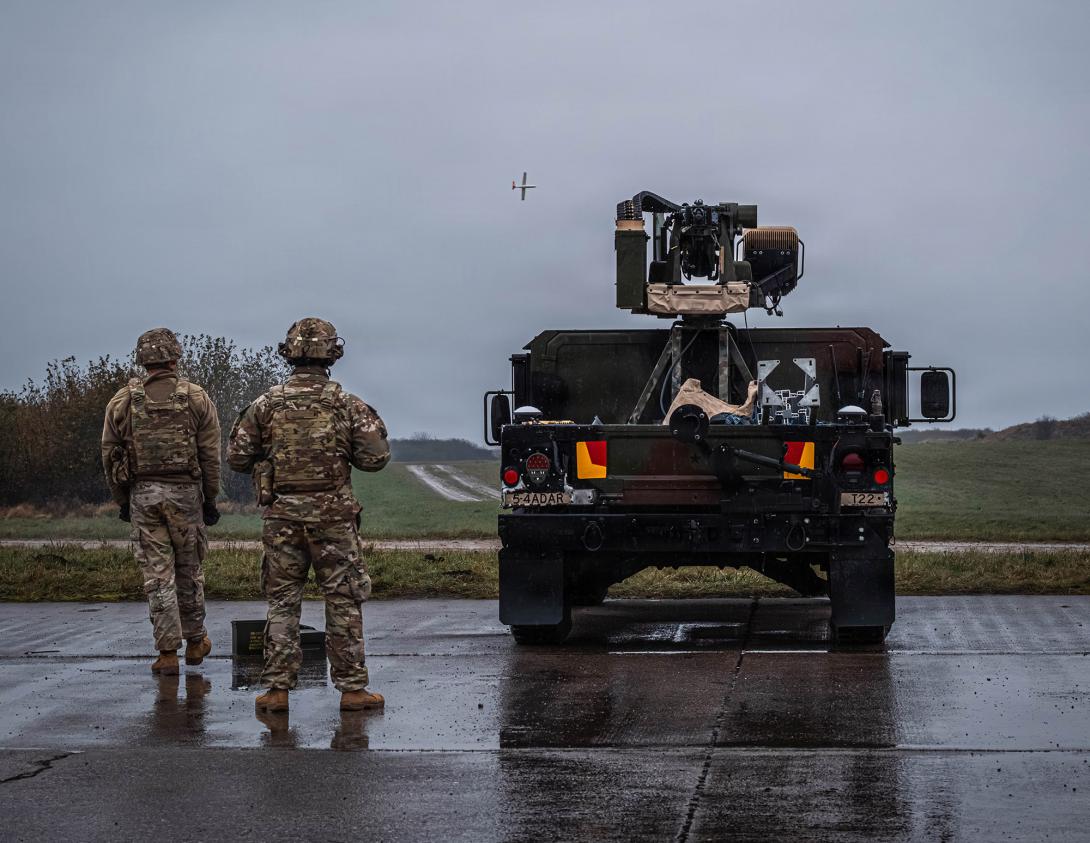
This month, Army officials in Europe are striving to propel the counter-unmanned aircraft systems (C-UAS) space forward by hosting Project Flytrap 5.0. At the event, soldiers will prioritize counter-drone systems and experiment with and demonstrate a handful of C-UAS-based capabilities to identify successful options that they can use to bolster their arsenal.
Through observations and lessons learned from the war between Russia and Ukraine, U.S. Army personnel are discovering the vital role that effective UAS tools play in winning the fight on the present-day battlefield. But just how instrumental are these capabilities? In fact, the utilization of these advanced technologies signifies a “fundamental transformation” in the execution of operational warfare, according to Maj. Mark Sauser of the U.S. Army.
Furthermore, integrating UAS into military operations has compelled opposing forces to adjust their command-and-control tactics, techniques and procedures, especially regarding their planning strategies and attack and defensive methods, and to stress the significance of, and become more effective and efficient at, infusing data and intelligence into operations. This exponentially elevated impact of UAS-based tools on the revolutionized battlefield reveals the direct relationship between UAS and C-UAS. In other words, as the UAS space becomes more important, so does the C-UAS space—exactly what Project Flytrap 5.0 contributors are working to address. For example, U.S. military officials are learning that Russian and Ukrainian forces are using UASs to monitor and investigate each other, which is limiting their ability to launch unexpected attacks on one another, per Sauser. To remedy this issue, the opposition must develop and integrate C-UASs to attack and eliminate the surveillance UASs.
Not only are U.S. defense personnel learning about emerging tactics, techniques and procedures that have been on display during the Russia-Ukraine War and unlocked by the creation of innovative technologies, but they are also discovering and identifying specific capabilities with high potential that they seek to interact with at Project Flytrap 5.0.
“One of the things that we look at when we look at the vendors and the capabilities that are coming out [to Project Flytrap] is: Is it being tested in Ukraine and is it being used in Ukraine?” Capt. Gabriel Glazer, squadron signal officer in the Field Artillery Squadron, 2nd Cavalry Regiment, said during an interview with SIGNAL Media. “We’re seeing the war in the east as a learning lab for the Army to drive its transformation. So, we’re really excited about a couple of vendors that are using those systems in Ukraine and giving them to Ukrainians to defend themselves.”
Project Flytrap 5.0 crews plan to test over 60 systems in harsh and contested environments to see which ones can remain effective despite the circumstances. Of the 60 capabilities, leaders are especially interested in observing firsthand the potential of several C-UAS-based tools developed by Moodro, Allen Control Systems and Areté.
Soldiers will assess Moodro’s Varta and Spectrofy systems during the event. The Varta system is a dismounted radio-frequency detection system that also gives users the ability to access and view the video feed from first-person-view drones controlled by adversaries, according to Capt. Cameron Woodard, squadron intelligence officer in the 3rd Squadron, 2nd Cavalry Regiment. This C-UAS-based capability enables soldiers to see exactly what the drones are watching.
“I’m very excited to see that get tested, because a lot of times when a first-person view [drone] is flying over top of you, and you’re undercover, you can’t tell if it’s actually observing you or not, which leads into the questions of have I been observed? Do I need to move?” Woodard said. “So, if I have the video feed from the first-person view drone, I can say, ‘Yes, I’ve been observed, and I need to move before indirect fire gets called up here or something like that.’” The Spectrofy device can allow users to view a drone’s pinpointed location and movement direction, according to Moodro personnel. This tool provides soldiers with knowledge of the opposition’s movements and when enemies are possibly watching their operations, subsequently limiting adversaries’ ability to stealthily maneuver via UAS.
Warfighters will also examine Allen Control Systems’ Bullfrog M2 system paired with Areté’s electro-optical/infrared (EO/IR) camera capabilities. The Bullfrog M2 is an automatic, semi-artificial intelligence (AI)-based ballistic weapon system that, with help from Areté’s EO/IR cameras, can uncover, locate, address and eliminate unmanned systems, per Allen Control Systems personnel. More specifically, when dealing with a type 1 UAS, the EO/IR camera from Areté can detect the unmanned system, and then it can send the digital longitude and latitude data directly to the Bullfrog M2 system. Soldiers at the platoon or troop levels can then assign that task and use the Bullfrog M2 capability to neutralize the UAS, per Capt. Brendan Printup, commander of the Eagle Troop, 2nd Squadron, 2nd Calvary Regiment. Printup added that during a simulation conducted in a controlled environment, the entire process took about 25 seconds. This combination of capabilities has only been put through initial simulated and controlled testing, so the experiments and assessments taking place at Project Flytrap 5.0 will be a major step in the inspection process for the possible partnership between Bullfrog M2 and EO/IR cameras.
In addition to Project Flytrap 5.0 giving officials the ability to evaluate and get their hands on new capabilities, it will also provide them the opportunity to see what level in the force is the best place for these technologies to “live.”
While Project Flytrap 5.0 crews are testing these capabilities, they will also indirectly put the network that supports these tools under the microscope. The added value of this specific iteration of the Project Flytrap series is critical, as it could expose weaknesses and vulnerabilities in the network and offer lessons learned as soldiers look to advance the network further, especially regarding the next-generation command and control project.
“I think with the 60 different pieces of equipment from the different vendors that will be on the ground, what it’s really going to do is give us some stress on our network that we didn’t have at the previous Flytraps, which I think will give us feedback on what we need to do to really improve our networks,” Woodard said. “I think that will feed into the next generation command and control and maybe give it some different data points that are needed as well. But I think the volume of C-UAS, UAS and electronic warfare use in this will be slightly different than before and slightly higher [than before].”
Furthermore, officials will hold Project Flytrap 5.0 from May 1-16 in Lithuania, per Glazer. At the event, U.S. European Command and U.S. Indo-Pacific Command will team up, providing the opportunity for forces from vastly different parts of the globe to convene and learn and transform together, Woodard said cheerfully. They will focus on improving the C-UAS arena, specifically on these tools’ ability to detect, track and neutralize UAS devices. This opportunity for interoperability will allow for further advancement of each other’s forces, better transparency between the groups and leaders to see what technologies work for which specific unit. To pinpoint which tools are effective and which are ineffective, soldiers will test the available capabilities in a maneuver live-fire exercise at the troop echelon level, Printup shared. Contributors will observe and record the successes and failures along the way.
“It’s just gathering the feedback, so then we can break these white papers and inform the big Army [of] this is what C-UAS focus at echelon should be; this is the equipment that truly allowed us to sense the deep area and how it connected to the squadron close,” Printup said. “And then what can the troop echelon then affect with the organic capabilities it has, and what we feasibly can do with all the overload systems that we will have at end state? That’s what we want to do is just inform the Army at the ground tactical maneuver level of what is right when it comes to the manning of people and equipment.
Soldiers aim to collect a plethora of takeaways by the time they wrap up the event, including achievements and accomplishments, disasters and disappointments and aspects that still need improvements. Glazer and Woodard underscored several specific tangible and intangible key benefits they anticipate arising from the exercises taking place at Project Flytrap 5.0.
“I think success looks like effectively employing the systems that we have in a tactical operation and then iterating and improving them on the line to make them better every single time,” Glazer said. “That’s the first thing that will be a success for us. The second thing that will be a success for us is that we have a robust amount of lessons learned and data that we can give to the Army and the broader Joint Force to inform them of what it may look like in a formation that can effectively counter the drones that we expect to encounter in the next conflict.” “I think [success] is three things,” Woodard added. “One is the relationship with industry. They get a real look at [the tools] in the hands of soldiers, direct feedback and iterates, [which] make their product better. I think that it is the tactics, techniques and procedures that we are learning with those things that we feed the larger Army. And then three, I think, is the acquisitions part. So, we feed the acquisitions for the Army [saying] this works, this doesn’t work, things like that.”
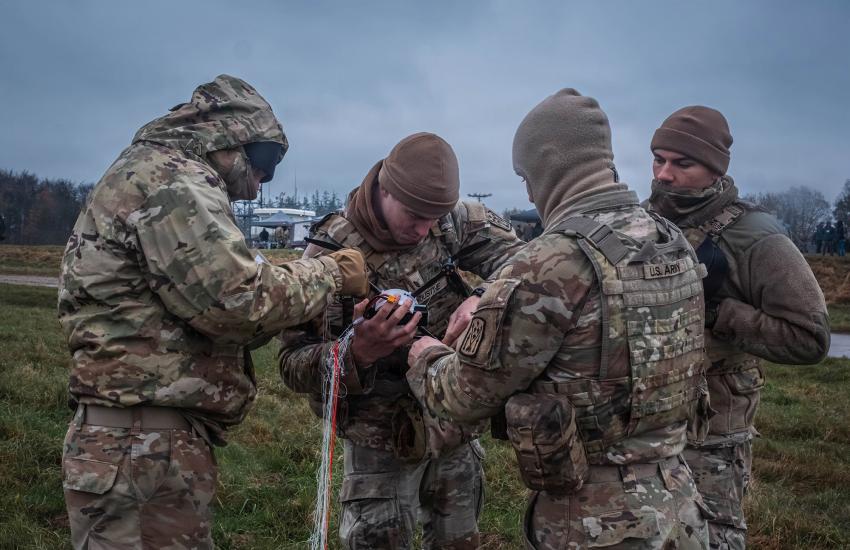
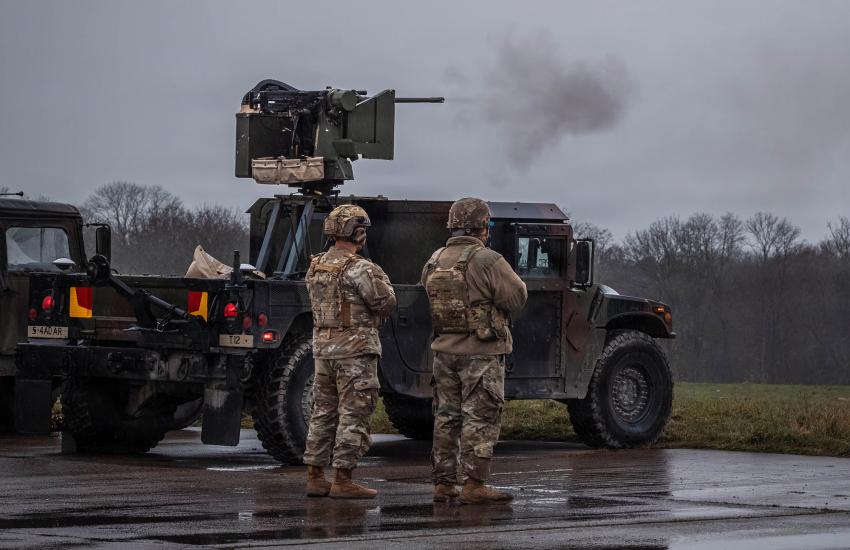
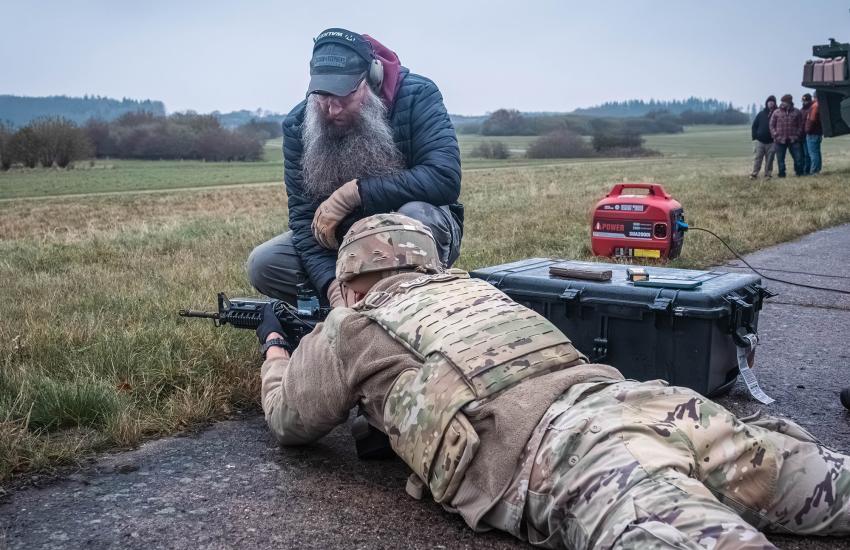
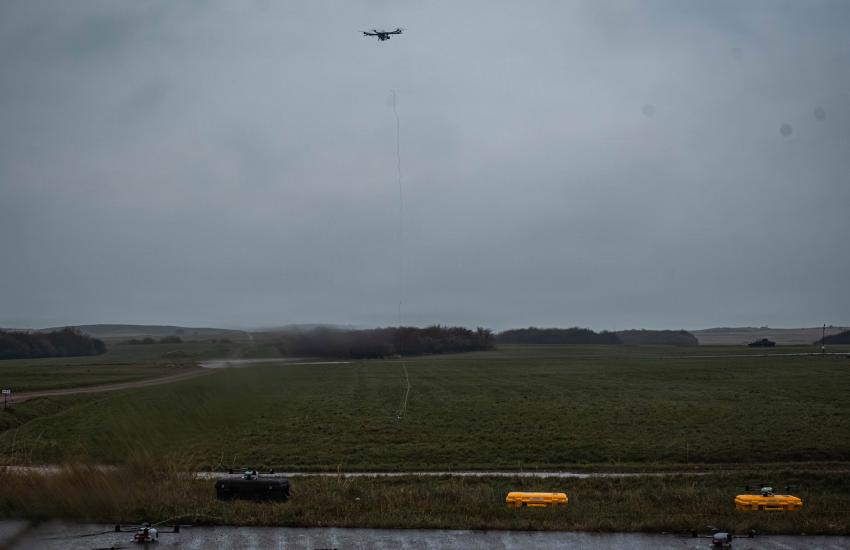
Following the event, soldiers will work to implement these lessons learned into their forces. As for the future of the event, Project Flytrap 5.0 contributors expect officials to put on several additional editions of the series.
“The really cool thing about [Project Flytrap] is that it is so iterative, so we absolutely expect there to be a Flytrap 6.0, 7.0, maybe 8.0,” Glazer said. “Something that our higher headquarters, V Corps, has directed us to provide at the end of the exercise is an operational needs statement so that we can kick-start that [aforementioned] acquisitions process. In addition to that, just further refinement of the tactics, techniques and procedures that the maneuver commanders have already been developing on how to effectively counter UAS [via] platform-agnostic and system-agnostic in a tactical operation.
“C-UAS, as a technology, moves so quickly,” Woodard added. “Six months ago, it was drastically different from now. So, I think Project Flytrap needs to be iterative, so you can continue to test new technology. And that’s why the way that Project Flytrap is built mirrors—about as close as we can get to—what’s going on in the Ukraine conflict, where industry is directly there on the ground, fixing things, changing things.”
The Project Flytrap series will likely continue changing and adapting to the current landscape of war, Woodard added. “I continue to see Project Flytrap iterating and changing because the technology requires it to. Then, I think as interest grows, I think we’ll see more and more partners and allies join in because they want to get those lessons learned.”
Army personnel are hosting Project Flytrap 5.0 six months after participating in the prior edition of the series: Project Flytrap 4.5. In November 2025, warfighters joined forces in Germany, where they primarily emphasized interceptors, according to Woodard. They noted the event’s ability to provide individuals with the chance to get their hands on C-UAS and use these capabilities to address simulated threats posed by UASs occupying the NATO airspace. Similar to Project Flytrap 5.0, the technologies on display at Project Flytrap 4.5 were compelled to either uncover, differentiate or neutralize the threat at hand.
One major highlight at Project Flytrap 4.5 was that crews were able to integrate a program of record classified system that can detect UASs and then move that information from the classified enclave to the unclassified enclave. Specifically, they used the Sentinel Radar, along with their organic secret radar that can detect UASs, to gather data, which they then forwarded to Anduril’s Lattice. This development is one that they are looking to repeat, enhance and refine at Project Flytrap 5.0. “
All these things are building on each other, and we’re just compounding the success to then create this fully integrated picture of C-UAS built upon a network that not only supports that but will support all of the next-generation command and control objectives as well,” Glazer said.
Despite several similarities between the two events, officials are ensuring that there will be distinctive features at Project Flytrap 5.0. Firstly, they are increasing the number of C-UAS, UAS and electronic warfare tools to thoroughly imitate a day on the battlefield in Ukraine, Woodard said during a media roundtable. This rise in accessible capabilities will also put additional stress on the network that has not been done at previous Flytrap iterations.
Furthermore, the Project Flytrap initiative separates itself from other events that prioritize C-UAS capabilities by stressing offensive maneuvers. Rather than focusing solely on the natural defensive side of the C-UAS space, Project Flytrap strives to improve the defensive side by strengthening the offensive side.
“It’s pushing the protected bubble with our frontline troops, improving tactics, techniques and procedures and then the technologies,” Woodard said.
Woodard went on to applaud the rapid and drastic evolution the series has seen in such a short amount of time. “Project Flytrap has grown significantly from last year,” Woodard added. “At one point, we had about a dozen systems and were testing some of the capabilities: radio frequency detection and jamming, some of the kinetic solutions and dismounted kinetic solutions. So, it’s grown significantly to a whole litany of other capabilities to include interceptors and things like that. It’s really testing those 60-plus systems now in harsh conditions, in constant offensive maneuver over multiple days, to see what breaks and what keeps going.”


Comments