
NATO’s ‘Digital Lethality Branch’ Breaks Records in Drive for Alliance-Wide Interoperability
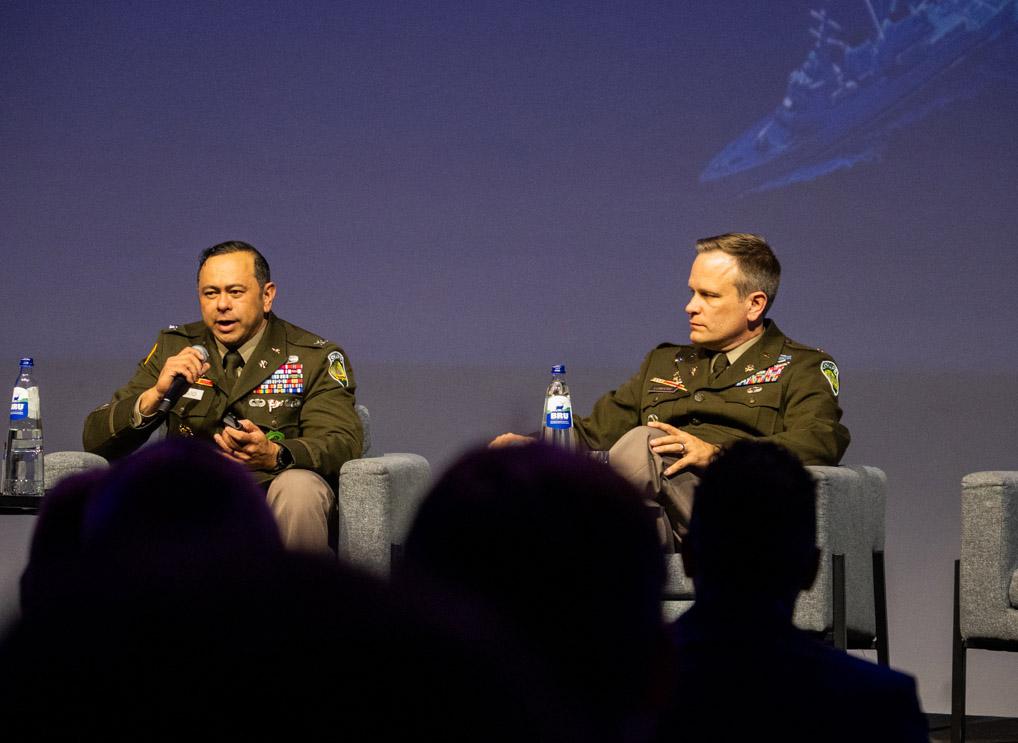
Breaking historic records, the eight-person team behind NATO’s Task Force Maven is accelerating integration of innovation to enhance the alliance’s operational capability and interoperability. In just a few months, the “Digital Lethality Branch” has proven success through speed and agility, with no plans to slow down—a mission and challenge led by two U.S. Army officers.
Having embarked on their journey a little over a year ago, Task Force Maven NATO announced NATO Maven Smart System’s (NATO MSS) full operational capability achievement and full security accreditation on classified networks in June of this year.
“This gives us full authorization to operate NATO MSS for everything, including exercises, missions and activities,” said U.S. Army Col. Arnel David, Task Force Maven director.
The achievement followed an exercise that tested NATO MSS capabilities, including automated scripting and opposition force response, according to a press release.
In an exclusive interview with SIGNAL Media following AFCEA’s TechNet International event in Brussels, David and Task Force Maven Chief of Artificial Intelligence (AI) Lt. Col. Ash Lubecke spoke on the program’s future and what its success means for command operations.
“Maven has the combat-proven track record of being able to interoperate across the world, so bringing it to the alliance helps reinforce our existing alliance efforts,” Lubecke stated. “The entire federated mission networking enterprise came about because of an interoperability challenge in Afghanistan, and that’s been going on for a decade, and it’s making this incremental, really hard progress.”
The difference with Task Force Maven’s iteration cycle is speed, he highlighted. Instead of years-long cycles, the program is achieving milestones within days to weeks, all while still pursuing NATO standardization agreements, or STANAGs.
“The more interoperable the alliance is, the more we are able to be lethal, which restores deterrence to our potential adversaries,” Lubecke continued. “Right now, some of the most combat-experienced soldiers in the world are in countries hostile to us, and they have experience under this revolution in military affairs that is autonomous warfare and so that experience gap can be made up through the power of 32 if all of our data can move from the point of origin to the point of need in order to create a concrete effect in the physical.”
Therefore, Lubecke said, the mission is in data effectivity and interoperability within significantly shorter timelines.
For land warfare, David said, Maven smart systems allow for the integration of disparate systems and equipment in unconventional ways, thereby achieving that critical piece of interoperability.
“It’s a matter of stop talking about it and start just getting in the field like soldiers always do, and just breaking things and playing with things and connecting things. The more we do that, the more we’ll solve the problem,” David stated.
That mindset is why Lubecke felt encouraged to join the Task Force Maven team, he added. The operational focus, he says, is to close the capability gap against the adversary. If the gap were to remain open, there would be a risk of miscalculation.
“If you look at the difference between World War I and World War II, we had these new technologies that were emerging that in World War I we didn’t know how to put them together to enable maneuver from a ground combat perspective,” Lubecke continued.
While the technology from the First to the Second World War—such as tanks and aircraft—improved, the key discriminator between the two was radio.
“It was synchronizing those effects in time and space, so that the tank could talk to the aircraft and then that re-enabled maneuver in the land domain,” he stated. “What we’ve seen in Ukraine is we’re kind of in that World War I space still, where you have all these technologies, but we haven’t quite mastered how to synchronize them without having to mask the forces that creates a vulnerability and allows you to be targeted pretty instantaneously.”
The role of NATO MSS is therefore to allow the transmission of data between machines to synchronize their effects in the land domain. This must be done with reduced latency, which is not possible in traditional systems, Lubecke added.
“The machine has to talk straight to another machine, and the human can only get involved when they have to, while maintaining some agency so you can shift the outcome of the fight if it’s going badly,” he said. “As you move towards this autonomous warfare paradigm, you have to re-enable maneuver, because that’s how the West wants to fight and that’s how we win.”
Thus, data integration within all systems is imperative for the future fight. However, as with most discussions about data interoperability, the subject of digital sovereignty comes into play.
“There’s a lot of misinformation about sovereignty and confusion,” David said. “Just to pierce through that fog of confusion, we’re absolutely clear that we have full sovereignty over our NATO Maven smart system, meaning that we own all our data.”
All software revisions and updates are controlled by NATO, he continued.
“It’s on our data, on our tech stacks ... on our servers and it’s in our data center. That is full sovereignty.”
Inside NATO, paradigms already exist for data sovereignty, Lubecke echoed.
“When a nation provides intelligence data, it can caveat how that can be disseminated or used to NATO, and then we observe that, so from a practical perspective, when we’re building those data rules into our Maven smart systems for NATO, those decisions are made by NATO personnel that are those data owners,” he stated.
The challenge, Lubecke continued, is understanding how the approach strengthens data sovereignty rather than weakening it. Instead of relying on personnel not to forward an email or include it in external media, protections can be enforced programmatically within the system.
“Right now, if a nation provides an image but tags it as ‘not for targeting,’ it’s a commercial image. I can actually put a tag in the metadata of that image that prevents it from surfacing in our targeting workflows, so you can’t even make the mistake anymore,” Lubecke said.
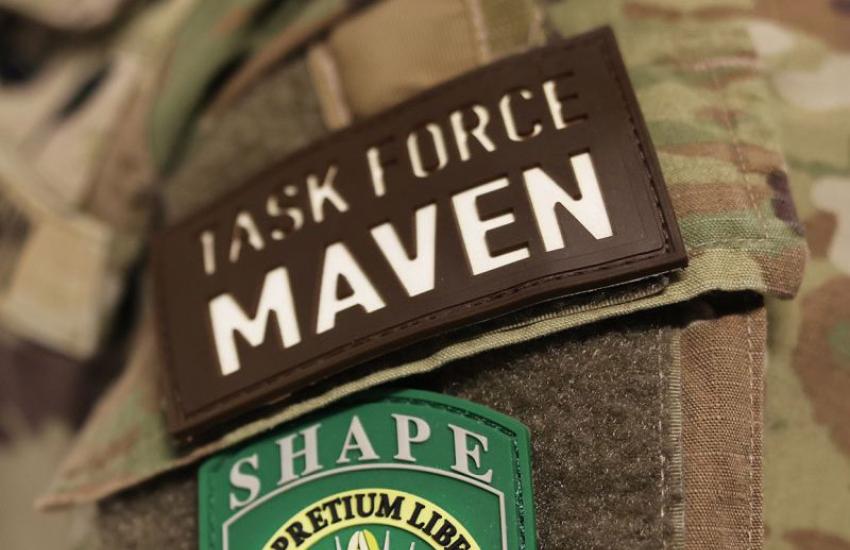
Enhanced capability allows for further control of data, along with built-in transparency and accountability within the platform.
“The problem with creating a walled garden where you rely on the database to be your security is once you’re past that wall, you have access to everything,” he explained. “Maven is a little challenging for NATO, because it represents the first system to kind of really push the boundaries of how we get to this data-centricity that we need to leverage things like AI.”
Without a framework, large language models over large sets of data create a risk of compromise to data sovereignty. To truly leverage AI capabilities, a safeguard infrastructure is critical within NATO’s systems.
“What we do is provide the practical foundation infrastructure that allows us to be successful and move data from joint targeting system to [Intelligence Functional Services] to [Joint Operations Center Watch], combine all of that and maintain that data sovereignty along the way, where it’s cryptographically bound to that data object,” he said.
For NATO, the Maven smart system is a step forward in accountability, he outlined.
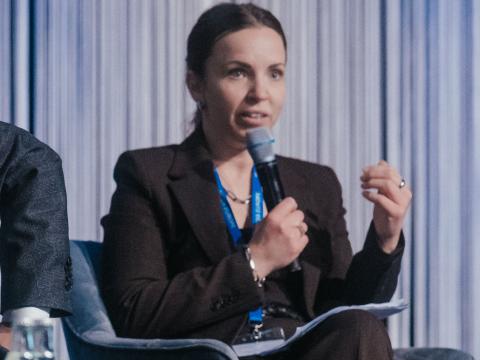
The statements were echoed by Fiona Bradley, deployment strategist at Palantir Technologies, the company credited with the development of Maven Smart Systems.
Though public misconceptions exist about Palantir capabilities, Bradley says all NATO MSS software is owned by the alliance, hosted on NATO networks and operated by NATO personnel. Palantir is not a data broker, Bradley stressed, nor does it own any of its customers’ data.
“The core focus on the software for an incredibly long time has been data integration, management and security,” she told SIGNAL Media in an interview. The real strength of the platform is its ability to operationalize data securely—that focus has been maintained for two decades, Bradley stated.
Currently, David noted, NATO MSS has more than 10,000 users, and more personnel are encouraged to join.
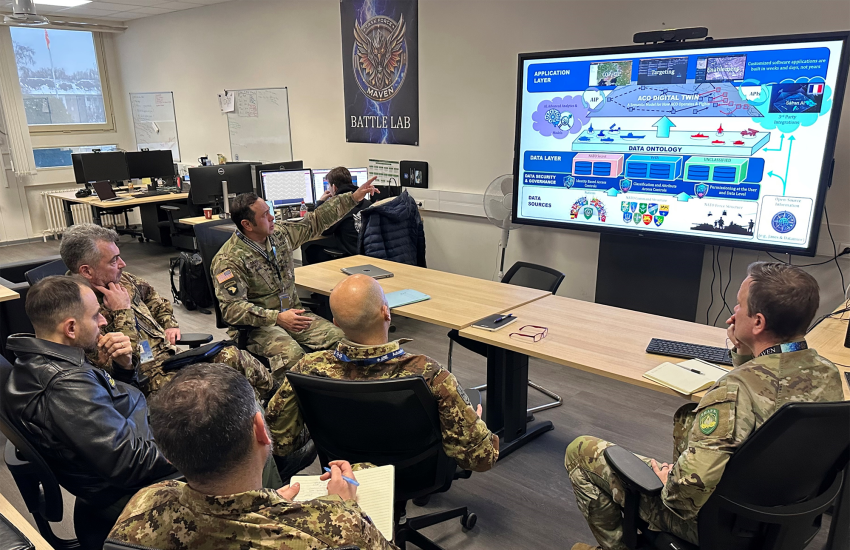
“Because of the success and the momentum that’s been built up in creating this data integration layer and this ontology, we’re looking to offer that to help the rest of the alliance as well, because more interoperable data means better results, no matter what your job is,” Lubecke added.
Today, MSS NATO is the largest AI provider within the alliance, he said.
“We’re quite proud we’ve achieved victory. It’s a good feeling,” David added.
In an email to SIGNAL Media, David shared his plans to retire in early 2027. With no firm plans yet, David will be finishing his Ph.D. and will likely continue his service in the tech industry.
“The foundation for Task Force Maven, the Digital Lethality Branch, is strong with incredible talent that will carry the torch forward,” he wrote. “This exciting effort is drawing top talent from all of our nations in the alliance.”
In the coming months, the team will double in size to scale and re-balance the workload, David added. Priority will remain on connecting all systems across the alliance and delivering a new level of interoperability.
“I see AI use increasing across all of our warfighting commands to make them more effective and faster,” he said.

Comments