
New Framework Delivers Once-Classified Data to Soldiers on the Frontlines
A new ecosystem consisting of three innovations is giving warfighters access to critical data when they need it, announced Col. Craig Cotner, director of the fires transformation integration directorate of the U.S. Army Fires Center of Excellence. The integrated battle command system (IBCS), Army Integrated Air and Missile Defense (AIAMD) gateway and Advanced Field Artillery Tactical Data System Artillery Execution Suite (AFATDS AXS) build off each other to provide warfighters with the most applicable information available to allow them to successfully complete their missions.
More specifically, the framework delivers classified data to individuals on the frontlines. Cotner listed and described the several benefits that achieving this ability offers.
“It provides aerial situational awareness, and it also provides data to do targeting for offensive fires,” he said during a brief one-on-one discussion following a panel at the 2026 Association of the U.S. Army’s Annual Meeting and Exposition. “That’s why it’s important. It allows us, it allows soldiers all across the battlefield to have robust information for aerial situational awareness.”
“It helps them understand what aircraft are in the area, what drones are in the area and what possible missiles are coming into your area. So, it allows you to protect yourself and get into a hardened area and get to bunkers, and then it also allows targeting to use that data to do counterfire with that, so that’s why it’s important,” he added.
Cotner illustrated what the framework looks like. The IBCS is the air and missile defense networking system that has the classified data. The AIAMD gateway is where officials take that classified data and convert it into secure but unclassified information. Then, AXS uses that data to carry out offensive fire-related missions. A fourth piece of the framework, called IBCS maneuver (IBCS-M), contains the unclassified data and uses it in the unclassified network.
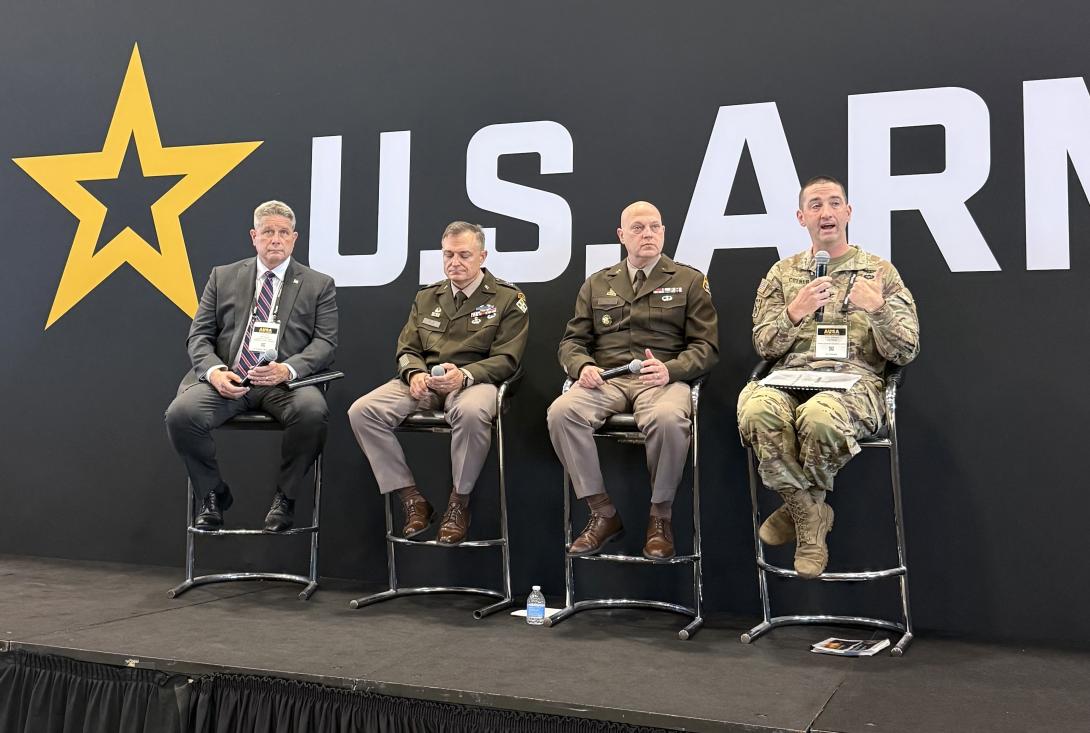
Out of the four components, AXS and IBCS-M are two elements that are parts of the Army’s Next Generation Command and Control (NGC2) infrastructure, which Maj. Gen. Pat Ellis, USA, commanding general of the 4th Infantry Division and Fort Carson, gave an update on during the panel.
“We sit here today and say it’s ready but not done,” he said. “It’s functional but not finished. I’ve had a lot of phrases like that I could use, but I think over the last year, we’ve learned a lot.”
The brief was similar to what the commanding general said at TechNet Augusta 2026 in August.
Army officials learned the lessons Ellis alluded to at exercises such as Ivy Sting.
The full IBCS system is a “separate but parallel effort to NGC2,” according to Cotner.



Comments