
PACAF Identifies Technologies To Succeed in the Indo-Pacific
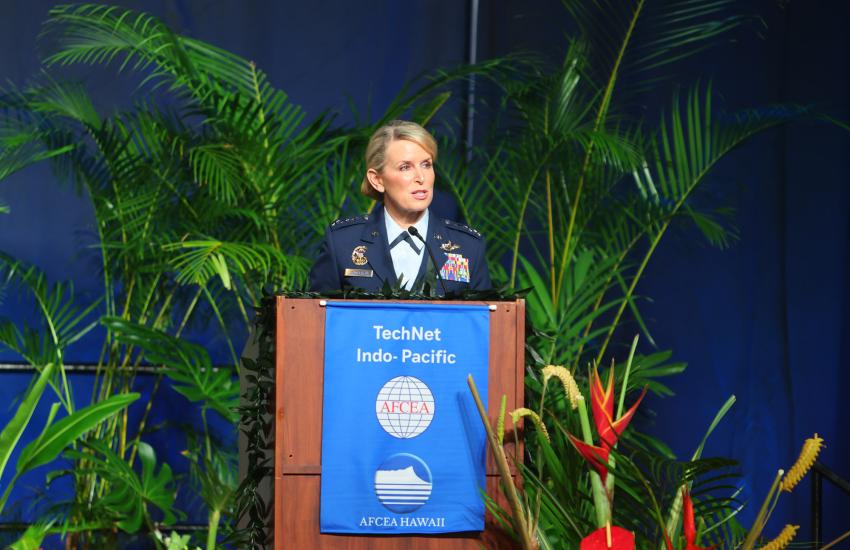
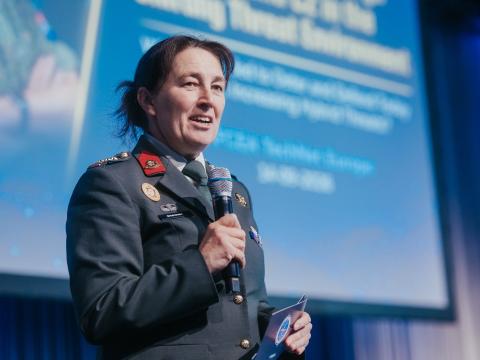
Technologies for the Pacific Air Forces must support dispersed operations in harsh conditions, under constant cyber attack, in a denied, degraded, intermittent and limited connectivity environment, said Lt. Gen. Laura L. Lenderman, USAF, deputy commander, Pacific Air Forces, and deputy theater air component commander to the commander of U.S. Indo-Pacific Command (INDOPACOM).
PACAF is the U.S. Air Force's major command in the INDOPACOM area of responsibility. The technologies PACAF needs now from industry include artificial intelligence (AI) and machine learning, semi-autonomous aircraft, cybersecurity, data processing and advanced command and control, Lenderman said..
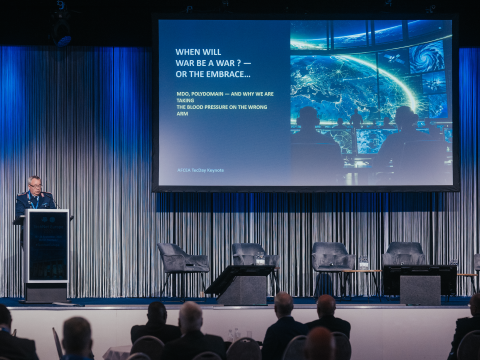
The deputy commander spoke at AFCEA’s TechNet Indo-Pacific Conference in Honolulu on October 25, 2025, sharing her observations along with those of her boss, Gen. Kevin Schneider, USAF, commander, Pacific Air Forces.
“To make this possible, we need your solutions,” she told industry at TechNet Indo-Pacific. “And we need advanced threat detection and the ability to rapidly sort through volumes of aggregated data. We need your solutions for advanced data analytics, secure communication networks and resilient communication systems, which must enable distributed command and control architecture that can maintain operational effectiveness even when traditional command centers are compromised.”
The major command has to support air power with continued allied integration, multidomain kill-chain methodology and data-based decision-making across INDOPACOM, she said.
PACAF takes the opportunity to examine new capabilities during key exercises, including at last summer’s Resolute Force Pacific (REFORPAC) 2025 exercise, and at Bamboo Eagle 25-3.
“Most importantly, we identified the capabilities that we need to win in this theater,” Lenderman noted, speaking of the success of the exercises. “First, we need to push hard on artificial intelligence, autonomy and machine learning.”
The role of AI and machine learning would be to augment warfighter-based decision-making and logistics, Lenderman stated.
“In the words of Admiral Paparo, we need robust, ethical AI systems that enhance decision-making while fiercely preserving human oversight of critical operations,” she explained, speaking about Adm. Samuel Paparo, USN, commander of INDOPACOM. “We need AI technology to ensure faster, more resilient logistical solutions with the ability to predict where supplies will be needed before the frontline unit requests them.”
Any AI solutions from industry “must absolutely be interoperable” with U.S. coalition partners, Lenderman advised.
“Because with each layer, the amount of data grows and the information available becomes almost overwhelming, with machine-to-machine data transfer,” she said. “Artificial learning and machine learning technologies hold our solution in this space.”
The PACAF deputy also called for semi-autonomous aircraft—and the need for associated tactics, techniques and procedures.
“We need autonomy to assist our most dangerous missions,” Lenderman stated.
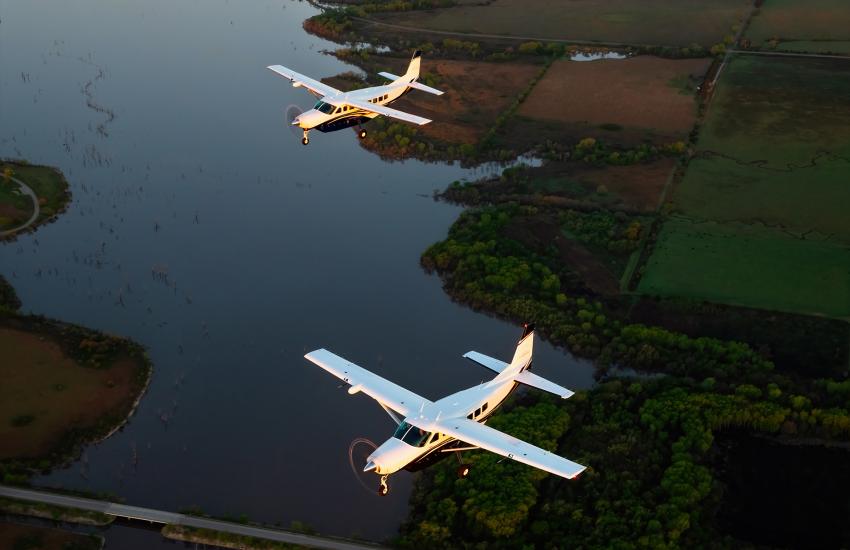
On the road to leveraging semi-autonomous aircraft, PACAF tested an semi-autonomous Cessna 208 during the REFORPAC event in the Pacific theater in July.
Officials from the major command worked with the Air Force Research Laboratory and its innovation arm, AFWERX, to pull off the effort, Lenderman explained.
“One of the most ambitious experiments was operationalizing the semi-autonomous Cessna 208 for inter-theater airlift,” she stated. “In less than 18 months, we went from an initial concept to operational testing.”
The remotely piloted Cessna deployed from the U.S. mainland to Oahu and flew sorties in and around the Hawaiian Islands. While the aircraft was flying around Hawaii, it was monitored by a safety pilot, but it was controlled thousands of miles away in Guam.
“We validated our point-to-point logistics and rapid resupply for a hub and spoke model,” the deputy commander stated. “This demonstrated the impact of autonomous systems to revolutionize our logistics and support operations here in the Pacific. Beyond experimenting with autonomous systems, though, we also learned how remarkably data-heavy command and control of logistics at this speed and scale is at the operational level. We must have access to a more holistic logistics picture.”
In addition, the Department of the Air Force is working on its so-called DAF Battle Network, to include coalition and joint all-domain command and control. In its role, PACAF needs advanced command-and-control solutions that will integrate with its international teammates.
“Secondly, we must continue to improve our command-and-control capabilities,” she continued. “How can we use technology to fuse common operating and common intel pictures to enable faster, more informed decision-making across the globe. How do we move beyond data generation and fusion at the tactical level so that we can rapidly assess a combined, integrated picture at the operational level with our joint and combined allies.”
Here, any industry solutions must be able to integrate with solutions already deployed across PACAF and work on a greater department-level scale.
“Interoperability and capacity to integrate are key, especially as we seek to capitalize on solutions that we already have available,” Lenderman said. “By leveraging these capabilities that have already been proven effective, we create a window of opportunity to adapt and scale these existing technologies and enhance them with your solutions.”
This means leveraging open architectures and open mission systems, such as MOSA, the modular open systems approach, widely used across the joint force.
“We will continue to focus on open system architectures and advocate for capabilities that work seamlessly across our joint service and allies and partners,” the deputy commander said.
And operating in such a contested area means PACAF needs cyber protections and network resiliency from any industry solution.
“We must also take a big-league swing at networking and cybersecurity resilient networks that can communicate securely in expeditionary environments and survive relentless attacks,” she continued. “These are not just ethereal objectives. They are threshold capability requirements. This is about not just defending against attacks. It is about ensuring that our systems can continue to function after they are attacked. It is about maintaining operational tempo in the face of these persistent threats.”
As such, the service needs solutions that provide proactive threat detection, robust security protocols and other zero-trust protocols. In addition, specific cyber solutions are needed for operational support capabilities, such as fuel systems.
“We are particularly interested in capabilities that can establish zero-trust architecture and provide real-time insights into the cyber terrain of our systems, including their vulnerabilities, the deputy commander stated. “And we need solutions that protect critical enablers, such as fuel systems, from cyber attacks. From the beginning, enable us to sense threats and patch vulnerabilities quickly. This is not something for 2030. This is something we need today.”
These are the solutions that PACAF needs from industry to succeed in the INDOPACOM area of responsibility, Lenderman emphasized, acknowledging the sophisticated capabilities needed from defense technology suppliers.
“To our industry partners here in Hawaii, and to those on the mainland and around the world, we are asking a lot of you,” Lenderman acknowledged. “We need your help to pull every lever. We ask for you to take action and help us get capabilities into the hands of warfighters as fast as our grandmothers and grandfathers did 80 years ago. This is our call to action for all of us.”
Comments