
President's Commentary: Two Countdowns to 2027: Cybersecurity and Indo-Pacific Readiness
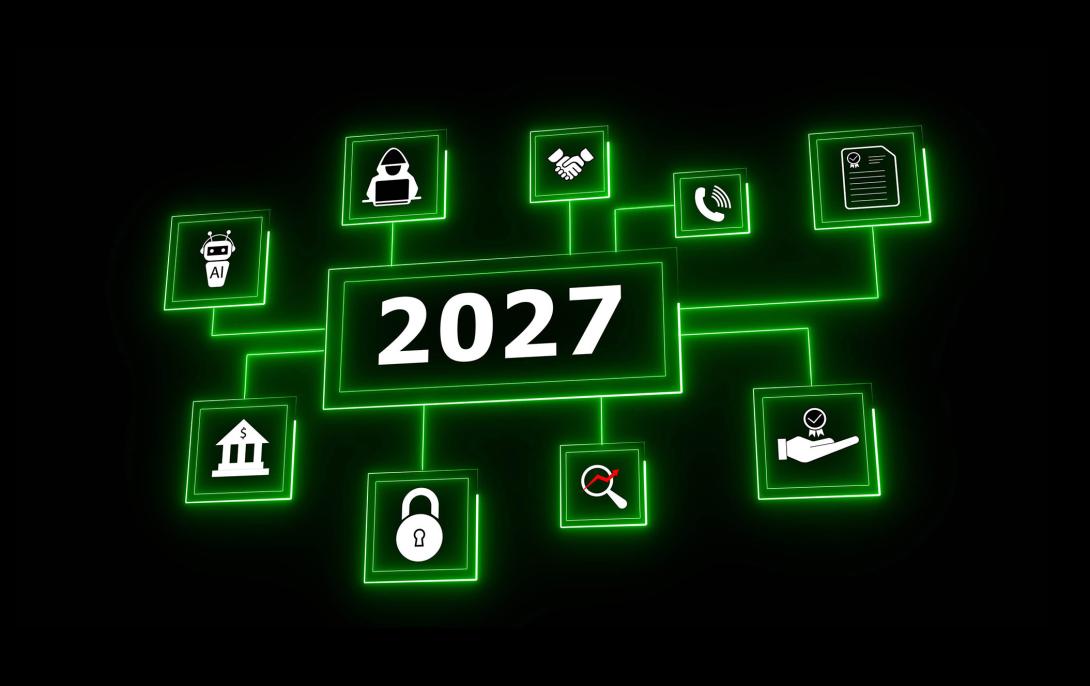
The U.S. Department of War is simultaneously undergoing two countdowns to 2027: one to fully implement zero-trust cybersecurity measures to better defend against China and other cyber aggressors and another to prepare for a potential invasion of Taiwan by the People’s Republic of China (PRC).
In late 2022, the department unveiled its Zero Trust Strategy to overhaul cybersecurity across all networks in the 2027 fiscal year, which begins in October. Zero trust assumes compromise and enforces continuous authentication, strict access controls and data-centric protections. Department officials expect to have implemented 91 of the 152 target activities that were identified in the Zero Trust Strategy and Roadmap, according to a Defense Department article published nearly one year ago.
The urgency stems from the dynamic, ever-evolving and persistent nature of cyber threats from nation-states—especially China and Russia. Those threats grow more sophisticated by the day, if not the hour. The Pentagon’s networks underpin everything from logistics to tactical weapon systems and nuclear command and control. More than just an information technology upgrade, zero trust fundamentally shifts toward resilience in the age of persistent cyber conflict.
The second clock ticks in the Indo-Pacific. In 2021, Adm. Phil Davidson, then commander of U.S. Indo-Pacific Command, warned that China could attempt to seize Taiwan by 2027. That prediction—often called the “Davidson Window”—has become a planning benchmark for U.S. defense strategy. Intelligence assessments suggest Xi Jinping has directed the People’s Liberation Army to be ready for a Taiwan contingency by that date.
In response, the Pentagon has been accelerating force posture improvements under the Pacific Deterrence Initiative, which includes modernizing fleets, stockpiling munitions, hardening bases and strengthening alliances with Japan, Australia and the Philippines. Exercises like Talisman Sabre and Keen Edge test these capabilities in real-world scenarios. The goal is to ensure U.S. and allied forces can operate effectively across vast distances and contested domains.
At first glance, these countdowns seem unrelated—one is about firewalls, the other about fighter jets. But they converge in critical ways.
Modern warfare is inseparable from secure networks. Indo-Pacific operations rely on Combined Joint All-Domain Command and Control (CJADC2), a concept that stitches together sensors, shooters and decision-makers across land, sea, air, space and cyber. If those networks are compromised, deterrence collapses. That’s why U.S. Indo-Pacific Command’s Mission Partner Environment—the backbone for coalition interoperability—is being built on zero-trust principles.
In short, zero trust is a vital operational enabler. It ensures that when U.S. forces maneuver in the Pacific, their command-and-control systems remain resilient against Chinese cyber attacks—a tactic Beijing is expected to employ early in any conflict.
The potential of that tactic became all too real when Volt Typhoon infiltrated critical U.S. networks and systems nearly two years ago. U.S. government officials said it likely did so in preparation for an invasion of Taiwan. Multiple U.S. agencies jointly warned that Volt Typhoon posed an urgent risk because the intrusions threatened vital American water, electric and communications sectors.
During last year’s Intelligence and National Security Summit, Robert Joyce, founder of Joyce Cyber LLC, whose illustrious career included service as special assistant to the president and cybersecurity coordinator on the U.S. National Security Council, described Volt Typhoon’s actions as preparation for causing societal panic. “That’s a fancy way to say they planned—they were pre-positioning—for terrorism. They wanted us, at a time of escalating tensions in the East, to look inward and not care about what was going on on the other side of the world.”
Both countdowns reflect a broader truth: the coming months are pivotal for U.S. defense modernization. Failure to meet either deadline would leave the military vulnerable—digitally and physically—at a time when adversaries are accelerating their own capabilities.
Cybersecurity and Indo-Pacific posture are two sides of the same coin. Together, they form the foundation of deterrence in an era where both bytes and battleships are destructive and decisive.



Comments