
The U.S. Coast Guard’s Major Modernization Moves
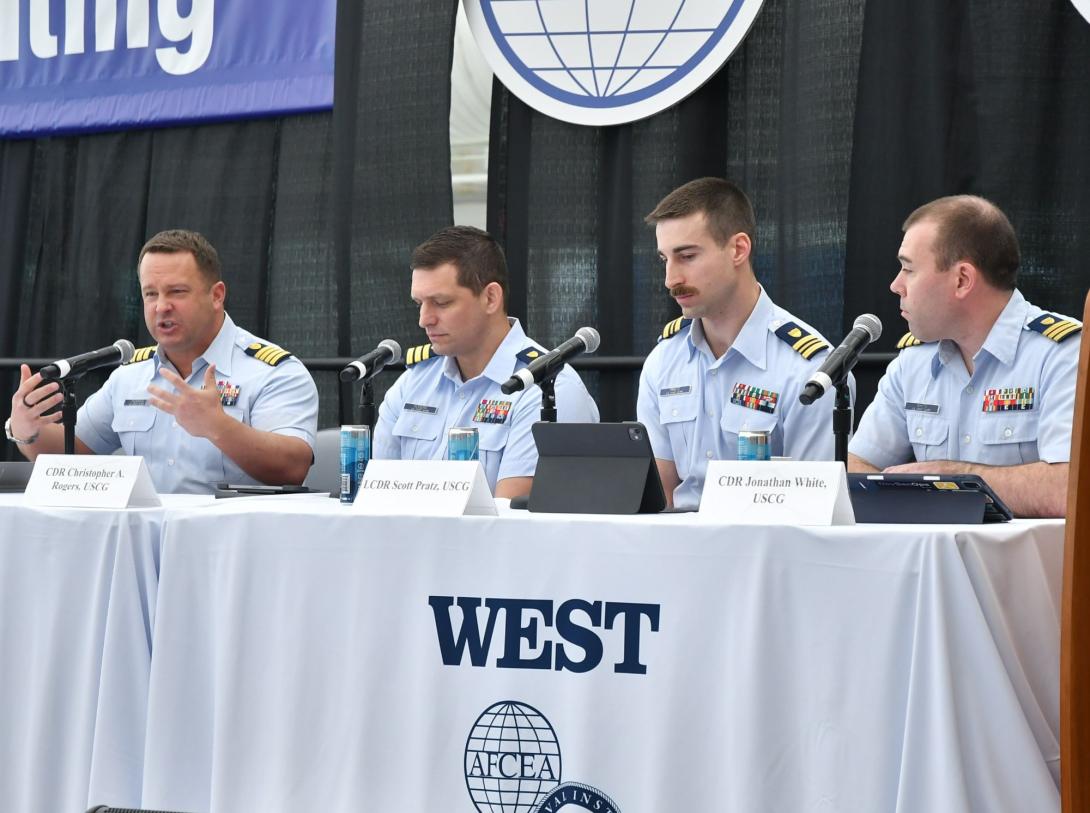
It’s the most exciting time to be part of the U.S. Coast Guard (USCG), according to four expert panelists who spoke at this year’s WEST 2026 conference. With major modernization efforts underway, the service is embracing disruptive technology and accelerating its mission operations.
Five years ago, the USCG looked very different, explained Capt. Patrick Thomas, infrastructure service division chief. New ideas were difficult to implement due to the lack of underlying infrastructure, contracts and organization.
Today, Force Design 2028 is bringing in a necessary influx of money.
“A lot of the Force Design effort is to restructure the organization, push down the decision-making authority to the edge where operators can be trusted to make those decisions to support operations much more rapidly,” said Lt. Cmdr. Scott Pratz, FD28 Technology Table, USCG.
When it comes to technology, Force Design 2028 has four key components:
1. Coastal Sentinel
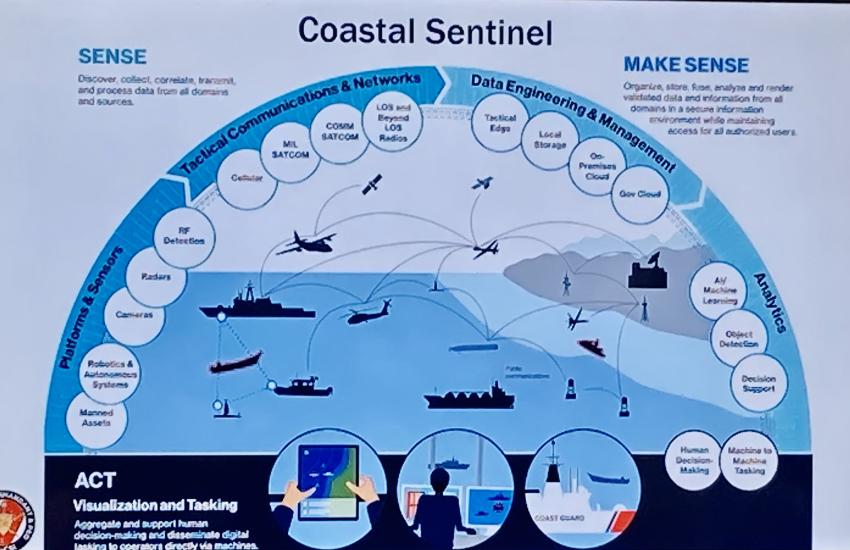
“The simple fact is that the Coast Guard’s existing C2 systems and really many of our systems exist in silos; they’re not integrated, they don’t speak, the data doesn’t flow between them very well,” explained Cmdr. Christopher Rogers, Coastal Sentinel technical director.
Therefore, the Coastal Sentinel initiative is the USCG version of the Combined Joint All-Domain Command and Control, or CJADC2, he said, with a focus on collapsing decision cycles and closing kill chains to outmaneuver the adversary.
2. Software Modernization
With an aim to create a centralized software delivery element, the USCG is establishing its own ‘Software Yard,’ a play on words, ‘software’ and ‘shipyard.’ “The key aspect of that is to do it at scale in a centralized fashion,” explained Cmdr. Jonathan White, branch chief of cloud and data section at the USCG. “Right now we do software very horizontally, which doesn’t really lend itself very well to value steam management. There’s a lot of overlap that happens. There’s different business processes that people might be following, a lot of over-the-fence type activities.”
To meet these challenges, the USCG created a program executive office (PEO) structure to bring the acquisition and sustainment communities together. “That piece is completed, White said.
“The second piece to that is restructuring that PEO so that we can deliver on those lines of effort that we’re really trying to go after in Force Design,” White continued.
One line of effort is focused on development, security and operations (DevSecOps) as a strategic enabler, he said. “We’re not doing agile to go fast; we’re doing agile to iterate our way to a more perfect solution for our mission operators.”
The panelist also spoke on the other elements of software modernization, including commercially available off-the-shelf products, low code and end-user experience.
3. Data & AI
The USCG is looking for robust artificial intelligence integration. “I’m talking like, you don’t even know the AI is there, it’s just doing your work for you,” White said. The panelists explained that the service is seeking the highest level of efficiency and accuracy, as current processes are very manual.
Additionally, the USCG is looking to build application programming interfaces (APIs). “You can’t do AI, and you can’t do microservice architecture without APIs.” White continued. “We want to do graph APIs, we want to do knowledge graphs, we want to do all sorts of things. We need your expertise in that.”
Our watch centers are typically our junior personnel . . . if we’re going to start giving them a lot more information, we need to think about how we’re going to present it in a way that’s better for them.
4. Zero Trust
By September 2027, White said, “If you’re not meeting zero-trust requirements, lights out.” The USCG has more than 100 applications that need to be zero-trust compliant, with 50 more on the way.
“We need a lot of help on the apps domain, which is part of the software yard,” he said. “We need a lot of help on the data domain, that’s classification, discovery, right management, data loss prevention. And we need a lot of help on automation.”
Following the panel discussion, Thomas spoke with SIGNAL Media about what industry can do for the USCG.
“I think for Coastal Sentinel effort . . . there’s the sensors out at the edge, there’s processing in the cloud and then there’s the end-user experience,” he said. “I think the two areas that need the most work are really that edge compute. We don’t want to be sending back all of the data off of those sensors. We want it correlated, we want it trimmed down, we want to just send a limited amount over those relatively small pipes.”
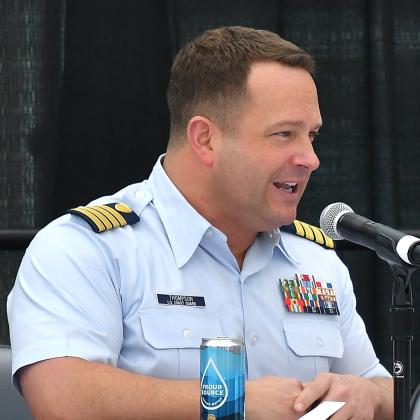
Thomas also spoke on the focus of improving the user experience from the watch centers. “Our watch centers are typically our junior personnel . . . if we’re going to start giving them a lot more information, we need to think about how we’re going to present it in a way that’s better for them.”
As the USCG continues to accelerate its modernization mission, industry is invited to play a role.
WEST 2026 is co-hosted by the U.S. Naval Institute and AFCEA International. SIGNAL Media is the official media of AFCEA International.
Comments