
3D Tasks Are Optimal for Artificial Intelligence Application

Navy officials are attempting to take advantage of artificial intelligence (AI) and autonomous systems to help alleviate the burden on their most powerful warfighting asset: the sailor, per Jennifer Edgin, acting deputy chief of naval operations for information warfare in the N2/N6, and acting director of naval intelligence. More importantly, since AI systems are complex and dangerous when used with bad intentions, Navy personnel want to be in a place where sailors fully comprehend and trust these capabilities.
“Part of using AI and these types of technologies is understanding where they come from, how they’re trained and how they continue to learn,” Edgin said during a panel at West 2026 held in San Diego. “So, think about that; think about how powerful it will be when we’re delivering these capabilities and our sailors know that they can trust the lineage. They can trust how they’re adapting and trust how they’ll continue to morph into the future, and then also have the human in the loop. If things are maybe going a little far off field, they can bring it back to the center line. That’s the ultimate end state that we’re driving to.”
Additionally, to ensure that sailors stay committed to completing the most important tasks and to keep human lives out of harm’s way, Navy leaders want AI to tackle assignments that are dull, dumb and dangerous. “We want sailors to spend their time looking at what information means, to looking at alternatives and to looking at courses of action,” Edgin stressed. “We don’t want them spending their time doing things like putting data into common separated value or doing swivel chair operations. So, if we look at the fields of AI right now, there’s a lot that’s available to us and a lot that can automate processes and a lot that can automate data integration so that we can free the sailor to do the things that matter most.”
Edgin underscored the importance of individuals in the private sector and the research community teaming up with Navy officials to create a clear, transparent communication pathway. This collaboration will ideally lead to each party notifying the other of their needs, leading to next-generation capability development and deployment, and will be effective, especially for capabilities they cannot envision at this time. Currently, the Navy lacks a lexicon to describe these types of futuristic technologies it wants, and this partnership can help clear up this complication, per Edgin.
“That’s the partnership, the partnership between industry, academia and sailors, where we can start to imagine a new future and imagine how we can use things like agentic AI or that general AI that you see depicted in the movies. That’s what it’s going to take—those ideas—and make them a reality,” Edgin said.
The people who learn AI are going to take your job. That’s the way it will work, so we have to embrace it.
Another participant of the panel covering Information Dominance to Support High-end Distributed Maritime Operations at AFCEA West 2026, emphasized that those in the fight need to adopt and begin to learn how to use AI.
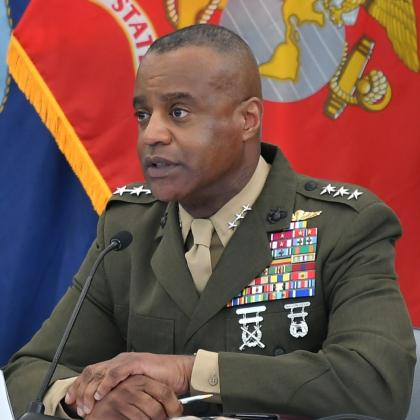
“We in the deputy commandant for information on behalf of the corps—we’re embracing [AI],” Lt. Gen. Melvin (Jerry) Carter, deputy commandant for Information Headquarters in the U.S. Marine Corps, said. “We must embrace it. It’s not about when AI arrives; it’s here. And for those that are concerned about AI taking their job or perhaps replacing them, [that’s] not true. It’s those that don’t understand or refuse to learn AI. The people who learn AI are going to take your job. That’s the way it will work, so we have to embrace it.”
WEST 2026 is co-hosted by the U.S. Naval Institute and AFCEA International. SIGNAL Media is the official media of AFCEA International.



Comments