
Army Leaders Adding Radiation Monitoring Capability to the Force
U.S. military officials are expanding their understanding of the nuclear hazard awareness space by inserting a new piece of technology within their operations. More specifically, Army leaders are striving to put the Man-portable Radiological Detection System (MRDS) into the hands of the warfighter by fiscal year 2032, according to Eric Miller, joint product leader for the Radiological Nuclear Defense Product Office within the Joint Program Executive Office for Chemical, Biological, Radiological and Nuclear Defense (JPEO-CBRND). This announcement comes as the tool, which is an Army program, enters the “production and deployment phase,” and since it’s an Army initiative, crews are currently distributing the tool to Army soldiers only, particularly soldiers in the Army CBRN technical forces. These personnel are responsible for completing site exploitation for CBRN detection technologies, according to Miller.
Additionally, as more individuals get their hands on the device and use it, Miller and his colleagues are seeking out any feedback regarding the tool. They are sending out a survey with the hope that users will share what they like about the device and give them suggestions on how to improve it. This process is extremely new, so it is too early to know what those responses look like; however, as the Army strives to transition toward total interoperability, this will likely force crews to make additions to the system, according to Miller.
“As all things evolve, one of the key things that the Army is going toward is being able to be interoperable and pushing data across networks,” Miller said. “Our system doesn’t have that requirement yet, but that could be something in the future that gets added to it, because it’s kind of a theme—it’s across the entire Army, [the goal] of being interconnected, having interoperable data, so I can see that being an incremental update; it may happen somewhere down the road.”
Exposure to hazardous materials can jeopardize the health of soldiers and put the mission at risk. The MRDS is a sensor technology that gives warfighters the ability to uncover and locate radiological and nuclear materials, helping keep soldiers out of harm’s way. Once detected, the system sends the location of the hazardous materials to the Tactical Operations Center, where commanders can see the information via maps or other overhead imagery forms, according to Army officials. The MRDS and the overall process protect soldiers more effectively, and they allow leaders to have quick access to critical data, giving leaders a new way to make faster, more informed decisions. Additionally, the ability to locate hazardous materials enables warfighters to hastily secure the area and continue on with the mission, according to Army officials.
Prior to the construction and fielding of the MRDS, only one group could complete missions involving radiological and nuclear materials, and having access to the MRDS now means that additional teams will have the ability to carry out these types of tasks, Miller explained.
“One of the key capabilities that this system brings to the Army that they did not have prior to fielding is the field confirmatory piece, which is effectively allowing the [Army CBRN] technical forces to survey, detect, identify radiological and nuclear sources and being able to confirm the identification of what that source is out in the field, whereas before, the [Army CBRN] technical forces did not have that, and they had to rely on one very limited, specialized CBRN unit to complete that activity,” Miller said in an interview with SIGNAL Media. “So, [MRDS] gives the commanders the ability to make more timely decisions with a broader set of equipment for the Army.”
The MRDS takes a more proactive approach as it highlights any risks or threats before soldiers are injured or missions are ruined, which is essential, according to Miller.
“One of the key capabilities of the MRDS is to be able to identify radiological sources before something happens,” Miller added. “This is what we call left of boom activity versus right of boom, which is after something happens. The MRDS’s mission is exclusively to find the special nuclear materials before a negative result occurs from detonation, so this is a critical capability for the Army to be able to find things before bad things happen.”
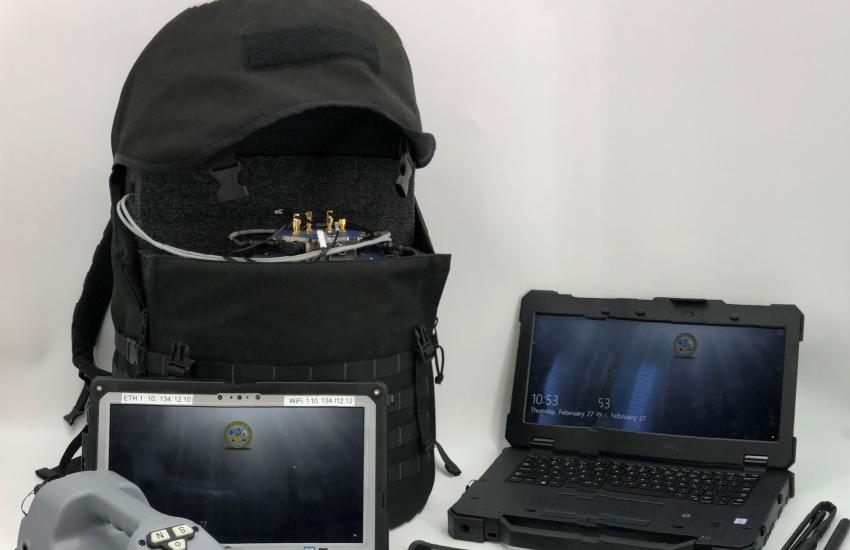
The MRDS has a compatibility feature, which allows developers to connect it to other capabilities, according to Army officials. One example of this is that crews will integrate the MRDS with the Advanced Radiological Nuclear Detection Family of Systems, which Army officials will soon receive as well. These capabilities play a similar role to the MRDS, but on a grander scale. Soldiers insert the Advanced Radiological Nuclear Detection Family of Systems on air and ground vehicles, enabling them to scope out large areas for radiological or nuclear threats. If they locate a potential risk, warfighters can then use the MRDS to carry out a more thorough examination of the area to identify the exact source, according to Miller. In certain instances, the source is positioned in an environment where air or ground vehicles cannot reach, like a building or a bunker. The addition of the MRDS gives warfighters increased mobility and maneuverability, affording soldiers the crucial ability to gather detailed information about the possible risk, according to Miller.
As aforementioned, the process of obtaining feedback from MRDS users is still in its infancy, but through tests, Army officials were able to witness firsthand the system’s potential and success, especially during the operational test. Personnel placed simulated radiological and nuclear sources around a facility in Aberdeen, Maryland. Soldiers then walked around the room with the MRDS, testing the device to see if it could detect the radiological and nuclear sources. They found that the device could uncover the threats successfully and that the detection capability was “overwhelmingly positive,” according to Miller. He added that it was “almost impossible” for the radiological and nuclear materials to go undetected.
Furthermore, the MRDS also displayed success during tests conducted in GPS-denied environments as it showcased its self-powering network, meaning that users can still employ the system and share information safely and securely even if they are in a disconnected environment, according to Army officials.




Comments