
Next Steps for the Air Force Warrant Officer Program
In an effort to strengthen its forces in 2024, the U.S. Air Force began a new warrant officer program for airmen to become experts on capabilities and deliver critical effects through technology. The new position is complemented by senior noncommissioned officers (NCOs), who are experts in leading people, and junior enlisted who are tactical experts.
The Air Force made history at the end of that year when it graduated the first class of warrant officers in the service in 66 years.
The service saw the need to return warrant officers to its ranks to better prepare for near-peer adversaries.
The new warrant officers, numbering now about 200, provide specific technical guidance to commanders and their staff. The warrant officers directly increase the capabilities of the service’s operational units, leaders argued when setting up the program.
The first several cohorts of new warrant officers were selected from the general communications field—either cyber operators, information technologists or communicators—given the operational need and demand for those types of experts. At first, the service pulled from the 17W and 17Y Air Force specialty codes, then made the program eligible for 17Xs.
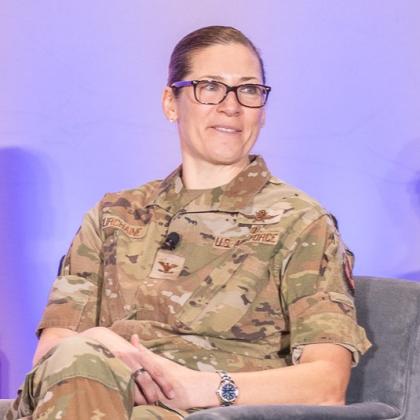
And while the groundbreaking effort is an initial success, the warrant officer program now faces several considerations, including available billets, funding past 2027 and further expansion, said Brig. Gen. (select) Lauren Courchaine, USAF, director, Communications and Cyber Systems Operations, AF/A6, Headquarters USAF.
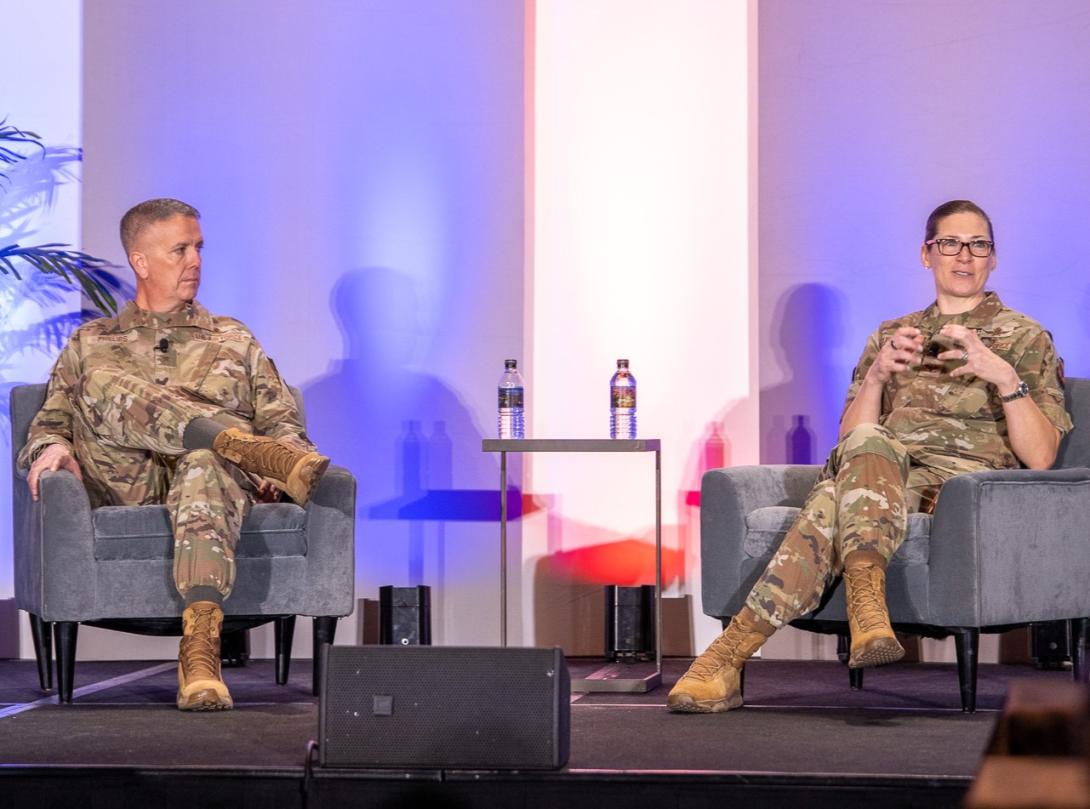
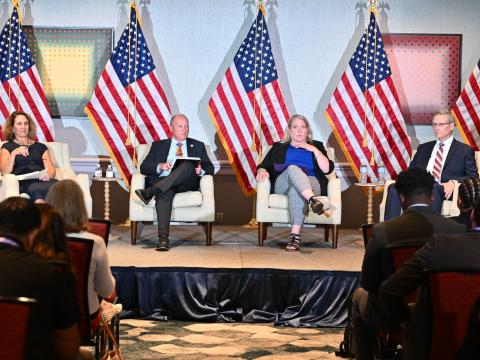
Courchaine spoke at the AFCEA Rocky Mountain Cyberspace Symposium on February 5, along with her boss, Brig. Gen. Jeffrey Phillips, USAF, director, Cyberspace Operations and Warfighting Communications, and chief information officer, Headquarters Air Combat Command (ACC), the ACC A6.
“I would say it is one question that we are thinking about very hard,” Courchaine said. “So, we do not have warrant officer billets today. All of our warrants are an ‘out-of-hide,’ which is what they allowed us to do for the first two years of the program.”
The issue now, she said, is having to convert officer billets into warrant officer billets, making the decision harder for units.
“When we didn't have it as a ‘billet conversation,’ everybody wanted a warrant officer, because why would you not?” Courchaine stated. “Then we said, ‘OK, now you have got to take an officer billet from your current [unit] and turn that into a warrant officer billet. You can understand that the numbers went down pretty low this week.”
The service may have some flexibility, however, depending on the final budgetary numbers pertaining to force structure.
“We heard that there’s potentially an increase in strength,” she said. “And the thought is, if we can look at what that increase in strength looks like, then maybe that is where we start to layer in those warrant officer billets. But we've got to be smart about it. We have got to truly look across the mission set of the Air Force and see where do we want to align those warrant officers, to have staying time and power from a technical perspective.”
The leaders do see the value in the warrant officers’ technical expertise. Phillips shared that his team was able to rely on a gifted warrant officer in cybersecurity.
“We have a warrant officer in charge of our Zero Trust Functional Management Office, who is doing an amazing job,” Phillips noted.
Courchaine added that they also have a high-level warrant officer, a level five, that they are excited about. To take other warrant officers to high ranks, though, Courchaine acknowledged that the service still needs to address what the promotion course would look like for the rest of the warrant officers coming through.
“I have got to start to build in what that promotion perspective is over the out years, to get people moving in the right direction,” she shared. “We do have our very first chief warrant officer five (CW5), who came from the Army, who is down at the schoolhouse, which I am very excited about. And we are also looking at how we pull somebody into a CW4 position.”
We have a really enterprising warrant officer group, and they are trying to build a council and look at how they do everything from talent management to what they do technically, to what their roles and responsibilities are.
In the meantime, the existing warrant officers, from the cohorts since December 2024, have created quite a community for themselves.
“We have a really enterprising warrant officer group, and they are trying to build a council and look at how they do everything from talent management to what they do technically, to what their roles and responsibilities are.”
“But I think we have got to get a little bit more of a stratification within the ranks so that we have some focused attention on how we are building out the warrant officers,” she added.
And given the tight budgetary times, the leaders do have to show that the warrant officer program is money well spent.
“We also have to show a return on investment,” Courchaine emphasized. “We are not funded out beyond 2027 for the program, and that is just a fact. So one of my charges out to the warrant officer community is you have got to give me some quantitative feedback on how you are changing the nature of the ecosystem in a positive manner.”
To her senior leaders, the general select has to clearly delineate the value between warrant officers and other NCOs.
“[How] can I really clearly delineate between a solid senior NCO that is technically proficient and has the brown book down and understands their roles and responsibilities?” she explained. “What is the difference between an enlisted patch from a weapons officer perspective, and then what is the role and responsibility of a warrant officer? We have got to clearly delineate those three and then show the return on investment of having those warrant officers in the mix.”
The leaders can’t just say that the warrant officers are really awesome, she laughed.
“Really awesome doesn't get you into the corporate process with dollars to fund an entirely new rate structure,” Courchaine noted.
The Rocky Mountain Cyber Symposium is co-hosted by the AFCEA Rocky Mountain Chapter and AFCEA International. SIGNAL Media is the official media of AFCEA International.
Comments