
The AFRL’s Rome R&D Adapts
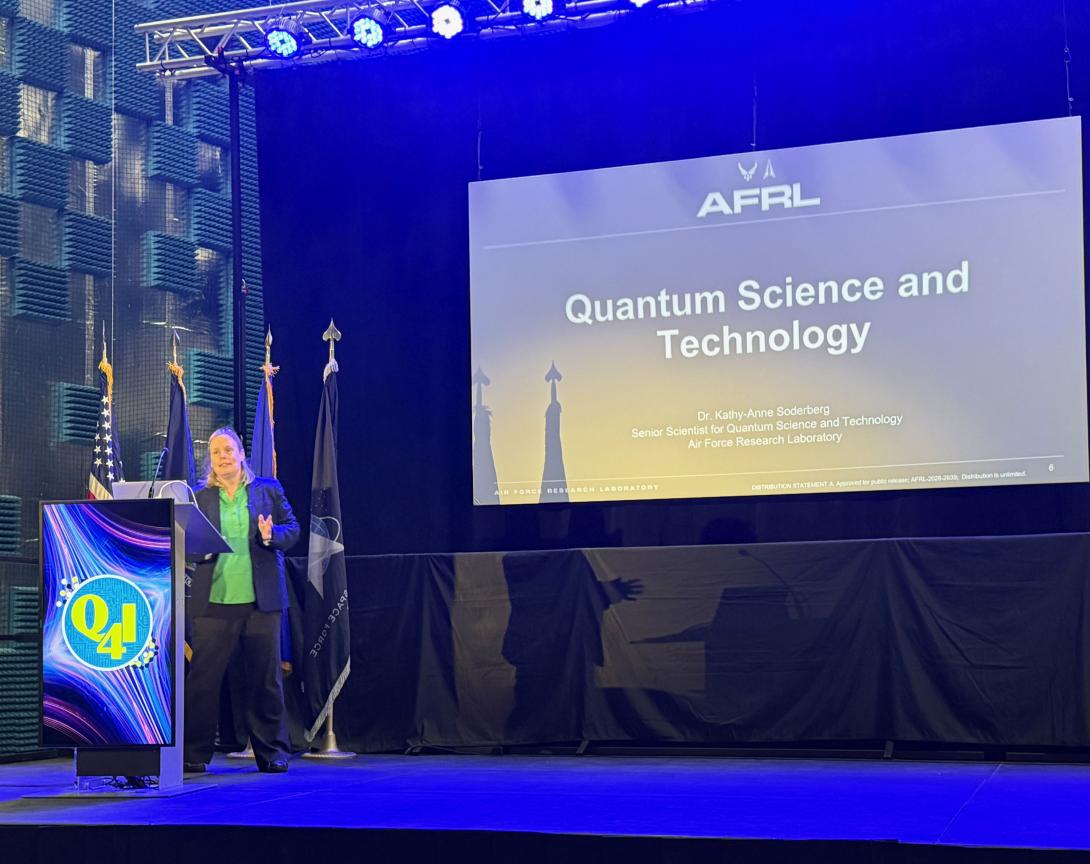
Like at so many other government institutions, the activities beset by the Department of Government Efficiency impacted the Air Force Research Laboratory (AFRL). As a result, the lab revamped its organizational structure with new directorates and cut personnel, including researchers and public affairs officials. The AFRL now has 11,400 employees in directorates such as the Information and Spectrum Warfare Directorate, the Basic Research Office and the Space Warfare Directorate.
“That number used to be above 12,000, but we lost some folks in the last few years with all the uncertainty and commotion within the government,” Soderberg said. “If you ask someone that’s from AFRL where they’re from, they may have a quick identity crisis because they won’t know if they should say the old directorate that they are used to or the new directorate that they’re now part of, so, please be patient with all of us.”
One of the challenges for the AFRL is securing funding for research post-reorganization, Soderberg shared.
Presently, Rome, New York’s research is organized in so-called Epochs, or targeted levels of research to impact certain timeframes, Soderberg said. This includes Epoch I, technologies needed in the immediate future (0-2 years) or things that are going to make a difference today, she explained.
“For that, AFRL needs to really look hard at what we have and see what we can push out fast to the warfighter for the needs that are right now,” she said.
Meanwhile, Epoch II is for mid-term R&D (3-7 years), and Epoch III is for long-term (8-18 years). The last level, which is unique to the AFRL, allows the lab to delve into what is possible, Soderberg noted.
“Epoch III is really the sweet spot in some sense for AFRL because we are the only organization, likely within the Department of Air Force, that is looking at the eight to 18-year time frame,” she said.
The AFRL also works to mature technologies, ushering solutions past basic reach into higher readiness levels and reducing risks, to ensure successful fielding of capabilities. For current needs, the AFRL also must close capability gaps and provide rapid prototyping, Soderberg said.
The new commander of the AFRL is Brig. Gen. Douglas Wickert, who took over from Brig. Gen. Jason Bartolomei.
Wickert leads the lab’s research for both the U.S. Air Force and the U.S. Space Force—and Rome supports both Air Force and Space Force, including the chief of Space Operations and the commander of Space Systems Command, Soderberg noted.
Moreover, the commander’s role is unique, compared to other service labs, Soderberg continued.
“We have a commander who manages our infrastructure and personnel,” she said. “He is also the technology executive officer (TEO) for the Department of the Air Force, so that gives AFRL a very unique perspective. Because, as the TEO, he has a lot of say in what technologies the Air Force should go after. That is a unique positioning within AFRL that the other service labs do not have.”
Comments